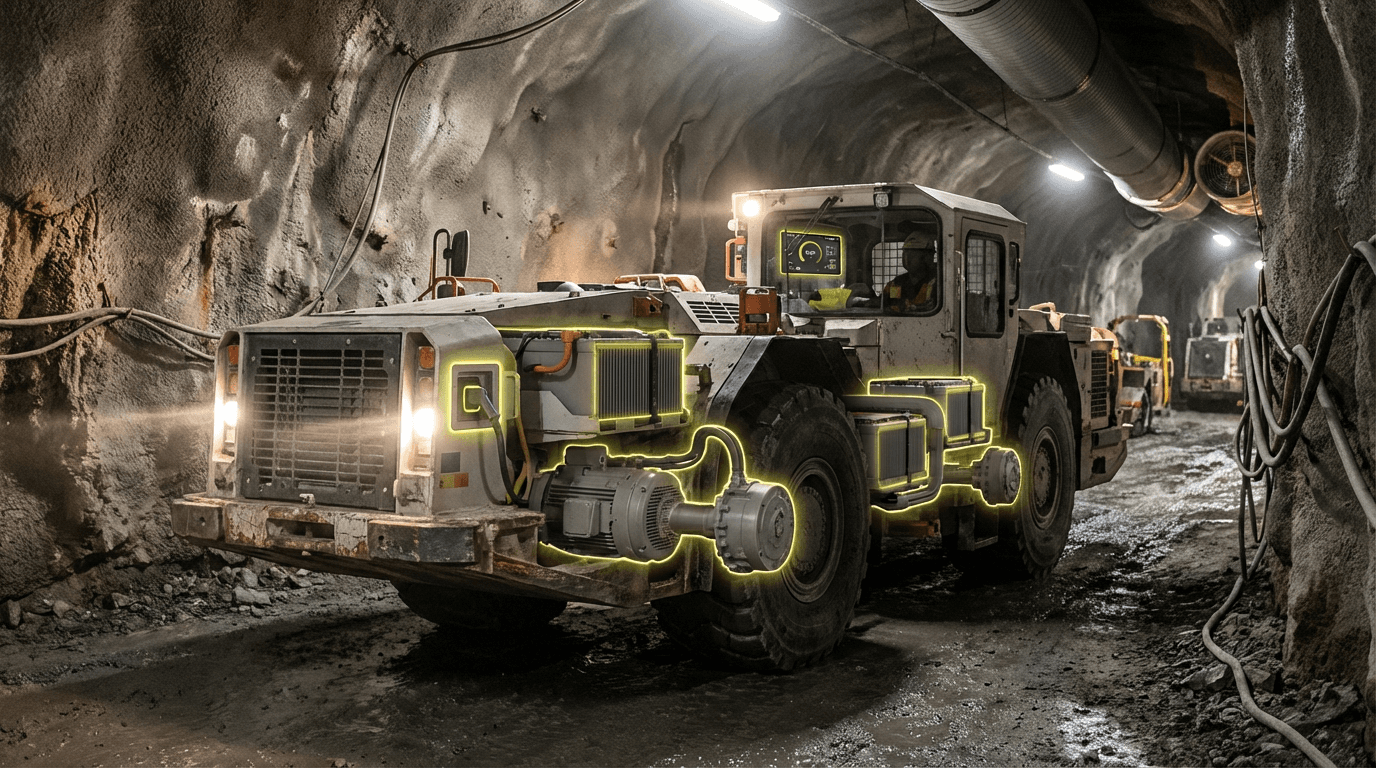
Battery-Electric Mobile Mining Equipment
Battery-electric mobile mining equipment represents a fundamental shift in how extractive operations power their machinery, replacing traditional diesel-powered vehicles with electric alternatives across the full spectrum of mining operations. These systems encompass load-haul-dump (LHD) units, haul trucks, drill rigs, personnel carriers, and various auxiliary vehicles, all powered by large-capacity lithium-ion or alternative battery chemistries. The technology relies on high-energy-density battery packs that can deliver the substantial torque and power required for heavy-duty mining applications, coupled with charging infrastructure strategically positioned throughout mine sites. Unlike surface operations where battery swapping or opportunity charging during loading cycles may be viable, underground deployments often require careful coordination of charging schedules with operational workflows, as the confined spaces and continuous production demands create unique logistical challenges.
The mining industry faces mounting pressure to reduce its environmental footprint while simultaneously addressing worker health and safety concerns that have long plagued underground operations. Diesel-powered equipment generates significant particulate matter, nitrogen oxides, and carbon monoxide, necessitating massive ventilation systems that can account for up to 50 percent of a mine's total energy consumption. Battery-electric vehicles eliminate these emissions at the point of use, dramatically reducing ventilation requirements and associated energy costs. The absence of combustion also eliminates the substantial heat generation from diesel engines, which in deep underground mines can create dangerously high temperatures requiring additional cooling infrastructure. Beyond environmental and cost benefits, the significantly lower noise levels from electric motors improve communication and reduce long-term hearing damage among operators, while the elimination of diesel particulate exposure addresses serious respiratory health risks that have historically affected mining workforces.
Early commercial deployments of battery-electric mining equipment have begun across various mining operations globally, with manufacturers developing purpose-built electric platforms rather than simple conversions of existing diesel models. Underground hard-rock mines have emerged as particularly suitable early adopters, where the confined environment amplifies the benefits of zero on-site emissions and reduced heat generation. Some operations report that the transition to electric equipment has enabled them to defer or eliminate planned expansions of ventilation infrastructure, generating substantial capital savings that help offset the higher upfront costs of electric vehicles. The technology also creates a foundation for increased automation, as electric drivetrains offer more precise control and easier integration with autonomous navigation systems compared to their diesel counterparts. As battery energy density continues to improve and charging infrastructure becomes more sophisticated, industry observers anticipate broader adoption across both underground and surface operations, positioning battery-electric equipment as a critical component in mining's transition toward lower-carbon, safer, and increasingly automated operations.
Related Organizations

Spun out of Atlas Copco, Epiroc specializes in mining equipment and provides extensive automation solutions for underground loaders and trucks.

Produces battery-electric loaders and trucks, bolstered by the acquisition of Artisan Vehicle Systems.

World's leading manufacturer of construction and mining equipment.

Industrial giant using thermoelectric generators via its subsidiary KELK to harvest waste heat in steel and manufacturing plants.

Specializes in underground utility vehicles and has electrified their entire fleet offering (EV Series).

Engineering firm designing electric powertrains (ALTDRIVE) for mining OEMs and retrofit projects.

Developed the Relay, a battery-electric light utility vehicle designed specifically for mining environments.

Offers the SmartDrive architecture for battery-electric underground mining utility vehicles.

Rokion
Canada · Company
Manufactures battery-electric crew transfer and utility trucks for underground mining.

Provides the eMine portfolio, including charging infrastructure and trolley systems for electric mines.
Supporting Evidence
Research this in Signals
Signals turns a topic into a sourced research record you can inspect and rerun. Your first scan is free, and this one starts with Battery-Electric Mobile Mining Equipment already loaded, so edit it or scan as is.