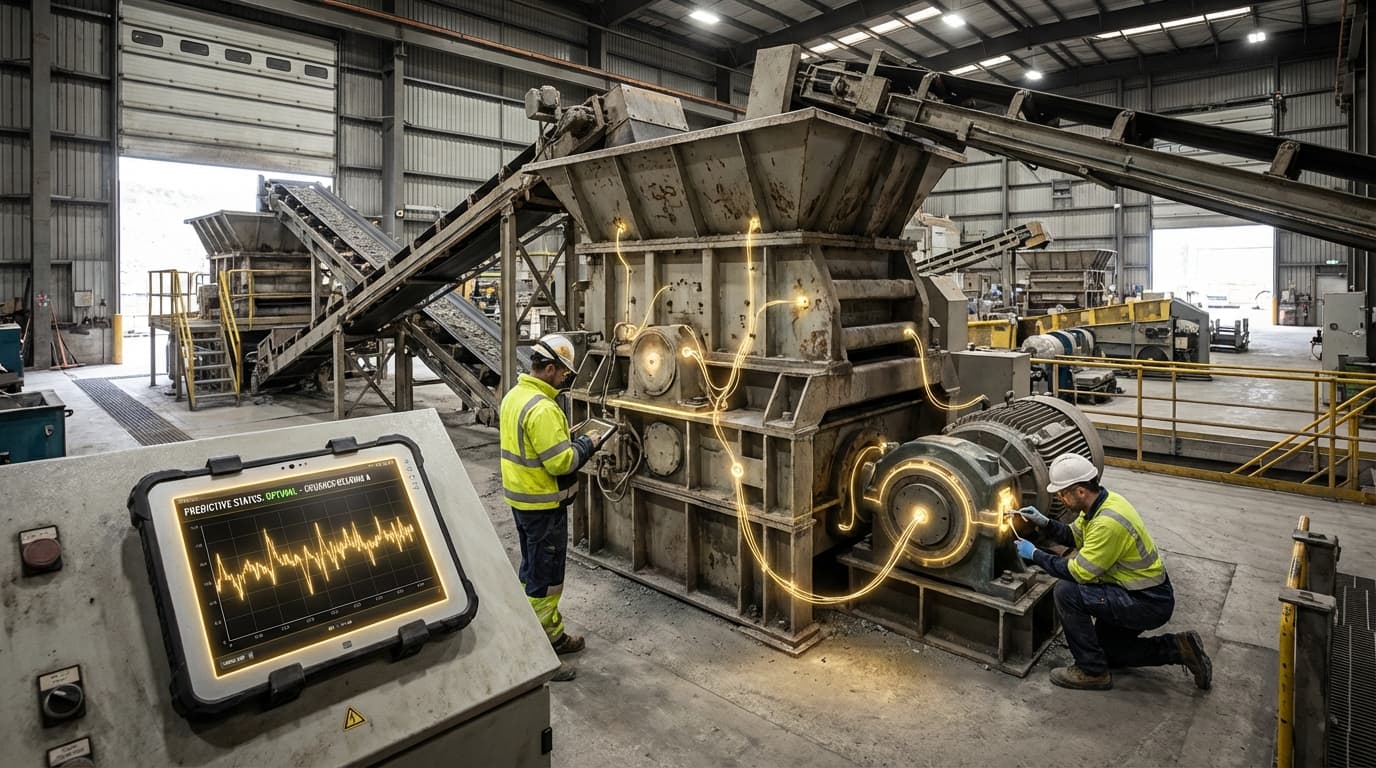
Predictive Maintenance AI
Heavy industrial operations face a persistent challenge: equipment failures that halt production, endanger workers, and cost millions in lost output and emergency repairs. Traditional maintenance strategies fall into two camps—reactive maintenance, which waits for breakdowns to occur, or time-based preventive maintenance, which replaces components on fixed schedules regardless of actual condition. Both approaches are inefficient: the former leads to catastrophic failures and safety incidents, while the latter wastes resources replacing parts that still have useful life. Predictive Maintenance AI addresses this fundamental inefficiency by continuously monitoring equipment health and forecasting failures with precision that human operators cannot match. The technology relies on machine learning algorithms trained on historical failure patterns, combined with real-time sensor data from industrial assets. These systems ingest streams of information from vibration sensors, thermal imaging cameras, acoustic monitors, oil analysis systems, and operational telemetry, building sophisticated models that recognize the subtle signatures of impending failure. Advanced implementations employ techniques like anomaly detection to identify deviations from normal operating patterns, time-series forecasting to project degradation trajectories, and classification algorithms to diagnose specific failure modes based on sensor fingerprints.
The industrial implications are transformative across mining, petrochemical, and heavy manufacturing sectors. In mining operations, where a single excavator or haul truck can represent a multi-million-dollar asset, unplanned downtime directly translates to lost production and missed shipment deadlines. Predictive AI systems can identify bearing wear, hydraulic system degradation, or structural fatigue weeks before catastrophic failure, enabling maintenance teams to schedule interventions during planned production pauses rather than emergency shutdowns. Petrochemical facilities benefit similarly, where pump failures or compressor breakdowns not only halt production but can create safety hazards. The technology enables a shift from fixed maintenance schedules to condition-based strategies, where components are serviced based on actual wear rather than arbitrary time intervals. This optimization extends equipment lifespan, reduces spare parts inventory costs, and allows maintenance crews to work more efficiently with advance notice rather than responding to crises. Perhaps most significantly, predictive maintenance enhances worker safety by preventing sudden equipment failures that can cause injuries in hazardous industrial environments.
Early adopters in mining and energy sectors report maintenance cost reductions of twenty to thirty percent alongside significant improvements in asset availability. Industrial equipment manufacturers are increasingly embedding sensors and connectivity into new machinery specifically to enable predictive analytics, while retrofit solutions bring these capabilities to legacy assets. Cloud-based platforms now offer predictive maintenance as a service, lowering barriers to adoption for mid-sized operators who lack in-house data science expertise. The technology continues to evolve with the integration of digital twin simulations that model equipment behavior under various conditions, and edge computing implementations that perform analysis directly on industrial equipment rather than relying on cloud connectivity. As industrial operations face pressure to improve efficiency while managing aging infrastructure, predictive maintenance AI represents a critical capability for the future of heavy industry—transforming maintenance from a cost center into a strategic advantage that maximizes asset performance and operational resilience.
Related Organizations

Specializes in predictive maintenance software specifically for the mining industry (Trakka).

Provides 'Machine Health' solutions using vibration and magnetic sensors combined with AI to predict machine failures.

Enterprise AI software provider with a dedicated suite for predictive maintenance across energy, defense, and manufacturing.

World's leading manufacturer of construction and mining equipment.

Industrial AI software that analyzes data from heavy equipment to predict failures and optimize maintenance strategies.

A global leader in industrial software, providing solutions for asset optimization and autonomous plant operations.

Industrial software leader offering 'AVEVA Predictive Analytics' (formerly PRiSM) for asset performance management.

Industrial giant using thermoelectric generators via its subsidiary KELK to harvest waste heat in steel and manufacturing plants.

Provides wireless vibration sensors and cloud-based ML software for asset reliability.
Supporting Evidence
Research this in Signals
Signals turns a topic into a sourced research record you can inspect and rerun. Your first scan is free, and this one starts with Predictive Maintenance AI already loaded, so edit it or scan as is.