Real-Time Tailings Dam Monitoring
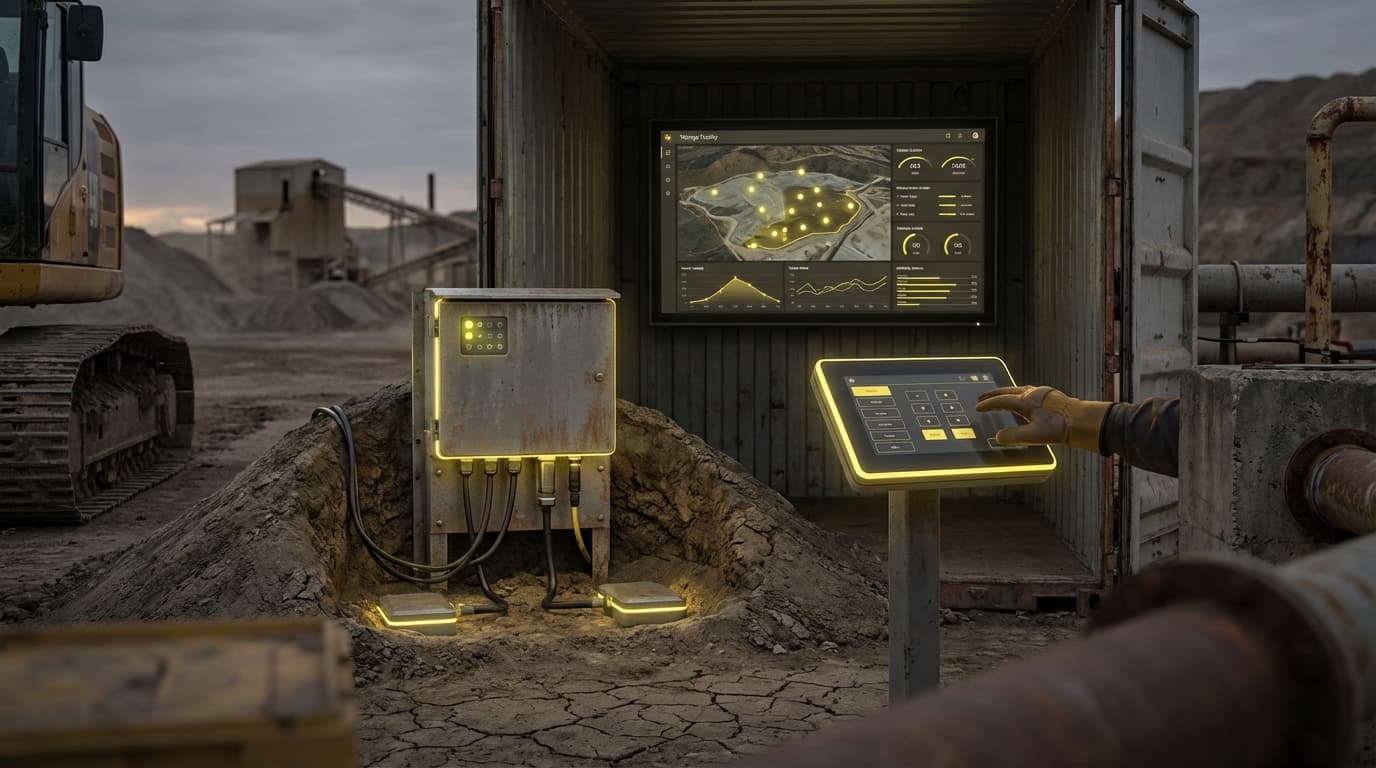
Tailings dams represent one of the most critical safety challenges in modern mining operations, storing vast quantities of water and fine mineral waste behind engineered embankments that can span hundreds of metres in height. Traditional monitoring approaches relied on periodic manual inspections and isolated sensor readings, creating dangerous gaps in surveillance that left facilities vulnerable to undetected structural degradation. Real-time tailings dam monitoring addresses this fundamental safety deficit by deploying integrated networks of sensors that continuously measure the physical parameters governing dam stability. These systems combine subsurface instrumentation—including piezometers that track pore water pressure within the dam structure and inclinometers that detect subtle ground movements—with surface monitoring technologies such as automated total stations, ground-penetrating radar, and satellite-based Interferometric Synthetic Aperture Radar (InSAR) that can detect millimetre-scale deformations across entire facilities. The continuous data streams from these diverse sensors feed into centralised analytics platforms that apply geotechnical models and machine learning algorithms to identify patterns indicative of instability, such as accelerating displacement rates, rising phreatic surfaces, or anomalous seepage.
The mining industry faces mounting pressure to prevent tailings failures following several catastrophic dam collapses in recent years that resulted in significant loss of life, environmental devastation, and billions in economic damages. Real-time monitoring systems transform risk management by shifting the paradigm from reactive inspection to proactive surveillance, enabling operators to detect warning signs days or weeks before potential failures rather than discovering problems during scheduled site visits. This continuous oversight proves particularly valuable for aging facilities, dams constructed using older methods, or operations in seismically active regions where ground conditions can change rapidly. The technology also addresses regulatory compliance challenges, as jurisdictions worldwide implement stricter oversight requirements and demand verifiable evidence of ongoing stability. By providing auditable data trails and automated alerting when parameters exceed predetermined thresholds, these systems help mining companies demonstrate due diligence to regulators and communities while reducing the liability exposure associated with tailings management.
Major mining operations have begun deploying these integrated monitoring systems as part of broader tailings governance frameworks, with some jurisdictions now mandating continuous surveillance for high-consequence facilities. The technology has proven particularly effective when combined with emergency response protocols that define specific intervention triggers and pre-planned mitigation actions. Early deployments indicate that real-time systems can identify developing instabilities that would have gone unnoticed under conventional monitoring schedules, allowing operators to implement corrective measures such as controlled water drawdown, buttress construction, or operational modifications before conditions become critical. The integration of artificial intelligence into these platforms continues to advance, with algorithms becoming increasingly sophisticated at distinguishing between normal seasonal variations and genuinely concerning trends. As the global mining industry confronts the dual challenges of managing thousands of existing tailings facilities while developing new operations under heightened scrutiny, real-time monitoring represents an essential component of the technological infrastructure needed to prevent future disasters and restore public confidence in the sector's commitment to safety and environmental stewardship.
Related Organizations

International Council on Mining and Metals, setting global performance expectations.

Provides enterprise software for heritage management and land access, specifically designed to integrate Indigenous land use agreements and cultural heritage data into mining workflows.

Manufacturer of geotechnical and structural instrumentation.

Earth observation company specializing in InSAR data processing.
Global leader in millimetric ground deformation measurement via satellite radar (InSAR).

Major mining company actively deploying remote operation centers for autonomous trucks and drills.
Provider of long-range wireless data acquisition solutions for industrial monitoring.


Supporting Evidence
Research this in Signals
Signals turns a topic into a sourced research record you can inspect and rerun. Your first scan is free, and this one starts with Real-Time Tailings Dam Monitoring already loaded, so edit it or scan as is.