Neuro-Affective Headsets
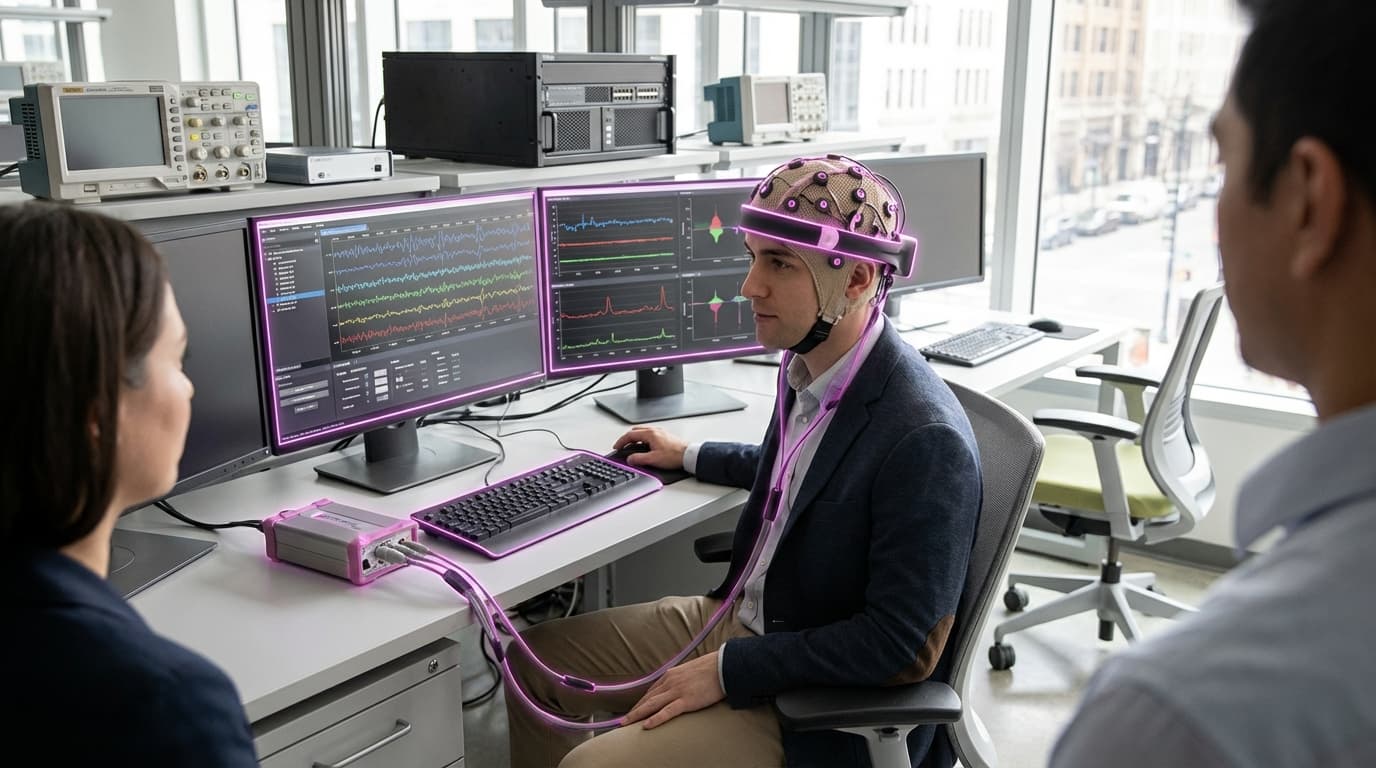
Neuro-affective headsets represent a convergence of neuroscience and wearable technology, employing electroencephalography (EEG) and functional near-infrared spectroscopy (fNIRS) to monitor brain activity patterns associated with emotional states. Unlike traditional brain-computer interfaces that focus primarily on motor commands or cognitive tasks, these devices are specifically calibrated to detect and interpret affective responses—such as stress, engagement, frustration, or relaxation—through neural signatures. EEG sensors capture electrical activity across the scalp, while fNIRS measures blood oxygenation changes in the prefrontal cortex, regions closely linked to emotional processing. Advanced signal processing algorithms then translate these physiological markers into actionable emotional data, creating a real-time window into the user's affective experience.
The technology addresses a fundamental limitation in human-computer interaction: the inability of digital systems to perceive and respond to users' emotional states. In therapeutic contexts, this gap has meant that mental health interventions often lack the adaptive precision needed for optimal outcomes. In entertainment and education, content delivery remains static, unable to adjust to moments of confusion, boredom, or overwhelm. Neuro-affective headsets solve these problems by enabling systems to detect when a user is becoming stressed during a virtual reality therapy session, disengaged during an educational module, or frustrated with a game's difficulty level. This creates opportunities for adaptive experiences that can automatically modulate content intensity, provide timely support, or adjust pacing based on emotional feedback rather than explicit user input.
Early deployments indicate growing interest across multiple sectors, with research institutions exploring applications in anxiety treatment, attention-deficit disorder management, and stress reduction protocols. Gaming companies are investigating how emotional responsiveness might create more immersive experiences, while corporate wellness programs are piloting these devices for real-time stress monitoring in high-pressure work environments. The technology also shows promise in accessibility contexts, potentially offering individuals with limited mobility or communication abilities new channels for expressing emotional needs. As machine learning models become more sophisticated at interpreting complex emotional states and as hardware becomes less obtrusive, neuro-affective headsets are positioned to play an increasingly significant role in creating responsive environments that adapt not just to what users do, but to how they feel while doing it.
Related Organizations

Produces EEG headsets and the BCI-OS platform, allowing developers to build applications that respond to cognitive stress and facial expressions.
Creates open-source brain-computer interface tools and the Galea headset (integrating with VR) for researching physiological responses.

Develops semi-dry and dry EEG wearable devices for human behavior research and neurotechnology applications.

Neuroscience company developing non-invasive brain recording technology (Flow and Flux).

A leader in wearable Near-Infrared Spectroscopy (NIRS) devices.

Developer of the Muse brain-sensing headband used in meditation and wellness retreats.

Develops BCI-enabled headphones that detect focus and intent to control digital experiences.
Produces dry electrode EEG systems based on technology licensed from Quantum Applied Science and Research (QUASAR).

Develops BMI technology including the FocusCalm headband and prosthetic hands.

Develops high-performance BCI hardware, including the 'Unicorn' hybrid black interface for developers.
Supporting Evidence
Research this in Signals
Signals turns a topic into a sourced research record you can inspect and rerun. Your first scan is free, and this one starts with Neuro-Affective Headsets already loaded, so edit it or scan as is.