Neurofeedback Algorithms
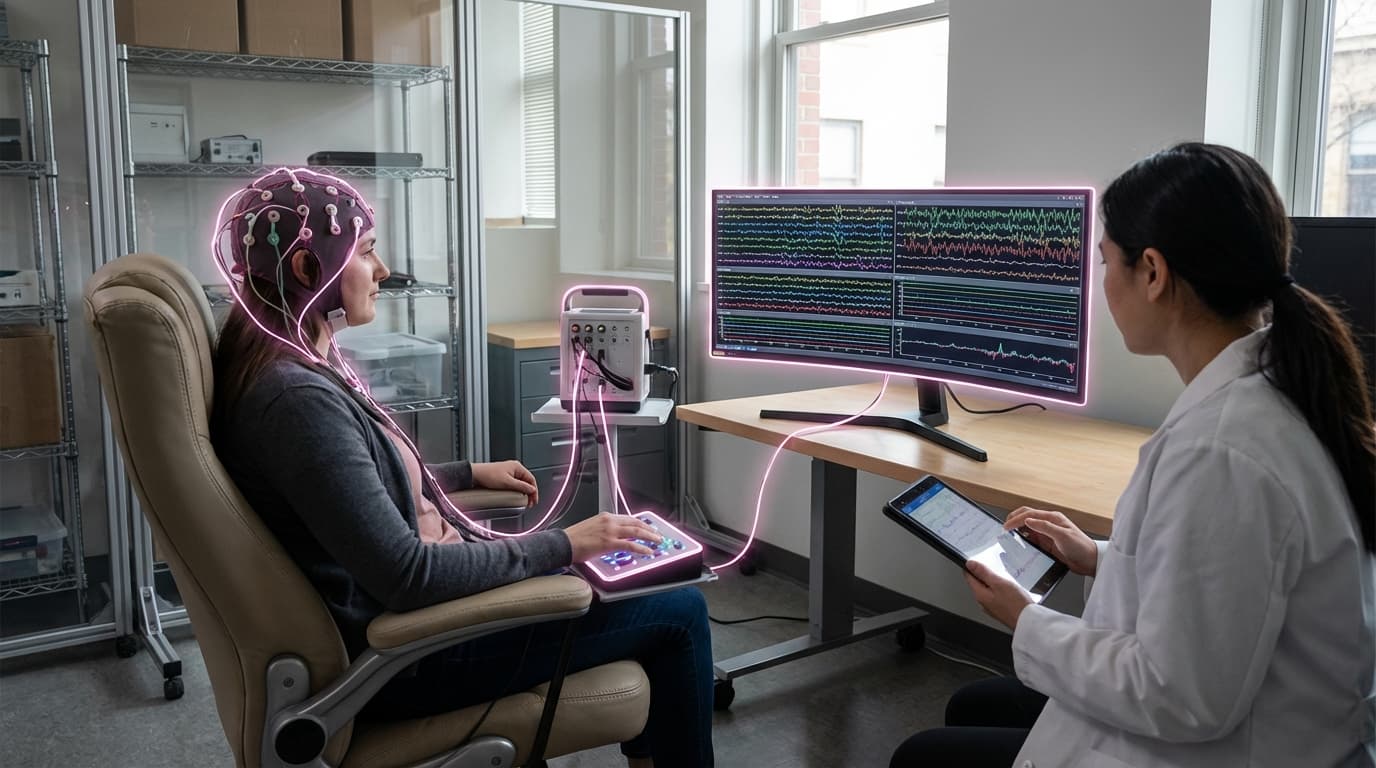
Neurofeedback algorithms represent a sophisticated intersection of neuroscience, signal processing, and machine learning that enables individuals to observe and potentially modulate their own brain activity in real time. These systems work by continuously monitoring neural signals—most commonly through electroencephalography (EEG), but also via functional near-infrared spectroscopy (fNIRS) or functional magnetic resonance imaging (fMRI)—and translating complex brainwave patterns into comprehensible visual, auditory, or haptic feedback. The algorithms employ advanced filtering techniques to isolate specific frequency bands associated with different mental states, such as alpha waves linked to relaxation or beta waves associated with focused attention. Machine learning models then analyse these patterns against baseline measurements and desired target states, providing users with immediate feedback that might appear as changing colours, sounds, or game-like interfaces that respond to their neural activity. This creates a closed-loop system where individuals can experiment with different mental strategies and observe their neurological impact within seconds.
The fundamental challenge these systems address is the historical opacity of our own mental processes—humans have traditionally lacked direct access to information about their brain states, making self-regulation of attention, emotional responses, and cognitive performance largely a matter of trial and error. For individuals managing conditions like ADHD, anxiety disorders, or PTSD, this disconnect between intention and neurological reality can be particularly frustrating. Neurofeedback algorithms bridge this gap by making the invisible visible, allowing users to develop more effective self-regulation strategies through operant conditioning principles. Research suggests that repeated training sessions can help individuals learn to voluntarily shift their brain activity toward more optimal patterns, potentially reducing reliance on pharmaceutical interventions or complementing existing therapeutic approaches. The technology also enables new possibilities for performance enhancement in domains ranging from athletic training to creative work, where achieving specific mental states—such as flow or focused attention—can significantly impact outcomes.
Current applications span clinical, wellness, and performance contexts, with neurofeedback systems increasingly available in therapeutic settings, meditation centres, and even consumer wellness devices. Clinical deployments have explored protocols for attention training in ADHD populations, anxiety reduction techniques, and trauma processing support for PTSD patients, though outcomes vary considerably across individuals and protocols. The meditation and mindfulness sector has embraced these tools as objective measures of practice depth, with several commercial headsets now offering real-time feedback on meditative states. As the technology matures, the algorithms are becoming more sophisticated in their ability to detect subtle neural signatures and personalise feedback protocols to individual brain patterns. Industry analysts note growing interest in integrating neurofeedback capabilities into virtual reality environments and workplace wellness programs, suggesting a trajectory toward broader adoption. However, the field continues to grapple with questions of protocol standardisation, individual variability in response, and the need for more rigorous validation of specific training approaches, even as the underlying technology becomes more accessible and refined.
Related Organizations

Developer of the Muse brain-sensing headband used in meditation and wellness retreats.

Translational neuroscience center at UCSF engaged in technology creation and scientific research on brain function and plasticity.

Provides a remote neurofeedback platform using consumer wearables (like Muse) to treat ADHD and anxiety.

Provides virtual reality and augmented reality stories that change visually based on the user's heart rate (via Apple Watch) or brainwaves (via Muse).
Creates open-source brain-computer interface tools and the Galea headset (integrating with VR) for researching physiological responses.

Consumer fNIRS headband for brain training and blood flow monitoring.

Creators of 'The Crown', a wearable EEG device focused on inducing and maintaining flow states for productivity and study.

Develops semi-dry and dry EEG wearable devices for human behavior research and neurotechnology applications.

Develops BMI technology including the FocusCalm headband and prosthetic hands.

A long-standing manufacturer of biofeedback and neurofeedback instrumentation for clinical and high-performance use.
Supporting Evidence
Research this in Signals
Signals turns a topic into a sourced research record you can inspect and rerun. Your first scan is free, and this one starts with Neurofeedback Algorithms already loaded, so edit it or scan as is.