Tangible Affective Interfaces
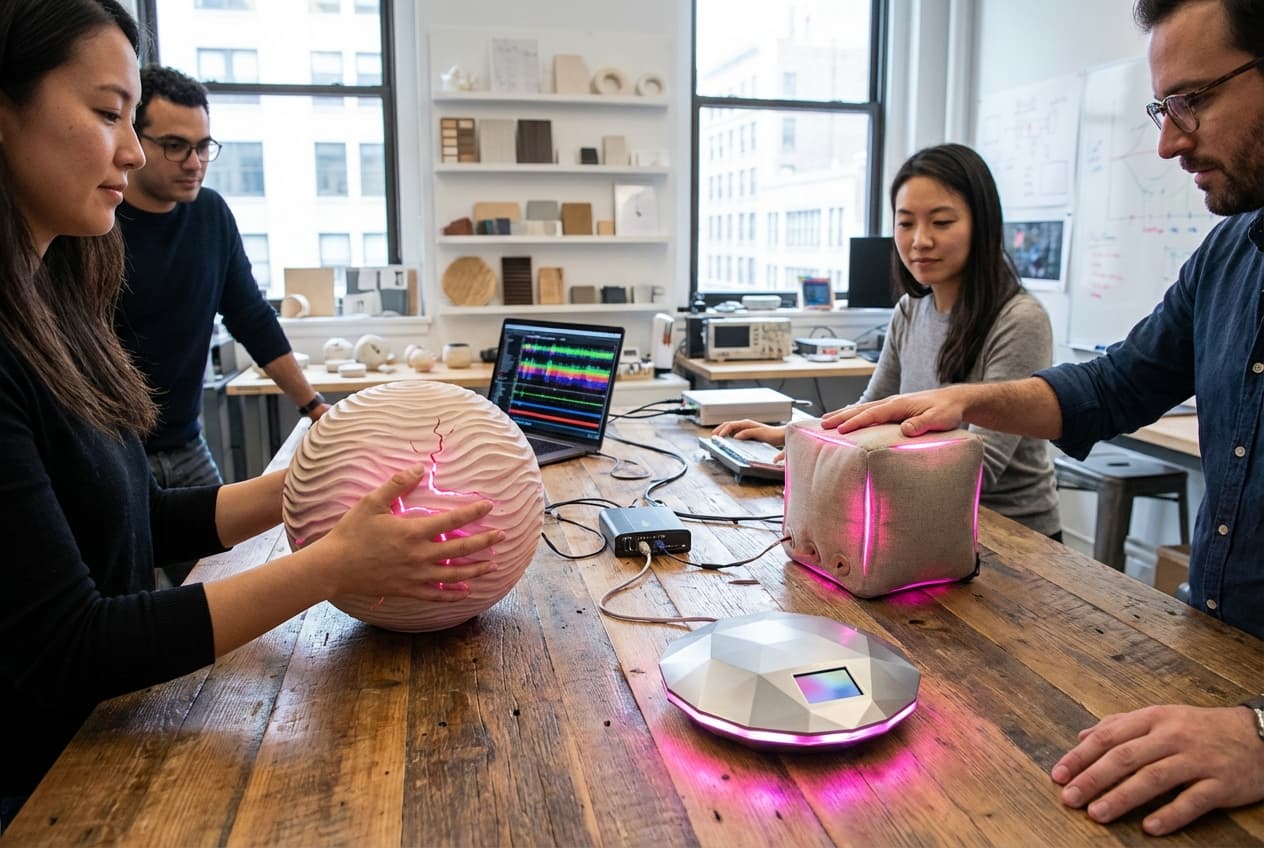
Tangible Affective Interfaces represent a paradigm shift in how technology mediates emotional communication, moving beyond screen-based interactions to leverage the rich sensory vocabulary of physical materials. These systems employ advanced smart materials—including shape-memory alloys, electroactive polymers, and thermochromic substances—that can dynamically alter their physical properties in response to emotional data. The technology integrates sensors capable of detecting physiological signals such as heart rate variability, skin conductance, and body temperature, which are then translated into tangible outputs through actuators embedded within physical objects. For instance, a soft robotic cushion might subtly expand and contract to mimic breathing patterns, while temperature-regulating fabrics could warm or cool in response to detected stress levels. The underlying principle is that humans possess deeply ingrained associations between physical sensations and emotional states—warmth with comfort, softness with safety, rhythmic movement with calm—and these interfaces harness those connections to create intuitive affective exchanges.
The development of Tangible Affective Interfaces addresses critical limitations in current digital communication systems, particularly for populations who struggle with conventional screen-based technologies. Young children who have not yet developed abstract symbolic reasoning, elderly individuals experiencing cognitive decline, and people with certain developmental differences often find traditional digital interfaces alienating or inaccessible. Research suggests that physical, embodied interactions provide more immediate and comprehensible emotional feedback for these groups. Beyond accessibility, these interfaces solve the problem of emotional impoverishment in remote communication—the inability to convey or perceive subtle affective cues through text or even video. In therapeutic contexts, tangible interfaces enable new forms of emotional regulation support, allowing users to externalize and modulate their emotional states through physical interaction. The technology also opens possibilities for asynchronous emotional communication, where physical objects serve as persistent emotional artifacts that can be touched and experienced repeatedly, unlike ephemeral digital messages.
Early deployments of tangible affective interfaces have emerged primarily in healthcare and educational settings, with pilot programs exploring applications in pediatric hospitals, elder care facilities, and special education classrooms. Prototypes include plush toys that change temperature to reflect a distant caregiver's presence, shape-changing wearables that provide calming pressure during anxiety episodes, and ambient objects that glow and warm when loved ones are thinking of the user. Industry analysts note growing interest from companies developing companion technologies for aging populations, as demographic shifts create demand for emotionally supportive devices that don't require digital literacy. The technology aligns with broader trends toward calm computing and ambient intelligence, where technology recedes into the background of daily life rather than demanding constant attention. As materials science advances and production costs decrease, tangible affective interfaces may become integral to how we maintain emotional connections across distance, support mental wellbeing, and create more humane technological ecosystems that honor the fundamentally embodied nature of human emotion.
Related Organizations

Professor Hiroshi Ishii's lab, pioneering 'Tangible Bits' and 'Radical Atoms'—interfaces that change shape and physical properties.

Creators of Qoobo (a therapeutic robot pillow with a tail) and Amagami Ham Ham (a biting robot).

Fashion technology brand known for the 'Sound Shirt', which translates music into tactile sensations for the deaf.

Developers of LOVOT, a companion robot designed to be loved and to nurture users' capacity for love.
Paro Robots
Japan · Company
Produces PARO, a therapeutic robot seal used in hospitals and nursing homes to reduce stress through tactile interaction.

Consumer hardware startup creating the Emerge Wave-1, a device using ultrasound to create tactile sensations for VR/AR without gloves.

The world leader in mid-air haptics and hand tracking, formed from the merger of Ultrahaptics and Leap Motion.

Develops surface haptics technology that modulates friction on touchscreens to simulate textures.

Investigates soft robotics for safe human-robot interaction and expressive animatronics.

Develops industrial-grade haptic gloves using microfluidic technology to simulate realistic touch and resistance.
Supporting Evidence
Research this in Signals
Signals turns a topic into a sourced research record you can inspect and rerun. Your first scan is free, and this one starts with Tangible Affective Interfaces already loaded, so edit it or scan as is.