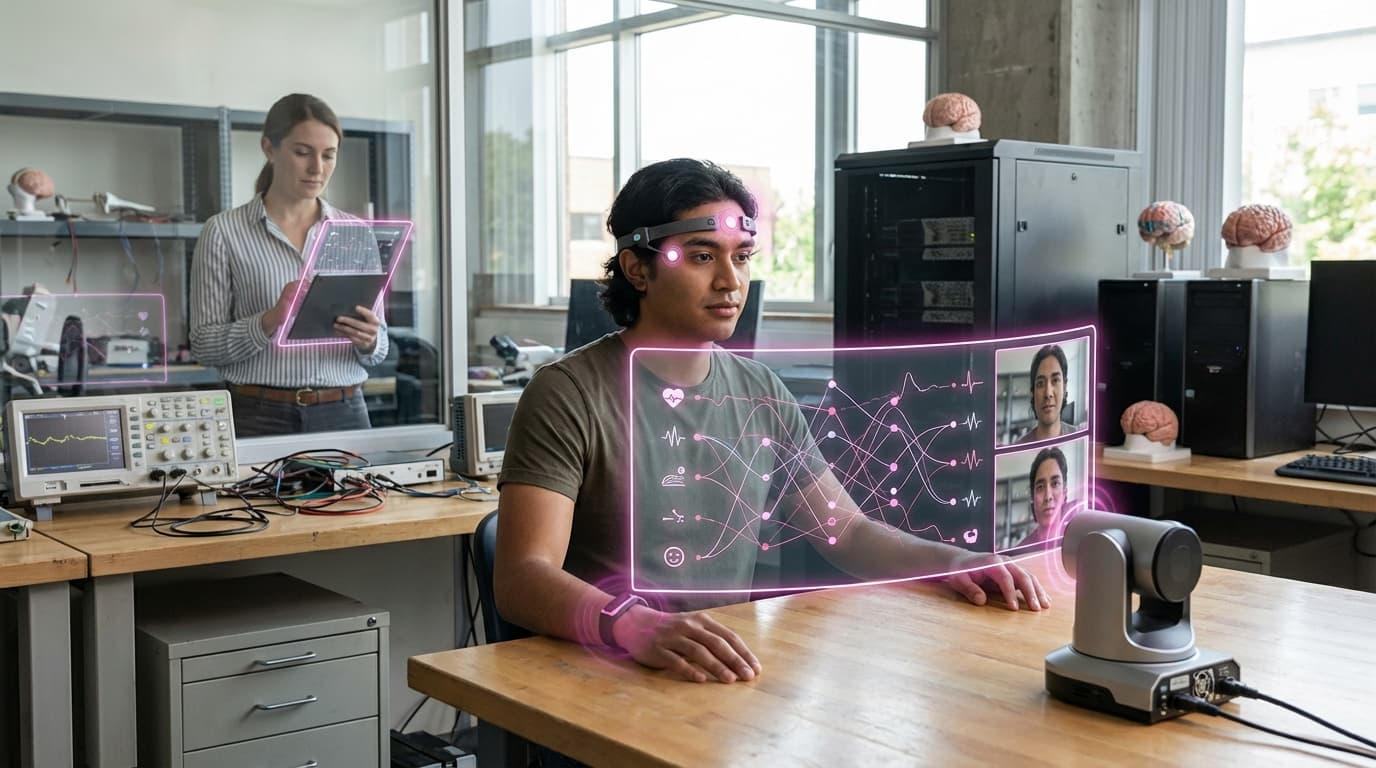
Multimodal Emotion AI
Multimodal Emotion AI represents a sophisticated approach to understanding human emotional states by simultaneously analyzing multiple channels of affective expression. Unlike traditional emotion recognition systems that rely on a single input source, these algorithms integrate data from facial micro-expressions, vocal prosody, body language, and physiological signals such as heart rate variability, galvanic skin response, and respiration patterns. The technical foundation rests on deep learning architectures capable of fusing these disparate data streams into coherent emotional assessments. By combining computer vision techniques for facial analysis, natural language processing for vocal tone interpretation, and biosensor integration for physiological monitoring, these systems create a more comprehensive picture of emotional states than any single modality could provide. The cross-cultural dimension is particularly critical, as emotional expression varies significantly across different societies and contexts—what constitutes a smile or an expression of discomfort can differ markedly between cultures. Training datasets must therefore encompass globally diverse populations to avoid the cultural biases that have plagued earlier emotion recognition technologies.
The primary challenge these systems address is the inherent ambiguity and complexity of human emotional expression. Traditional customer service interactions, mental health assessments, and human-computer interfaces have long struggled with accurately interpreting user emotional states, leading to miscommunication, frustration, and missed opportunities for meaningful engagement. In healthcare settings, clinicians may miss subtle signs of distress or discomfort, particularly when treating patients from different cultural backgrounds. In customer experience management, companies often rely on explicit feedback mechanisms that fail to capture real-time emotional responses during service interactions. Multimodal Emotion AI overcomes these limitations by providing continuous, objective measurement of affective states that doesn't depend solely on self-reporting or single-channel interpretation. This capability enables more responsive and empathetic interactions across various domains, from adaptive learning systems that adjust to student frustration levels to automotive interfaces that detect driver stress and fatigue.
Current applications span multiple industries, with early deployments appearing in call centers where the technology helps identify customer frustration before it escalates, in therapeutic settings where it assists mental health professionals in monitoring patient emotional states during sessions, and in market research where it provides deeper insights into consumer responses to products and advertisements. Automotive manufacturers are exploring integration into driver monitoring systems to enhance safety by detecting emotional states that might impair driving performance. As privacy concerns and ethical frameworks around emotion recognition continue to evolve, the technology is moving toward more consent-based, transparent implementations that give individuals control over how their emotional data is collected and used. The trajectory points toward increasingly sophisticated systems that can navigate the nuanced landscape of human affect while respecting cultural diversity and individual autonomy, ultimately enabling more emotionally intelligent interactions between humans and the technologies that serve them.
Related Organizations

Developing an Empathic Voice Interface (EVI) that detects and responds to human emotion.

A leader in eye tracking and driver monitoring systems that acquired Affectiva (the pioneer of Emotion AI) to integrate deep affective computing capabilities.

A spin-off from TU Munich specializing in audio analysis and speech emotion recognition.

Provides an Integrated Market Research platform (Affect Lab) using Emotion AI, Facial Coding, and Eye Tracking.

Developers of Anura, an AI platform that measures blood pressure, heart rate, and stress levels via 30-second video selfies using Transdermal Optical Imaging.

Develops voice biomarker technology for mental health.

Uses webcams to measure attention and emotion in response to video advertising.

Creates autonomously animated 'Digital People' with simulated nervous systems.

An enterprise AI company specializing in conversational service automation, using tonal analysis to detect customer sentiment and emotion.

Provides a client-side JavaScript SDK for Emotion AI in the browser.
Supporting Evidence
Research this in Signals
Signals turns a topic into a sourced research record you can inspect and rerun. Your first scan is free, and this one starts with Multimodal Emotion AI already loaded, so edit it or scan as is.