Self-Healing Bio-Concrete
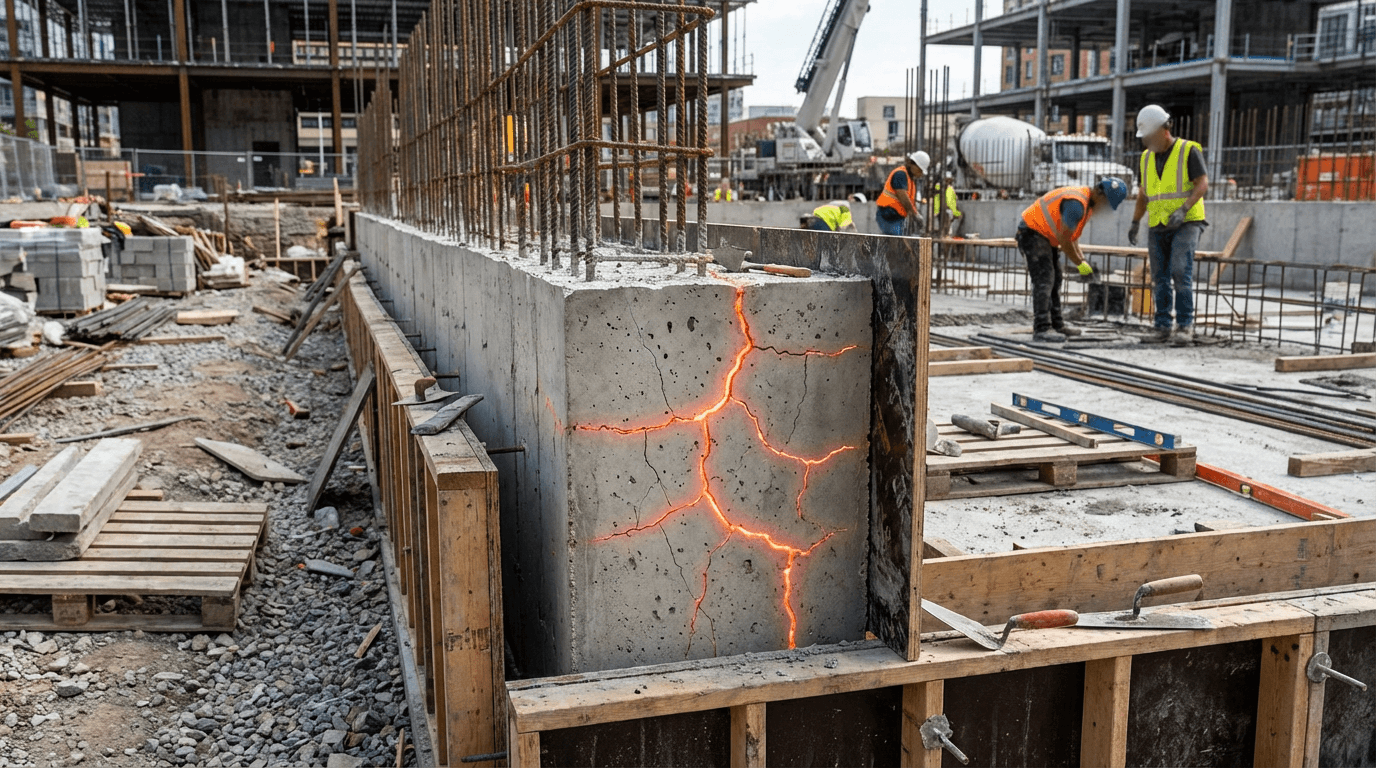
Self-healing bio-concrete represents a significant advancement in construction materials, addressing one of the most persistent challenges in the built environment: the deterioration of concrete structures over time. Traditional concrete, while strong in compression, is prone to developing microcracks due to thermal expansion, structural loading, and environmental exposure. These cracks allow water and corrosive agents to penetrate the material, leading to steel reinforcement corrosion and progressive structural degradation. Bio-concrete solves this problem through a biological mechanism embedded within the material itself. The technology incorporates dormant bacterial spores, typically from the genus Bacillus, along with a calcium-based nutrient source such as calcium lactate, directly into the concrete mix during production. When cracks form and expose these bacteria to moisture and oxygen, the spores activate and begin metabolizing the nutrients, producing calcium carbonate (limestone) as a byproduct. This biologically generated limestone precipitates within the crack, effectively sealing it before water and harmful substances can penetrate deeper into the structure.
The construction industry faces enormous costs associated with concrete maintenance and repair, with infrastructure deterioration representing a multi-billion dollar challenge globally. Research suggests that traditional concrete structures often require significant intervention within decades of construction, particularly in harsh environments or high-stress applications. Self-healing bio-concrete addresses this economic and practical burden by enabling structures to repair minor damage autonomously, without human intervention or costly maintenance programs. This capability is particularly valuable for infrastructure elements that are difficult or expensive to access, such as underwater foundations, tunnel linings, or bridge supports. Beyond cost savings, the technology contributes to sustainability goals by extending the functional lifespan of concrete structures, thereby reducing the need for demolition, reconstruction, and the associated carbon emissions from cement production. Early deployments indicate that bio-concrete can seal cracks up to several millimeters wide, with the healing process typically occurring within weeks of crack formation.
While still emerging from research laboratories into commercial applications, self-healing bio-concrete is gaining traction in pilot projects and specialized construction scenarios where durability and reduced maintenance are critical priorities. The technology shows particular promise in marine environments, wastewater infrastructure, and parking structures where traditional concrete faces accelerated degradation. Industry analysts note that as production methods become more refined and costs decrease, bio-concrete could become standard practice for critical infrastructure projects. The development aligns with broader trends toward biomimetic materials and circular economy principles in construction, where buildings and infrastructure are designed not just for initial performance but for longevity and self-sufficiency. As urbanization intensifies and aging infrastructure demands attention worldwide, self-healing bio-concrete offers a forward-looking approach to building more resilient, sustainable, and economically viable structures that can adapt and repair themselves throughout their service lives.
Related Organizations

Produces concrete mixed with limestone-producing bacteria that autonomously repair cracks.

Home to QuTech and the Hanson Lab, which performed the first loophole-free Bell test using NV centers.

The Centre for Microsystems Technology (CMST) at Ghent is a pioneer in flexible electronics and smart contact lens displays.

Lead institution for the 'Resilient Materials 4 Life' (RM4L) project, researching biomimetic building materials.

Microbial technology company offering 'Sanicon', a microbial agent for self-healing concrete applications.

A global group that develops and manages sustainable infrastructure solutions, including testing self-healing materials in construction projects.
Costain Group
United Kingdom · Company
A British technology-based construction and engineering company.
A global leader in lactic acid and its derivatives, and a leading supplier of emulsifiers, functional enzyme blends, minerals, vitamins, and algae ingredients.

Runs the Semantic Forensics (SemaFor) program to develop technologies for automatically detecting, attributing, and characterizing falsified media.
Supporting Evidence
Research this in Signals
Signals turns a topic into a sourced research record you can inspect and rerun. Your first scan is free, and this one starts with Self-Healing Bio-Concrete already loaded, so edit it or scan as is.