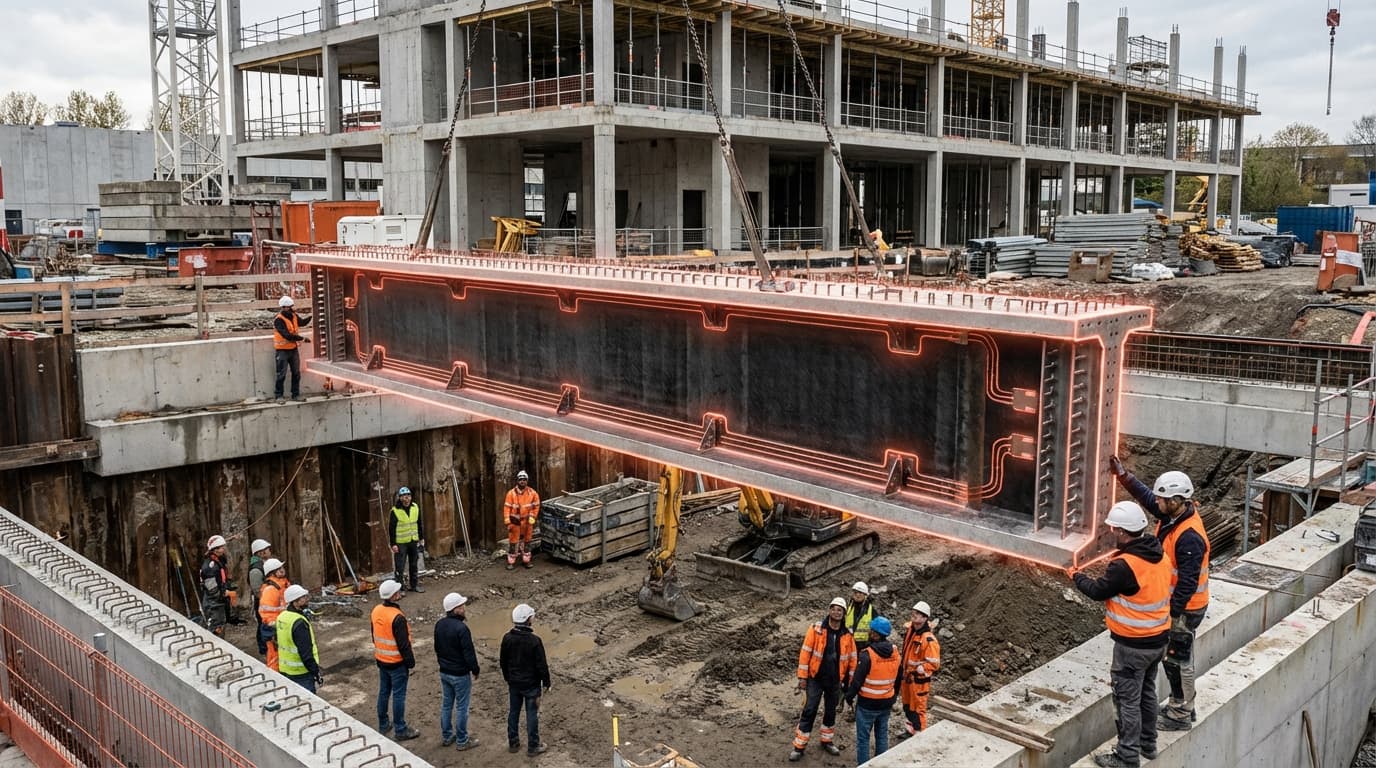
Graphene-Enhanced Structural Composites
Graphene-Enhanced Structural Composites represent a breakthrough in construction materials that addresses fundamental limitations in traditional building components. Graphene, a single layer of carbon atoms arranged in a hexagonal lattice, possesses extraordinary properties: it is approximately 200 times stronger than steel by weight, highly flexible, and an excellent conductor of both heat and electricity. When incorporated into conventional construction materials like concrete, steel, or polymer composites, even small amounts of graphene—typically between 0.01% and 0.5% by weight—can dramatically enhance mechanical performance. The integration process involves dispersing graphene nanoplatelets or graphene oxide throughout the material matrix during mixing or manufacturing. In concrete applications, graphene particles fill microscopic voids and create stronger bonds within the cement paste, while in steel and polymer composites, they reinforce the molecular structure and prevent crack propagation. This reinforcement mechanism works at the nanoscale, fundamentally altering how materials respond to stress and environmental factors.
The construction industry faces mounting pressure to reduce material consumption, lower carbon emissions, and extend infrastructure lifespan while meeting growing demand for buildings and infrastructure. Graphene-enhanced composites directly address these challenges by enabling structures that require less raw material to achieve equivalent or superior performance. Research suggests that graphene-reinforced concrete can achieve strength improvements of 30% to 100% depending on formulation, potentially allowing for thinner structural elements, reduced foundation requirements, and lighter overall building weights. Beyond mechanical advantages, the electrical conductivity of graphene opens entirely new functional capabilities for structural materials. Graphene-enhanced concrete can act as a self-sensing material, detecting internal stress, strain, or damage by measuring changes in electrical resistance—essentially transforming structural elements into their own monitoring systems. This same conductivity enables de-icing applications, where passing electrical current through graphene-enhanced pavement or bridge decks generates heat to melt ice and snow, eliminating the need for chemical de-icers that damage infrastructure and harm the environment.
Early commercial applications have begun to emerge, though widespread adoption remains limited by production costs and the technical challenges of achieving consistent graphene dispersion in large-scale manufacturing. Several pilot projects have demonstrated graphene-enhanced concrete in real-world settings, including experimental building foundations and infrastructure repairs, with performance monitoring showing promising durability improvements. The technology aligns with broader industry trends toward smart infrastructure and sustainable construction practices, offering a pathway to buildings and infrastructure that are simultaneously stronger, lighter, more durable, and capable of providing real-time structural health data. As production methods mature and economies of scale develop, graphene-enhanced structural composites may become a standard component in the construction industry's toolkit for creating more efficient, resilient, and intelligent built environments.
Related Organizations

Home of the Graphene Engineering Innovation Centre (GEIC), where graphene was first isolated.

Developers of Concretene, a graphene-enhanced concrete that reduces cement usage and carbon footprint.

Produces high-quality graphene and develops applications for the construction industry, including strengthening and conductive additives for cement.

Specializes in functionalizing graphene (plasma treatment) to make it bond effectively with textile inks and fibers.

Develops 'Graphene-Wear' technology, integrating graphene ink into fabrics for moisture and heat management.

Producers of Graphene Plus (G+), a chemical-free graphene used in textiles for thermal regulation.

GrapheneCA
United States · Startup
Produces graphene-based additives for paints, coatings, and concrete (OG Concrete).

Uses flash joule heating to turn waste into graphene, targeting concrete reinforcement markets.

Develops robotic 3D printing systems for continuous fiber and graphene-enhanced composites.

Supporting Evidence
Research this in Signals
Signals turns a topic into a sourced research record you can inspect and rerun. Your first scan is free, and this one starts with Graphene-Enhanced Structural Composites already loaded, so edit it or scan as is.