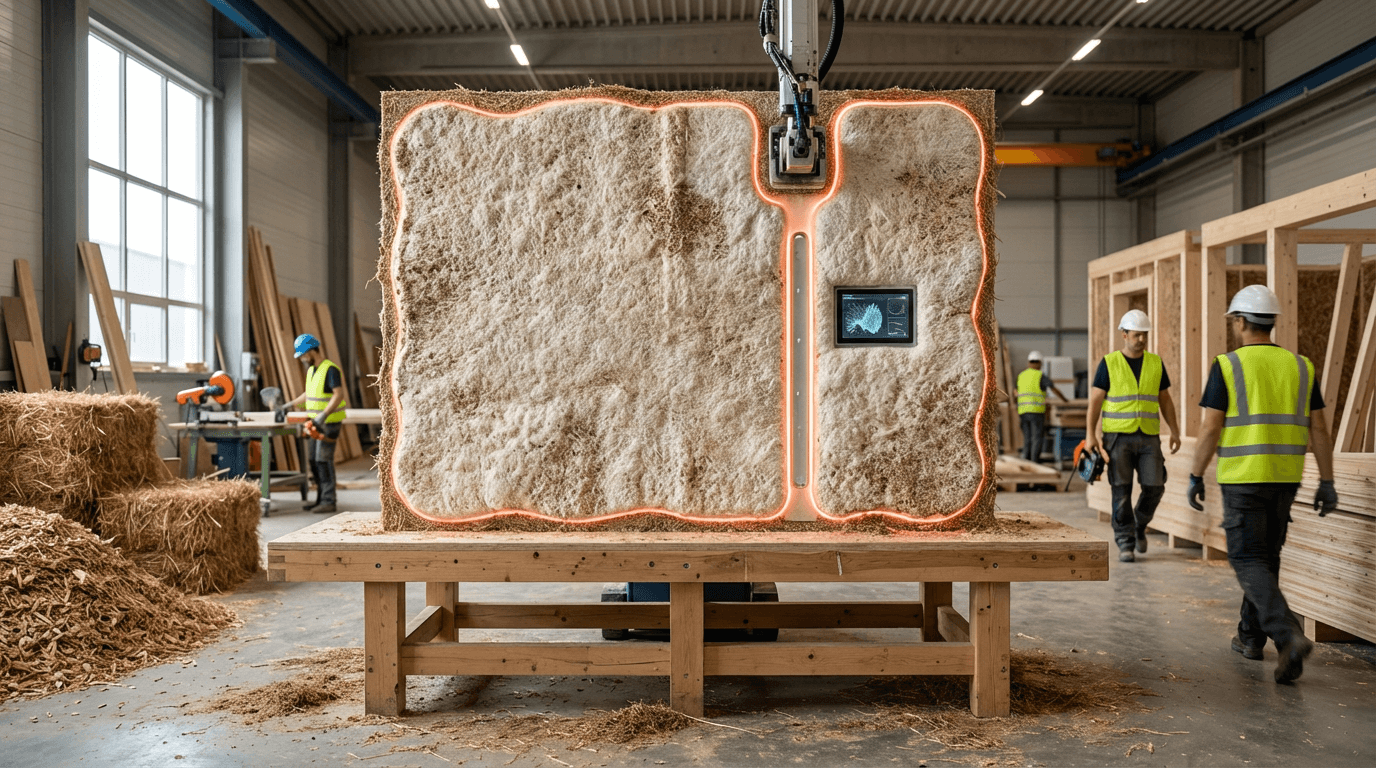
Mycelium & Biobased Composites
Mycelium-based composites represent a radical departure from conventional construction materials by harnessing the natural growth patterns of fungal networks. The technology works by combining agricultural waste substrates—such as corn stalks, rice husks, or sawdust—with mycelium, the thread-like root structure of mushrooms. When inoculated into shaped molds, the mycelium colonizes the organic matter over several days, binding the particles together through a dense network of hyphae. The growth process occurs at room temperature without energy-intensive manufacturing, and once the desired density is achieved, the material is heat-treated to halt growth and create a stable, lightweight composite. These bio-composites can be engineered to achieve specific properties by varying substrate composition, mycelium species, and growth conditions, resulting in materials with different densities, thermal properties, and structural characteristics suitable for diverse construction applications.
The construction industry faces mounting pressure to reduce its substantial carbon footprint, with building materials accounting for a significant portion of global greenhouse gas emissions. Mycelium composites address this challenge by offering a carbon-negative alternative to petroleum-based insulation foams and energy-intensive materials like concrete and plastic formwork. The production process sequesters carbon as the mycelium grows, while the agricultural waste substrates would otherwise decompose or be burned, releasing stored carbon. Beyond insulation and acoustic panels, these materials are finding applications as temporary formwork that can biodegrade on-site after concrete curing, eliminating disposal logistics and landfill waste. The technology also enables new circular economy models within construction, where materials can be composted at end-of-life to regenerate soil rather than contributing to demolition waste streams. This capability is particularly valuable for temporary structures, exhibition spaces, and interior fit-outs that undergo frequent renovation cycles.
Early commercial deployments have demonstrated the viability of mycelium composites in real-world construction projects, particularly in Europe where stringent environmental regulations and green building certifications drive adoption. Pilot projects have incorporated mycelium-based insulation panels in residential developments and used fungal formwork in concrete casting operations, with results indicating comparable thermal performance to conventional materials while achieving superior environmental metrics. When combined with other bio-based materials like hempcrete—a mixture of hemp fibers and lime binder—and bamboo fiber reinforcements, these composites can address multiple building envelope requirements simultaneously. Research initiatives are exploring enhanced fire resistance through mineral treatments and improved moisture management for exterior applications. As building codes evolve to accommodate bio-based materials and manufacturers scale production capabilities, mycelium composites are positioned to transition from niche applications to mainstream construction solutions, particularly in markets prioritizing embodied carbon reduction and regenerative design principles that align with broader sustainability goals in the built environment.
Related Organizations

A biomanufacturing company using mycelium for construction, researching the thermal and acoustic sensing properties of their materials.

The pioneer of mycelium technology, developing the 'MycoComposite' platform used to grow sustainable building materials and packaging.

A joint research initiative between Newcastle University and Northumbria University.

Develops mycelium-based materials for interior design and is researching 'smart' fungal materials that respond to the environment.
A biotechnology company developing carbon-negative insulation materials using mycelium and waste paper pulp.

An Autodesk Studio that designed the 'Hy-Fi' tower at MoMA PS1, the first large-scale structure made of mycelium bricks.

A licensee of Ecovative's technology in Europe, producing mycelium packaging and interior design products.
Redhouse Studio
United States · Company
An architecture firm researching 'biotecture', including using mycelium to bind biomass for structures on Earth and Mars (NASA partner).

Dutch biotech startup growing living coffins and urns from mycelium, with R&D into other structural applications.
A large-scale manufacturer of mycelium-based biodegradable packaging.
Supporting Evidence
Research this in Signals
Signals turns a topic into a sourced research record you can inspect and rerun. Your first scan is free, and this one starts with Mycelium & Biobased Composites already loaded, so edit it or scan as is.