Lunar & Martian Construction Technologies
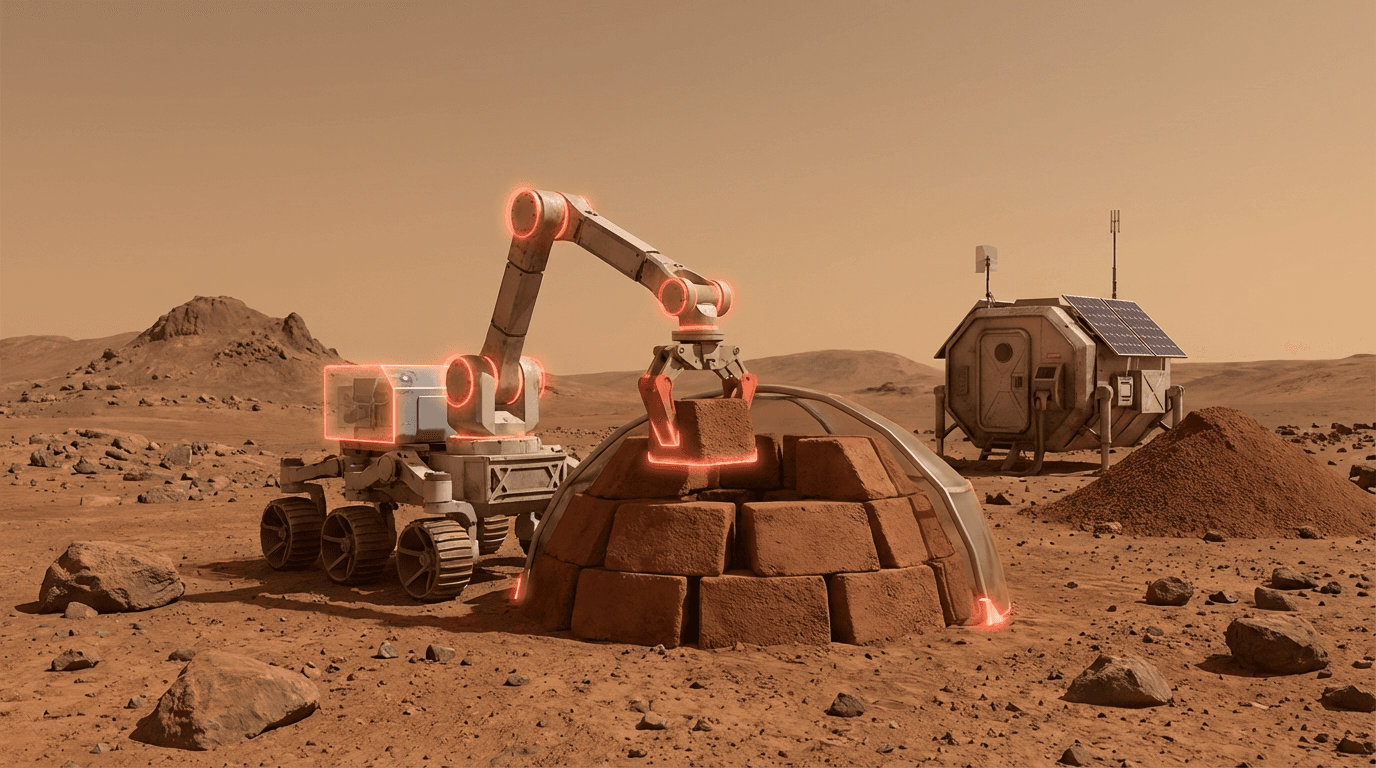
The challenge of establishing permanent human settlements beyond Earth demands a radical rethinking of construction methodologies. Traditional approaches that rely on transporting materials from Earth are prohibitively expensive, with launch costs making every kilogram of payload a critical constraint. Lunar and Martian construction technologies address this fundamental problem through in-situ resource utilization (ISRU), which leverages locally available materials—primarily regolith, the loose rocky soil covering planetary surfaces—to create structural components. The technical foundation rests on several key innovations: robotic 3D printing systems that can sinter or bind regolith using microwave energy, solar concentrators, or chemical binders; inflatable habitat modules that provide pressurized living spaces while minimizing launch mass; and autonomous construction systems capable of operating with minimal human supervision across communication delays of up to 22 minutes for Mars. These technologies must withstand extreme temperature fluctuations, intense radiation, micrometeorite impacts, and the abrasive nature of regolith itself, while maintaining structural integrity in low-gravity environments with vastly different atmospheric conditions than Earth.
The construction industry on Earth faces its own set of formidable challenges: labor shortages, hazardous working conditions, material waste, and the environmental impact of cement production, which accounts for approximately 8% of global carbon emissions. Extraterrestrial construction research directly addresses these terrestrial concerns by pioneering automated building processes that reduce human exposure to dangerous environments, developing binder systems that require minimal water and energy, and creating construction workflows optimized for resource scarcity. The necessity of teleoperation and autonomous robotics for space applications is accelerating the development of construction automation technologies that can operate in remote or hazardous locations on Earth—from disaster zones to deep-sea installations. Furthermore, the extreme design constraints of space habitats are driving innovations in structural optimization, material science, and modular construction that promise to make terrestrial building more efficient and sustainable.
Research institutions and space agencies are currently conducting analog missions in extreme terrestrial environments, testing regolith-processing equipment and construction robotics in settings that approximate lunar and Martian conditions. Early demonstrations have shown that microwave sintering can create brick-like building blocks from simulated regolith, while robotic systems are being refined to perform repetitive construction tasks with increasing autonomy. The knowledge gained from designing structures to withstand month-long lunar nights at -173°C or Martian dust storms is already informing the development of disaster-resistant housing and extreme-climate construction on Earth. As commercial space ventures accelerate and national space programs target sustained lunar presence within the next decade, the convergence of space construction research with terrestrial building challenges is creating a bidirectional technology transfer. The innovations born from the necessity of building on other worlds—advanced robotics, sustainable material processing, and resilient structural design—are poised to transform how we construct buildings in Earth's most challenging environments, from polar research stations to rapidly deployable emergency shelters, ultimately contributing to more sustainable and automated construction practices across the industry.
Related Organizations

Architecture and technology firm that won NASA's 3D Printed Habitat Challenge with 'MARSHA', a vertical Martian habitat design.

Construction technology company using 3D printing robotics, software, and advanced materials.

Hosts the Center for Space Resources, a leading academic hub for ISRU research and education.

Provides in-space 3D printing and bioprinting capabilities, having acquired Made In Space and Techshot.

SEArch+ (Space Exploration Architecture)
United States · Company
A startup focused on developing human-supporting concepts for space exploration.

Architecture firm partnering with ICON and NASA on Project Olympus to design the layout and structure of 3D printed lunar bases.

Global architecture firm collaborating with ESA and NASA on lunar habitation concepts involving 3D printing with regolith.

Honeybee Robotics
United States · Company
Develops advanced robotic systems for planetary exploration, specifically drilling and sampling tools essential for extracting subsurface ice and regolith.


Major construction firm researching the 'Luna Ring' concept and robotic lunar construction methods.
Supporting Evidence
Research this in Signals
Signals turns a topic into a sourced research record you can inspect and rerun. Your first scan is free, and this one starts with Lunar & Martian Construction Technologies already loaded, so edit it or scan as is.