Dual-Use Risk in Construction & Robotics
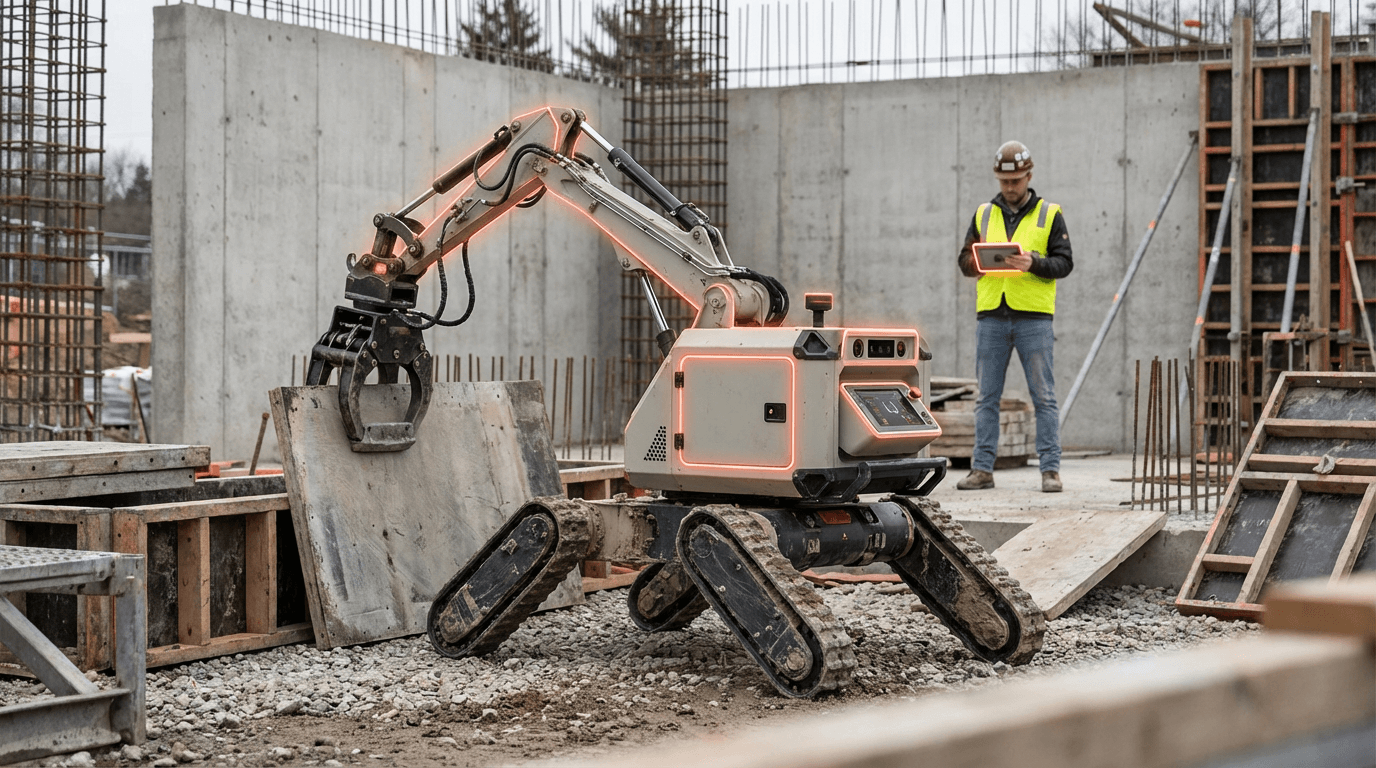
The rapid advancement of construction technologies—ranging from autonomous heavy machinery and industrial drones to large-scale 3D printing systems—has introduced a complex challenge at the intersection of innovation and security. These technologies, designed to build infrastructure, streamline logistics, and improve efficiency on construction sites, possess inherent characteristics that make them adaptable for military or surveillance purposes. Autonomous excavators and bulldozers, for instance, can be repurposed to construct military fortifications or defensive barriers in conflict zones. Similarly, industrial drones equipped with mapping and surveying capabilities can be converted into surveillance platforms, while large-format 3D printers capable of producing concrete structures could theoretically manufacture bunkers, weapon components, or other military infrastructure. The core technical challenge lies in the fact that the same sensors, control systems, and material processing capabilities that make these tools valuable for civilian construction also make them attractive for security and defense applications.
This dual-use potential creates significant ethical and regulatory dilemmas for construction technology manufacturers, exporters, and policymakers. The industry must grapple with questions of accountability when technologies developed for peaceful purposes are diverted to military use or employed by authoritarian regimes to build surveillance infrastructure that suppresses civil liberties. Traditional construction equipment has always had some dual-use potential, but the integration of artificial intelligence, autonomous navigation, and advanced manufacturing capabilities has dramatically expanded the range of possible military applications. This concern is particularly acute when technologies are exported to regions experiencing political instability or human rights concerns, where the line between civilian infrastructure development and military capability enhancement becomes increasingly blurred. The challenge is compounded by the global nature of construction supply chains and the difficulty of monitoring end-use once equipment leaves the manufacturer's control.
In response to these risks, industry stakeholders and regulatory bodies are developing frameworks that balance innovation with security concerns. Export control regimes are being updated to include advanced construction robotics and additive manufacturing systems, requiring licenses for shipments to certain countries or end-users. Some manufacturers are implementing use-case restrictions through software limitations, geofencing capabilities, or hardware designs that make military adaptation more difficult without compromising civilian functionality. Research suggests that ethical design principles—such as transparency in capability disclosure, collaboration with security experts during development, and proactive engagement with international regulatory bodies—can help mitigate dual-use risks without stifling technological progress. As construction automation continues to advance and becomes more accessible globally, the industry faces an ongoing responsibility to anticipate potential misuse scenarios and develop governance structures that protect both innovation and international security. This challenge reflects a broader trend across emerging technologies, where the boundary between civilian and military applications grows increasingly porous, demanding new approaches to responsible development and deployment.
Related Organizations

Famous for Spot and Atlas, now integrating reinforcement learning for dynamic movement.

The world's largest drone manufacturer, producing consumer and enterprise drones with advanced obstacle avoidance and automated flight modes.

Develops the Vision 60 Q-UGV, a durable quadruped robot focused on defense, homeland security, and enterprise inspection.

A division of the School of Computer Science at Carnegie Mellon University, known for its research in robotics.

Construction technology company using 3D printing robotics, software, and advanced materials.

International institute dedicated to research into conflict, armaments, arms control and disarmament.

Built Robotics
United States · Startup
Creates the Exosystem, an aftermarket kit that transforms heavy construction equipment like excavators into autonomous robots.

Develops highly advanced powered exoskeletons like the Guardian XO for heavy lifting.

Digital rights group advocating for privacy in emerging technologies, including BCI and mental privacy.

Builds software that empowers organizations to integrate their data, decisions, and operations (Foundry and AIP).
Supporting Evidence
Research this in Signals
Signals turns a topic into a sourced research record you can inspect and rerun. Your first scan is free, and this one starts with Dual-Use Risk in Construction & Robotics already loaded, so edit it or scan as is.