Climate Adaptation & Resilience Scenario Modeling
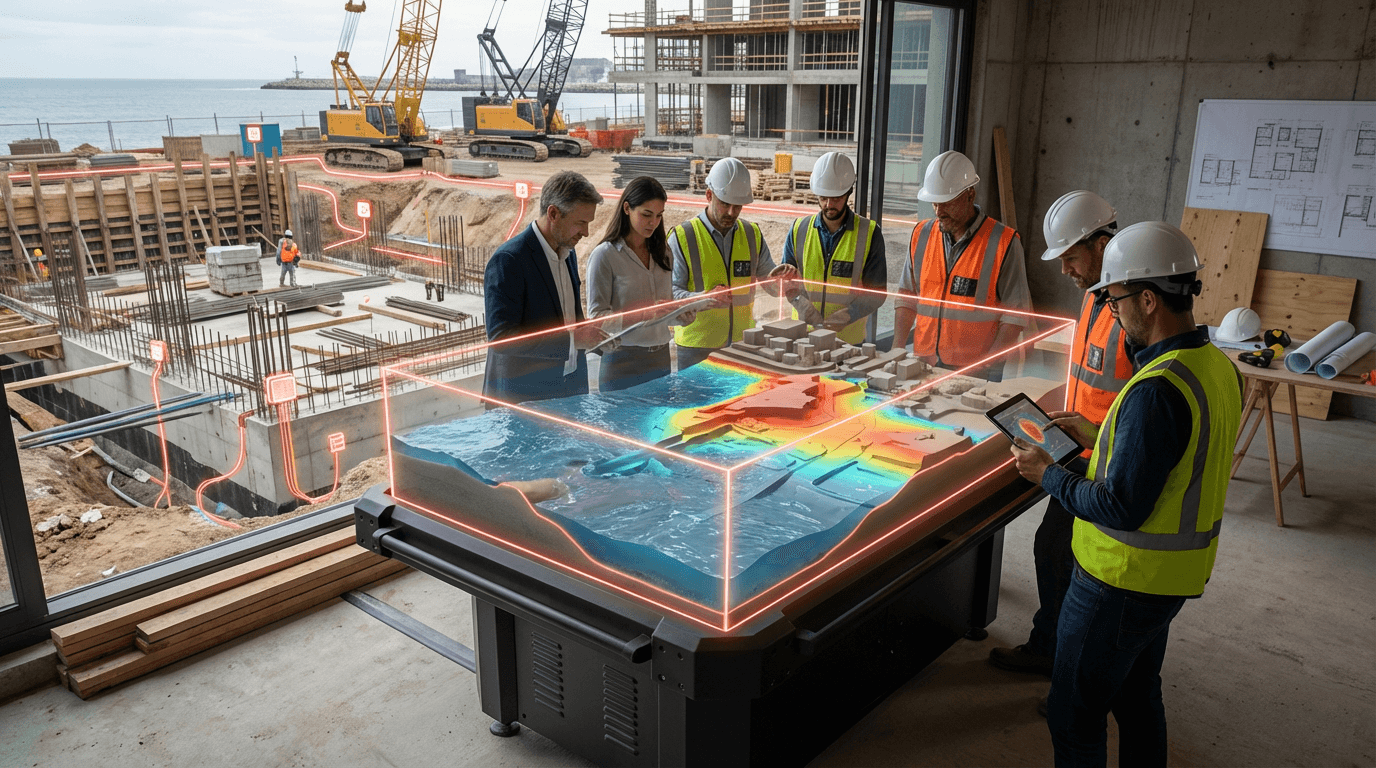
Climate adaptation and resilience scenario modeling represents a sophisticated computational approach that integrates multiple data streams—climate projections, hydrological models, structural engineering parameters, and historical hazard data—to assess how buildings and infrastructure will perform under future environmental stresses. These platforms synthesize outputs from global climate models with local topography, soil conditions, and built environment characteristics to generate probabilistic forecasts of flood depth, heat exposure, wildfire spread patterns, and wind loading from intensifying storms. The technical architecture typically combines geographic information systems with physics-based simulations that account for variables such as sea-level rise trajectories, changing precipitation patterns, urban heat island effects, and vegetation dynamics. By running thousands of scenarios across different emissions pathways and time horizons, these tools produce risk profiles that quantify potential damage, operational disruption, and safety implications for specific sites and building typologies.
The construction and real estate industries face mounting pressure to demonstrate climate resilience as extreme weather events become more frequent and severe. Traditional design standards, often based on historical climate data, no longer provide adequate guidance for projects expected to operate for decades in rapidly changing conditions. This modeling capability addresses a critical gap by enabling developers, architects, and engineers to evaluate adaptation measures before breaking ground—whether that means elevating foundations above projected flood levels, incorporating passive cooling strategies to reduce heat stress, specifying fire-resistant cladding and defensible space in wildfire-prone areas, or reinforcing structures against higher wind speeds. Insurance underwriters increasingly require these assessments to price policies accurately, while lenders use resilience modeling to evaluate long-term asset value and default risk. Permitting authorities in vulnerable jurisdictions are beginning to mandate climate risk disclosures, making these tools essential for regulatory compliance and project approval.
Early adoption has concentrated in coastal metropolitan areas facing sea-level rise and storm surge, California communities navigating wildfire exposure, and flood-prone regions where traditional insurance markets are retreating. Major infrastructure projects—from transportation networks to energy facilities—now routinely incorporate scenario modeling into feasibility studies and design development. The technology is also informing portfolio-level decisions for institutional real estate investors seeking to understand climate exposure across hundreds of properties. As regulatory frameworks evolve and stakeholder expectations shift, scenario modeling is transitioning from a specialized risk assessment tool to a standard component of due diligence and design practice. This trajectory reflects a broader industry recognition that climate adaptation is not merely an environmental consideration but a fundamental determinant of project viability, operational continuity, and long-term financial performance in an era of accelerating environmental change.
Related Organizations

Argonne National Laboratory
United States · Research Lab
U.S. Department of Energy multidisciplinary science and engineering research center.

Provides climate risk analytics using cloud computing and AI to model extreme weather risks for asset planning.

Climate X
United Kingdom · Startup
Provides financial insights into climate risks, calculating the impact of extreme weather on asset valuations.

Resilience-as-a-Service solution for disaster prediction.

Provides an urban intelligence platform that analyzes data to assist governments and utilities in planning for climate, energy, and community resilience.

Arup
United Kingdom · Company
A multinational professional services firm dedicated to sustainable development, known for pioneering the use of BIM in complex engineering projects.

Owner of the Arnold renderer, which integrates AI denoising to optimize high-end VFX workflows for film and TV.
Uses satellite data and AI to create climate risk models for financial institutions and supply chains.

Uses AI to model property risk from wildfires, hail, and storms for insurers and real estate.

Spun out of Cambridge University, providing a platform for companies to assess climate transition and physical risks.
Supporting Evidence
Research this in Signals
Signals turns a topic into a sourced research record you can inspect and rerun. Your first scan is free, and this one starts with Climate Adaptation & Resilience Scenario Modeling already loaded, so edit it or scan as is.