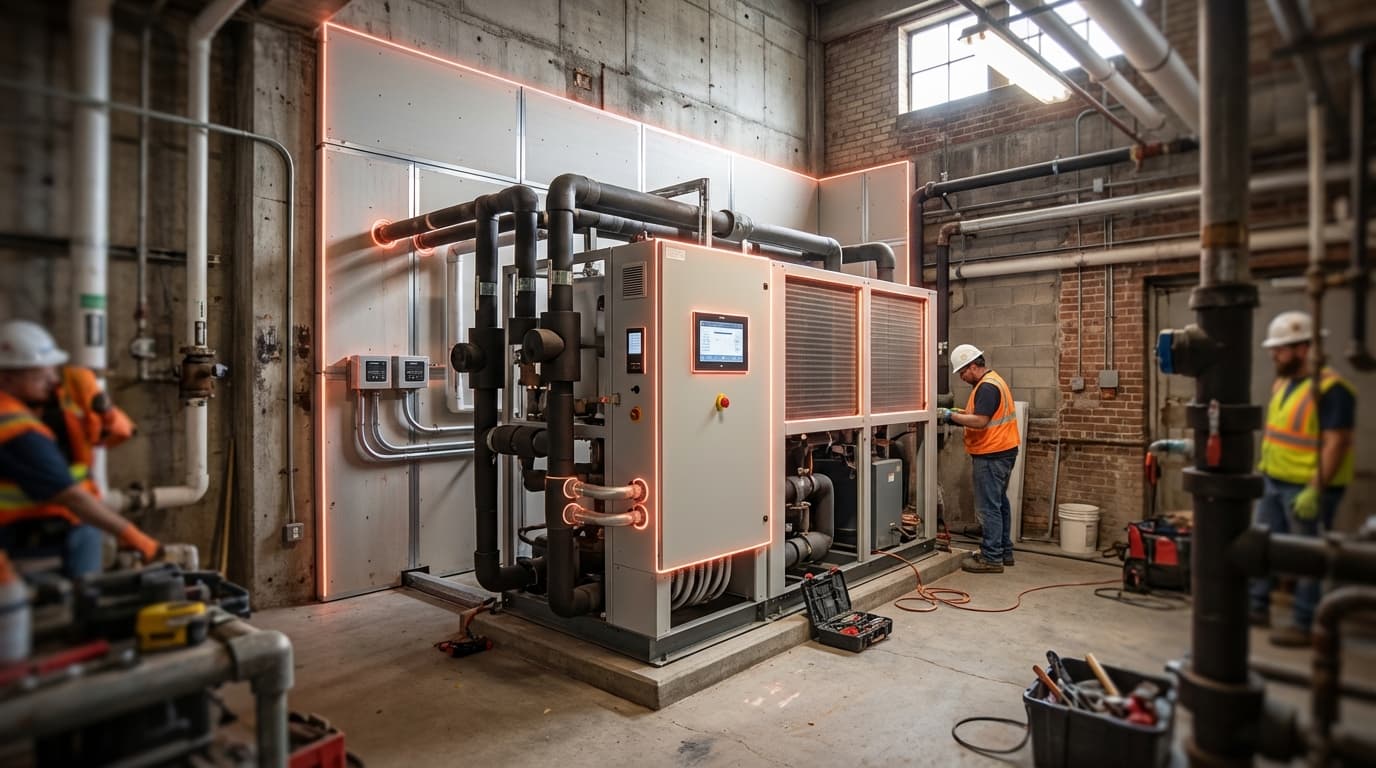
Deep Retrofit & Building Electrification
Deep retrofit and building electrification represents a comprehensive approach to transforming the energy performance of existing structures through the coordinated deployment of multiple building systems. Unlike traditional renovation projects that address individual components in isolation, this methodology integrates prefabricated envelope improvements, electric heat pump systems, and intelligent building controls into unified packages designed for rapid installation. The technical foundation rests on several key innovations: factory-built insulated panels that can be attached to existing building exteriors with minimal disruption to occupants, air-source or ground-source heat pumps that replace fossil fuel heating systems, and smart thermostats and sensors that optimize energy use based on occupancy patterns and weather conditions. These components work synergistically—improved building envelopes reduce heating and cooling loads, making smaller, more efficient heat pumps viable, while advanced controls ensure these systems operate at peak efficiency. The industrialized nature of these solutions, with components manufactured off-site and assembled rapidly on location, fundamentally changes the economics and logistics of building upgrades that were previously too expensive or disruptive to undertake at scale.
The construction industry faces an urgent decarbonization challenge, as the vast majority of buildings that will exist in 2050 are already standing today. Traditional approaches to building renovation—piecemeal upgrades executed by multiple contractors over extended timelines—have proven too slow, expensive, and disruptive to achieve the pace of emissions reductions required by climate targets. Deep retrofit programs address these barriers by treating building upgrades as a manufacturing and logistics challenge rather than purely a construction problem. This shift enables standardized quality control, predictable pricing, and dramatically shortened installation timelines, sometimes completing whole-building retrofits in days rather than months. The integration of electrification is particularly crucial, as it eliminates on-site fossil fuel combustion while positioning buildings to benefit from an increasingly renewable electricity grid. These programs also unlock new financing mechanisms, as the predictable energy savings from standardized packages make them more attractive to lenders and enable innovative models like on-bill financing or energy service agreements that remove upfront cost barriers for building owners.
Early deployment programs in Europe and North America demonstrate the viability of this approach, with pilot initiatives achieving installation rates several times faster than conventional renovations while maintaining quality standards. Multifamily residential buildings represent a particularly promising application, as their repetitive layouts allow for maximum standardization of retrofit components. The model is also gaining traction in social housing portfolios, where public entities can aggregate demand across hundreds or thousands of units to achieve economies of scale. Looking forward, the success of deep retrofit programs will depend heavily on workforce development, as the construction industry must train installers in new techniques and technologies while managing the transition away from fossil fuel-based trades. The convergence of regulatory pressure through building performance standards, falling costs for heat pumps and prefabricated components, and growing awareness of indoor air quality benefits positions deep retrofit and electrification as a cornerstone strategy for decarbonizing the built environment. As these programs mature and scale, they represent not just a technical solution but a fundamental restructuring of how the construction industry approaches existing building stock.
Related Organizations
Market development team that sets the standard for industrialized, net-zero energy retrofits.

A German startup offering industrial, serial renovation of apartment buildings using prefabricated facade elements.

A climate tech startup that trains and hires local workforces in underserved communities to install heat pumps and green building tech.

NYSERDA
United States · Government Agency
New York State Energy Research and Development Authority.

An independent research institute that developed the Passive House Standard, a precursor and key enabler for zero-energy buildings.

Uses robots to apply insulation under suspended floors in existing buildings.

A non-partisan nonprofit transforming global energy use, heavily involved in retrofitting for net-zero energy (Realize initiative).

Provides Energy-as-a-Service, funding and installing energy-saving retrofits (lighting, HVAC) monitored by their data platform.

Home wellness company that finances and manages home weatherization and electrification projects.
Aeroseal
United States · Company
Provides technology to seal air ducts and building envelopes from the inside using aerosolized particles.

Kelvin
United States · Startup
Formerly Radiator Labs, they produce 'The Cozy', an insulated smart cover for old steam radiators to control heat distribution.
Supporting Evidence
Research this in Signals
Signals turns a topic into a sourced research record you can inspect and rerun. Your first scan is free, and this one starts with Deep Retrofit & Building Electrification already loaded, so edit it or scan as is.