Autonomous Site Logistics
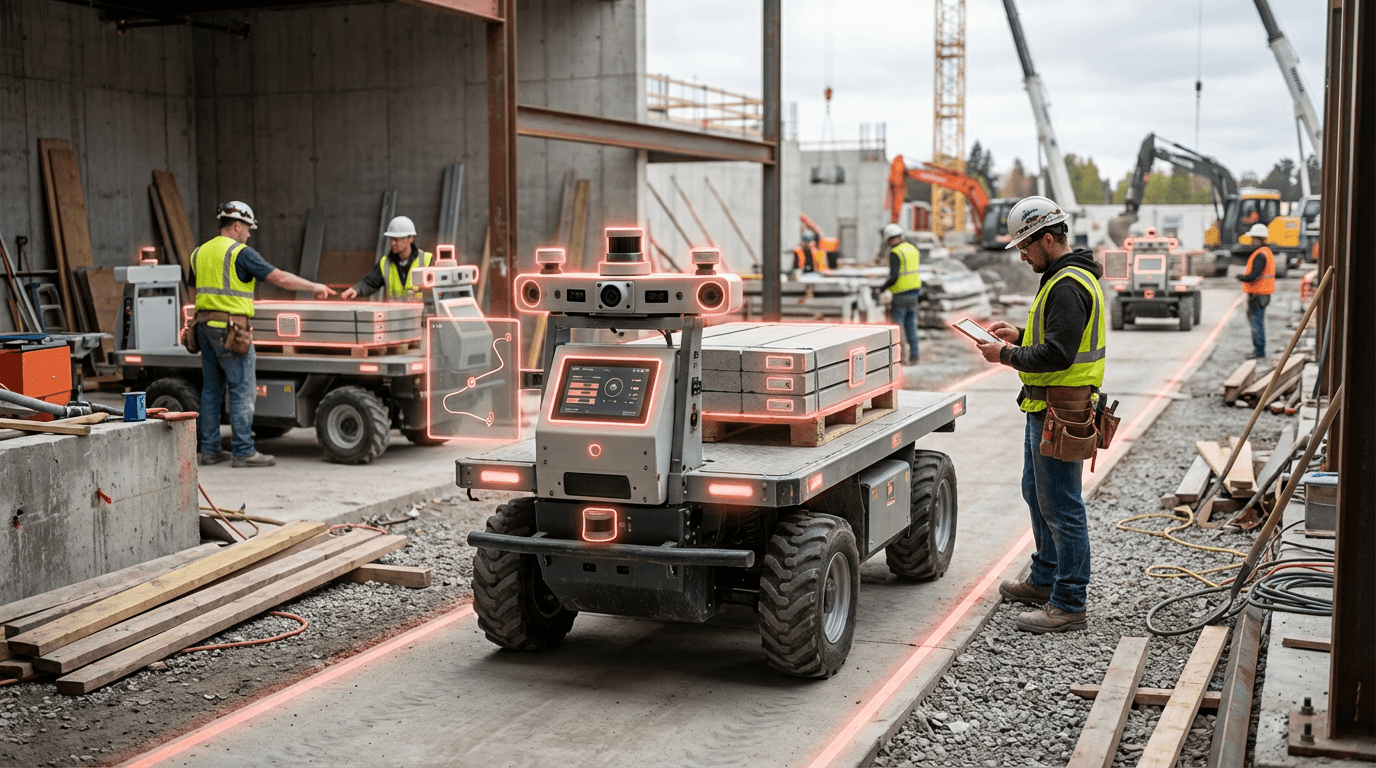
Construction sites are inherently complex environments where materials, equipment, and workers must coordinate across limited space and tight schedules. Traditional logistics approaches rely heavily on manual tracking, radio communication, and experience-based decision-making, leading to frequent bottlenecks when materials arrive at the wrong time, get misplaced in crowded staging areas, or block access routes for other trades. Research suggests that construction workers spend up to 30% of their time searching for materials or waiting for deliveries, representing a substantial drain on productivity and project timelines. Autonomous site logistics addresses these inefficiencies by integrating real-time tracking technologies—such as RFID tags, ultra-wideband (UWB) sensors, and GPS—with intelligent routing algorithms and robotic material handling systems. These technologies work in concert to create a dynamic map of material locations, predict delivery needs based on construction schedules, and coordinate the movement of supplies through geofenced zones that prevent conflicts between different activities.
The construction industry faces mounting pressure to deliver projects faster and within tighter budgets, particularly in dense urban environments where staging space is severely limited and road access is restricted to specific time windows. Autonomous site logistics systems solve these challenges by optimizing the flow of materials from delivery trucks to final installation points, reducing the need for multiple handling steps and minimizing the footprint required for temporary storage. Autonomous guided vehicles (AGVs) and smart carts can navigate construction sites using sensor fusion and pre-mapped routes, transporting materials directly to where trades need them without requiring dedicated operators. This capability is especially valuable on high-rise projects or renovations where elevator access is constrained and manual material movement is both time-consuming and physically demanding. By reducing congestion in circulation paths and eliminating the need for workers to leave their tasks to locate supplies, these systems enable trades to maintain continuous workflow and improve overall site safety by reducing foot traffic in active work zones.
Early deployments of autonomous site logistics have primarily occurred on large-scale commercial and infrastructure projects where the investment in tracking infrastructure and robotic equipment can be justified by significant time savings. Pilot programs indicate that integrated logistics platforms can reduce material search time by over 50% and decrease the number of delivery-related delays, though widespread adoption remains limited by the initial cost of sensors and autonomous vehicles. The technology shows particular promise for modular construction and prefabrication workflows, where precise coordination between off-site manufacturing and on-site assembly is critical. As construction sites become increasingly digitized through Building Information Modeling (BIM) integration and Internet of Things (IoT) sensors, autonomous logistics systems are expected to evolve into essential components of smart construction management, enabling just-in-time delivery strategies that mirror manufacturing best practices and supporting the industry's broader shift toward lean construction methodologies.
Related Organizations

Major international builder of heavy equipment.

World's leading manufacturer of construction and mining equipment.

Provides autonomous vehicle software for mining and construction equipment.

Builds autonomous collaborative robots that follow pickers and carry produce in vineyards and nurseries.

Turns construction equipment into semi-autonomous robots controlled remotely.

Construction technology platform that revolutionizes equipment fleet operations with tracking and logistics software.

IoT services provider for the construction industry, focusing on telematics and asset tracking.

French robotics company creating collaborative 'follow-me' robots for logistics and order picking, applicable to site materials.

Developer of the 'Honda Mobile Power Pack', a standardized swappable battery for motorcycles and small mobility devices.

Specializes in rugged mobile robotics platforms (Husky, Ridgeback) that are frequently integrated with robotic arms for research and industrial prototyping.
Supporting Evidence
Research this in Signals
Signals turns a topic into a sourced research record you can inspect and rerun. Your first scan is free, and this one starts with Autonomous Site Logistics already loaded, so edit it or scan as is.