Construction Site Air Quality & Community Health
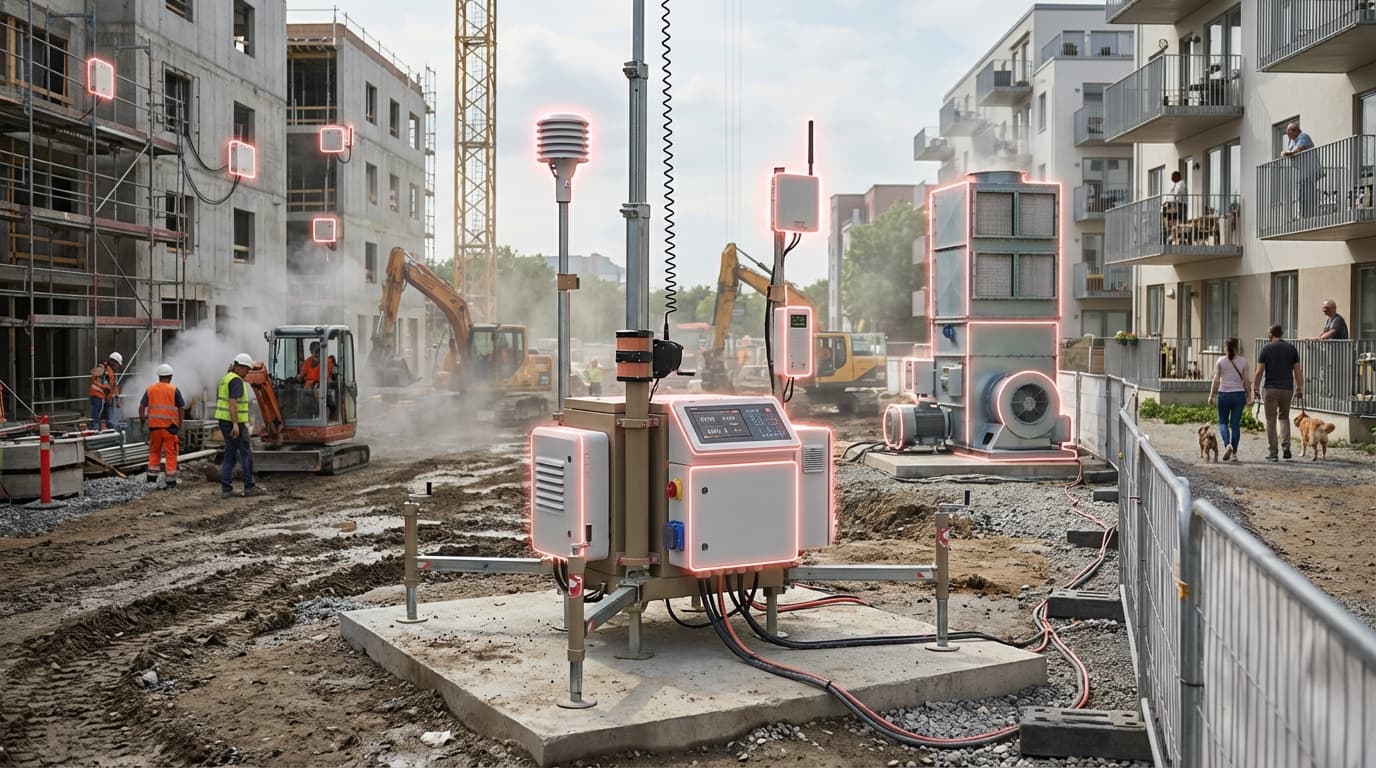
Construction sites have long been recognized as significant sources of localized air pollution, generating particulate matter (PM2.5 and PM10), nitrogen oxides (NOx) from diesel equipment, and volatile organic compounds (VOCs) from paints, solvents, and adhesives. The technical challenge lies in the dispersed, temporary nature of construction activities, which makes traditional fixed-location air quality monitoring inadequate. Modern approaches combine low-cost sensor networks deployed at site perimeters with real-time data transmission to cloud platforms, enabling continuous tracking of pollutant concentrations. These systems typically measure multiple parameters simultaneously—particulate matter through optical scattering methods, gas concentrations via electrochemical sensors, and meteorological conditions to model dispersion patterns. Advanced implementations integrate this monitoring data with construction schedules and equipment logs, allowing project managers to identify specific activities or machinery contributing to pollution spikes and adjust operations accordingly.
The construction industry faces mounting pressure to address its environmental footprint, particularly in urban areas where sites often sit adjacent to residential neighborhoods, schools, and healthcare facilities. Research indicates that communities near active construction experience elevated exposure to harmful pollutants, with effects ranging from respiratory irritation to cardiovascular complications, especially among vulnerable populations including children, elderly residents, and those with pre-existing health conditions. This issue intersects directly with environmental justice concerns, as construction projects in lower-income neighborhoods have historically proceeded with less stringent oversight and fewer mitigation measures. Air quality monitoring addresses these inequities by creating accountability mechanisms and enabling evidence-based interventions. When pollution thresholds are exceeded, automated systems can trigger responses such as increased dust suppression through water spraying, temporary work stoppages, or equipment substitutions. This technology also supports regulatory compliance as jurisdictions increasingly mandate environmental performance standards, with some cities requiring continuous monitoring as a condition for building permits.
Early adoption of comprehensive air quality management systems has been driven by regulatory frameworks in jurisdictions with strong environmental justice policies, where construction projects must demonstrate community health protection measures. These systems are evolving beyond simple compliance tools into integrated platforms that combine monitoring with predictive analytics, using historical data and weather forecasts to anticipate high-pollution periods and proactively adjust construction schedules. The transition toward electric construction equipment—from excavators to concrete mixers—further reduces on-site emissions, particularly NOx from diesel combustion. Community notification features represent another critical development, with some platforms providing real-time air quality data to nearby residents through mobile applications or public dashboards, fostering transparency and enabling individuals to make informed decisions about outdoor activities. As urban densification continues and construction activity intensifies in populated areas, these monitoring and mitigation systems are likely to become standard practice rather than exceptional measures, fundamentally reshaping how the industry balances productivity with public health responsibilities and contributing to broader smart city initiatives that prioritize livability alongside development.
Related Organizations

Manufacturer of portable and fixed air quality monitoring systems for industrial and environmental applications.

The clean air agency in the government of California.

A global leader in the manufacture and supply of industrial hygiene and environmental monitoring equipment.


The devolved regional governance body of London.

Provides air quality monitoring solutions to cities and businesses.

Developer of automated environmental monitoring instrumentation.

Manufacturer of industrial and scientific instruments.

Major international builder of heavy equipment.

Supporting Evidence
Research this in Signals
Signals turns a topic into a sourced research record you can inspect and rerun. Your first scan is free, and this one starts with Construction Site Air Quality & Community Health already loaded, so edit it or scan as is.