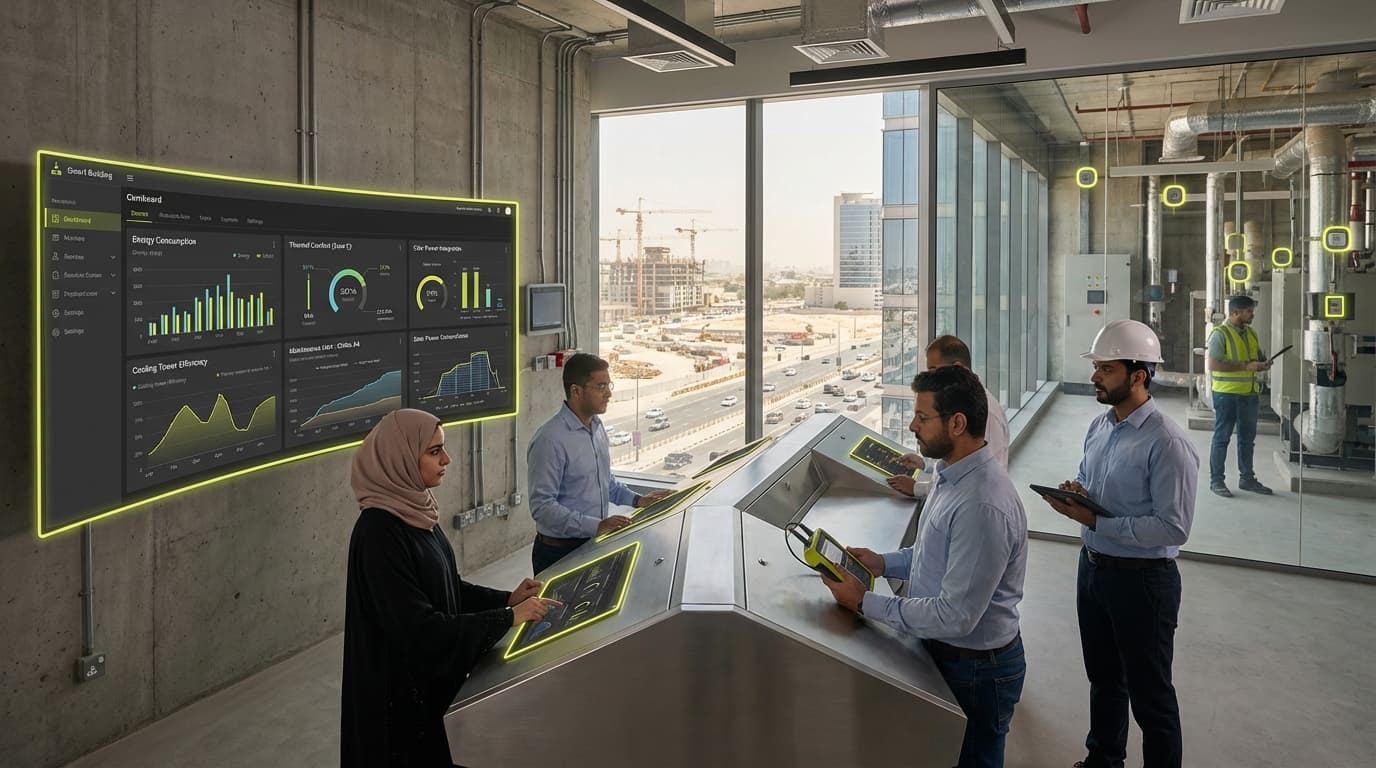
Smart Building Management Systems
Smart building management systems represent a strategic response to the dual pressures of extreme climate conditions and sustainability mandates facing Gulf urban development. In regions where cooling accounts for up to 70% of building energy consumption and outdoor temperatures regularly exceed 45°C, traditional building controls prove inadequate for both operational efficiency and environmental targets. These AI-driven platforms address a fundamental challenge: how to maintain occupant comfort and building performance while dramatically reducing energy consumption and operational costs. The transition from reactive, schedule-based controls to predictive, adaptive systems marks a significant shift in how buildings respond to environmental conditions, occupancy patterns, and equipment performance. This matters particularly in the GCC context, where rapid construction, ambitious sustainability frameworks like UAE's Estidama and Saudi Arabia's Mostadam, and high energy subsidies create both pressure and opportunity for intelligent building operations.
The technology operates through integrated sensor networks, machine learning algorithms, and automated control systems that continuously optimize HVAC, lighting, and other building functions based on real-time conditions and predicted patterns. Early deployments in premium commercial and residential developments demonstrate energy reductions of 20-40%, with some implementations reporting even higher savings during peak cooling periods. The systems learn from occupancy data, weather forecasts, and equipment performance history to adjust operations proactively rather than reactively. Industry analysts note growing integration with district cooling networks, which serve multiple buildings across Gulf cities, enabling optimization at both building and network scales. Pilot projects increasingly incorporate predictive maintenance capabilities, using equipment sensor data to identify potential failures before they occur, reducing downtime and extending asset life. The pattern direction suggests movement beyond standalone building optimization toward integration with broader urban digital infrastructure, including digital twin platforms that model entire districts or developments. Regulatory frameworks are accelerating adoption, with sustainability certifications increasingly requiring smart BMS as baseline rather than premium features.
The implications extend beyond individual building performance to reshape urban energy systems and development economics. As smart BMS becomes standard in new construction, the competitive advantage shifts to integration sophistication and data utilization rather than basic automation. Developers and operators face decisions about data ownership, platform interoperability, and long-term vendor relationships as buildings become software-dependent infrastructure. The technology enables new service models, including performance-based contracts where building operators guarantee energy outcomes rather than simply providing equipment. Key monitoring points include adoption rates in mid-market developments beyond premium projects, integration standards that allow cross-platform data sharing, and the emergence of regional technology providers versus reliance on international platforms. The convergence of smart BMS with renewable energy systems, battery storage, and electric vehicle charging infrastructure will determine whether buildings evolve from passive energy consumers to active participants in flexible urban energy networks.
Related Organizations

AI-driven property operations platform that unifies building data to optimize performance and sustainability.

Multinational conglomerate operating in aerospace and building technologies.

Offers the Desigo and Building X platforms for smart building automation.

Global specialist in energy management and automation that integrates cybersecurity into its industrial hardware and software.

Johnson Controls
United States · Company
Multinational conglomerate producing HVAC and building control systems, notably the OpenBlue digital platform.
Joint venture between Veolia and Majid Al Futtaim providing energy and facilities management.

A subsidiary of DEWA (Dubai Electricity and Water Authority) providing digital solutions and IoT platforms for Dubai's smart city initiatives.

Uses autonomous AI to optimize HVAC systems in real-time, predicting thermal behavior to save energy.

IoT-based building management system that uses smart sensors and cloud computing to predictively control HVAC and lighting.

Develops hardware and software for building automation and climate control.