Predictive Maintenance & AI Asset Management
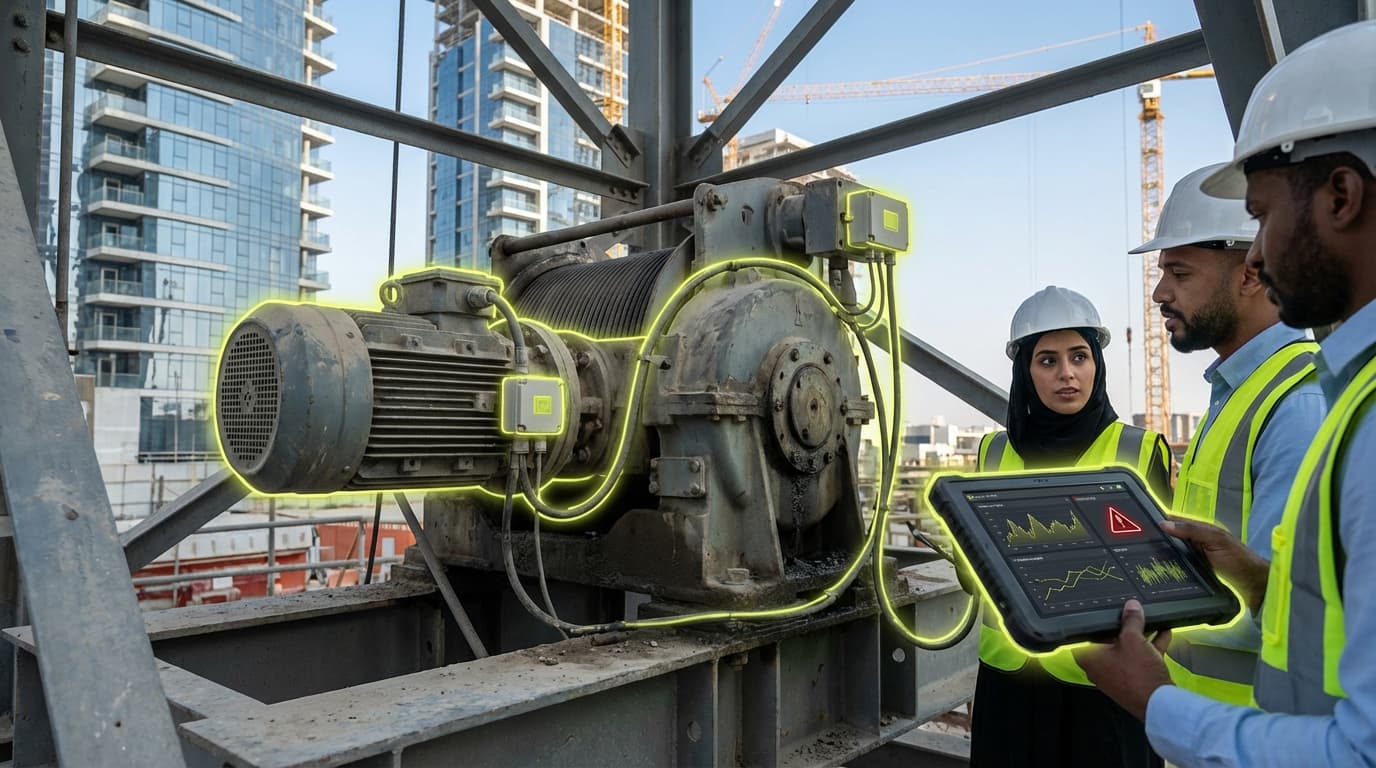
The shift from reactive repairs and calendar-based servicing to predictive, data-driven asset management represents a fundamental transformation in how buildings operate and maintain value over time. Traditional maintenance approaches—either responding to breakdowns or following rigid schedules—generate substantial inefficiencies: emergency repairs disrupt operations and incur premium costs, while scheduled maintenance often services equipment unnecessarily or misses emerging problems between intervals. Predictive maintenance addresses this challenge by continuously monitoring equipment health through sensor networks and applying machine learning algorithms to identify degradation patterns before failures occur. This approach is particularly critical in the Gulf context, where extreme temperatures place extraordinary stress on mechanical systems, accelerating wear cycles and making equipment failures both more likely and more consequential. When HVAC systems operate near-continuously in 45°C heat, the difference between scheduled and predictive intervention can mean thousands of hours of extended equipment life and significantly reduced energy consumption.
The operational model integrates multiple data streams—vibration sensors on motors, thermal imaging of electrical systems, pressure differentials in HVAC networks, and historical performance patterns—into platforms that learn normal operating signatures and flag deviations indicating impending failure. Early deployments by major facility management operators across GCC markets demonstrate measurable improvements: industry reports suggest maintenance cost reductions in the 20-30% range, primarily through eliminating emergency callouts and optimizing technician deployment. More sophisticated implementations now incorporate building management system integration, allowing predictive algorithms to account for usage patterns, occupancy data, and environmental conditions when scheduling interventions. Some platforms are beginning to extend beyond individual buildings to portfolio-level optimization, identifying patterns across similar assets and sharing learning between properties. The technology also generates secondary benefits—fewer service disruptions improve tenant satisfaction and retention, while detailed equipment health records support more accurate asset valuation and lifecycle planning.
The implications extend beyond operational efficiency to reshape facility management business models and building ownership economics. As predictive capabilities mature, they enable performance-based maintenance contracts where providers guarantee uptime rather than simply delivering scheduled services, shifting risk and aligning incentives differently. For developers and asset managers, demonstrating robust predictive maintenance infrastructure may become a differentiator in competitive leasing markets, particularly for premium commercial properties where tenant expectations around service continuity are high. Key monitoring points include the rate at which new construction incorporates sensor-ready infrastructure, the emergence of standardized data protocols enabling cross-platform analytics, and whether insurance markets begin recognizing predictive maintenance in risk assessments and premium calculations. Challenges around sensor deployment costs, data quality standards, and integration with legacy building systems remain significant barriers to widespread adoption, particularly in older building stock where retrofitting comprehensive monitoring networks may not be economically viable.
Related Organizations

AI-driven property operations platform that unifies building data to optimize performance and sustainability.

Provides 'Machine Health' solutions using vibration and magnetic sensors combined with AI to predict machine failures.
Joint venture between Veolia and Majid Al Futtaim providing energy and facilities management.

Multinational conglomerate operating in aerospace and building technologies.

Provides watsonx.governance for managing AI risk and compliance.
A global leader in the elevator and escalator industry, specializing in modernization solutions for aging buildings.
Offers the Desigo and Building X platforms for smart building automation.

Enterprise AI software provider with a dedicated suite for predictive maintenance across energy, defense, and manufacturing.

A platform for documentation and communication in construction and real estate projects, facilitating defect management and compliance reporting.

Provides cloud-based strata management software widely used in the GCC to manage service charges, meetings, and asset maintenance for large developments.