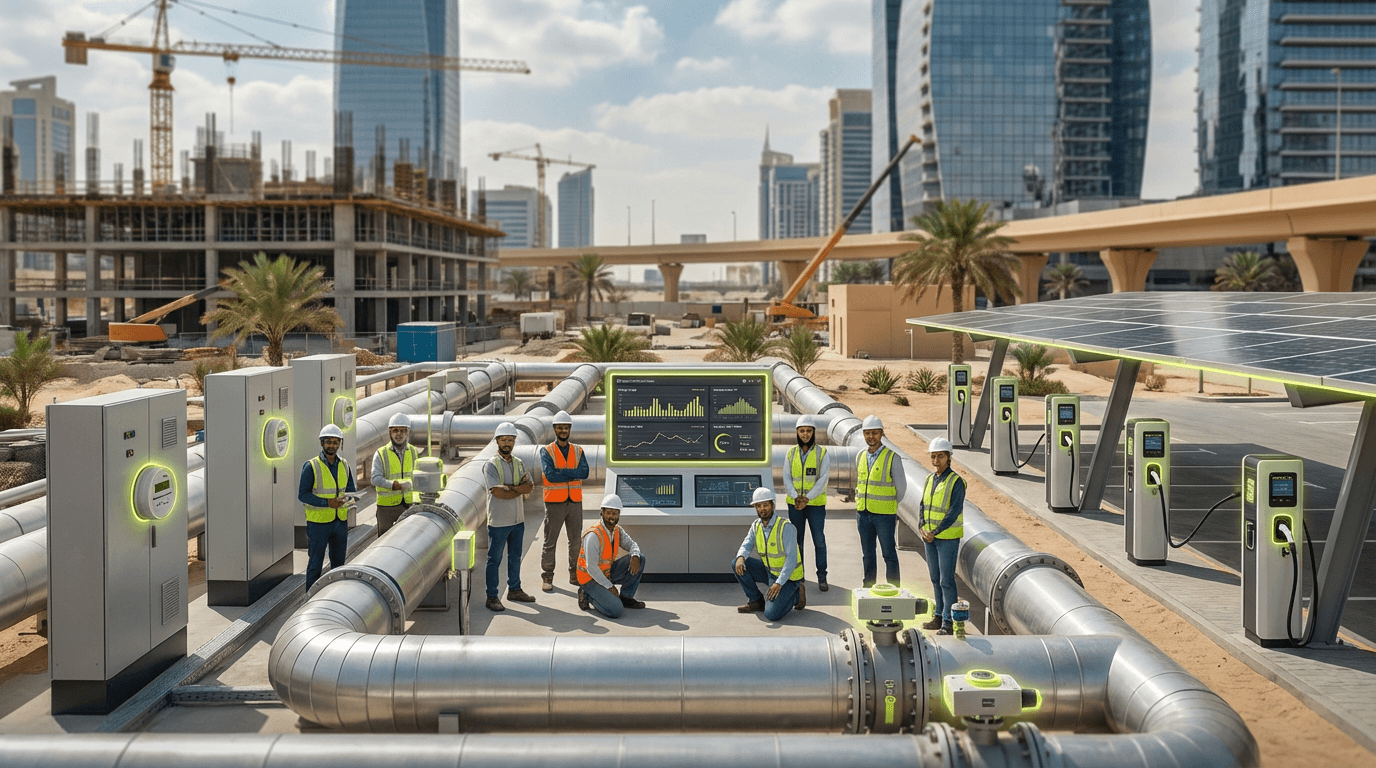
Demand Response, Smart Metering & Dynamic Tariffs
Demand response, smart metering, and dynamic tariffs represent a fundamental shift in how electricity is priced and consumed, moving away from static, flat-rate billing toward real-time price signals that reflect the true cost of generation and grid stress. This approach addresses a critical challenge in rapidly urbanizing regions: the mismatch between electricity supply and demand, particularly during extreme peak periods when air conditioning loads surge. In the Gulf, where cooling can account for 60–70 percent of building electricity use during summer months, this mismatch creates severe grid strain, necessitates expensive peaking power plants, and drives up infrastructure costs. Dynamic tariffs—whether time-of-use rates, critical peak pricing, or real-time pricing—signal scarcity to consumers and building systems, creating financial incentives to shift or reduce consumption. When paired with smart meters that capture granular usage data and automated controls that respond without manual intervention, these pricing mechanisms enable buildings to act as flexible grid assets rather than passive loads.
Early deployments in the UAE and Saudi Arabia indicate growing institutional interest in demand-side flexibility. Dubai Electricity and Water Authority (DEWA) has piloted time-of-use tariffs for select customer segments, while Saudi Arabia's Vision 2030 framework explicitly calls for smart metering rollout and demand management programs. Industry analysts note that the business case strengthens as renewable energy penetration increases—solar generation peaks midday, but cooling demand often extends into evening hours, creating a structural need for load-shifting. Automated building management systems can pre-cool thermal mass during low-price periods, adjust setpoints by one or two degrees during peak windows, or dispatch battery storage and ice-based thermal storage when grid signals indicate stress. Large residential communities, institutional portfolios, and mixed-use districts represent the most promising early adopters, as they possess both the scale to justify control infrastructure and the operational sophistication to manage complex tariff structures. However, adoption remains uneven; consumer acceptance hinges on transparent tariff design, minimal disruption to comfort, and trust that savings will materialize.
The implications for Gulf cities are significant. Widespread demand response could defer or eliminate the need for costly peaking power plants, reduce carbon intensity by avoiding fossil-fuel peakers, and lower service charges for building owners who participate. For utilities, it offers a lower-cost alternative to supply-side expansion, particularly as electric vehicle adoption accelerates and introduces new evening peaks. Key variables to monitor include the pace of smart meter deployment, the design of tariff structures (whether they provide sufficient price differentials to motivate behavior change), and the emergence of aggregator platforms that bundle flexibility across multiple buildings. Interoperability standards, cybersecurity protocols, and robust measurement and verification frameworks will determine whether demand response scales from pilot programs to grid-wide infrastructure. As Gulf nations pursue net-zero targets and grid modernization, the ability to orchestrate flexible demand at scale will become a defining feature of competitive, resilient urban energy systems.
Related Organizations

The utility provider for Dubai, which has fully deployed smart meters and operates the 'Shams Dubai' and demand response programs.
Saudi Electricity Company (SEC)
Saudi Arabia · Company
The primary electricity provider in KSA, currently rolling out millions of smart meters and introducing time-of-use tariffs.

Emirates Central Cooling Systems Corporation, the world's largest district cooling services provider.
The advanced energy services arm of Enel Group, focusing on demand response and flexibility.

A Swiss multinational corporation that provides integrated energy management solutions, focusing heavily on smart metering and grid edge intelligence.

The National Central Cooling Company, providing district cooling services that drastically reduce energy consumption compared to conventional AC.

Multinational conglomerate operating in aerospace and building technologies.
A global leader in IoT and smart metering solutions, providing the hardware and software backbone for AMI deployments worldwide.

Global specialist in energy management and automation that integrates cybersecurity into its industrial hardware and software.

European startup producing smart thermostats that integrate with dynamic tariffs to heat/cool homes when energy is cheapest.