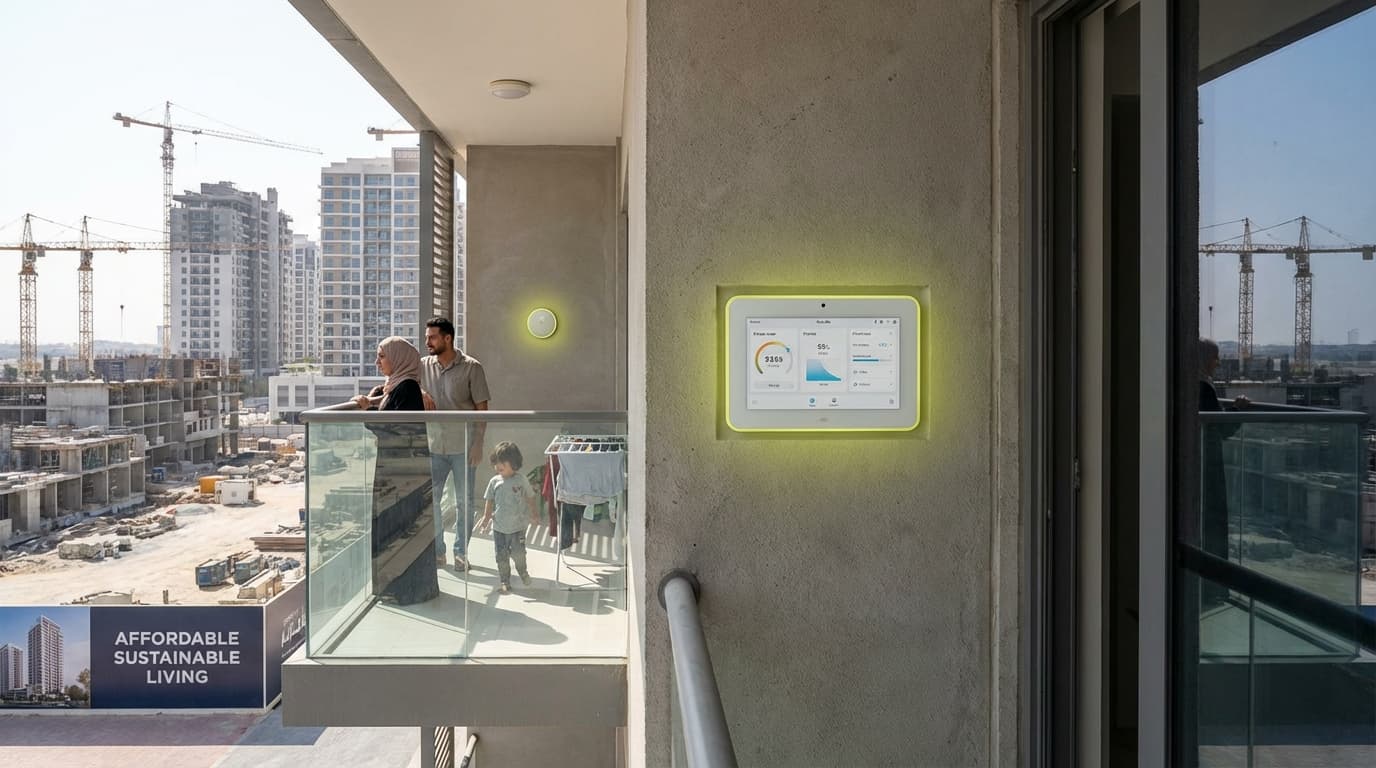
Smart Home Integration in Affordable Housing
The integration of smart home technologies into affordable housing represents a fundamental shift in how energy efficiency and quality of life improvements are distributed across income levels. Historically, intelligent building systems—automated climate control, energy monitoring, leak detection, and connected appliances—have been positioned as premium amenities in high-end developments. This signal tracks the movement of these technologies down-market, driven by falling hardware costs, cloud-based service models, and policy pressure to reduce residential energy consumption. In the Gulf context, where extreme temperatures create substantial cooling loads and where national visions emphasize both digital transformation and housing accessibility, this convergence matters strategically. It suggests that operational efficiency gains previously reserved for luxury segments may become baseline expectations in mass housing, potentially reshaping affordability calculations and resident expectations across the housing spectrum.
Early evidence appears in several forms across GCC markets. Saudi Arabia's Sakani program, which aims to increase homeownership among middle and lower-income citizens, has begun exploring smart home packages in select developments, focusing on energy management and remote monitoring capabilities. UAE affordable housing initiatives similarly incorporate basic automation systems—programmable thermostats, LED lighting with occupancy sensors, and smartphone-accessible controls—as standard features rather than upgrades. Industry analysts note that sensor and controller costs have declined sufficiently that basic smart home packages add modest incremental costs to construction budgets while delivering measurable energy savings, typically cited in the 15-25% range through optimized HVAC operation and behavioral nudges. Smartphone penetration rates exceeding 90% in Gulf markets create the necessary user interface infrastructure, reducing the need for dedicated control panels. However, this remains an emerging pattern rather than widespread practice; most affordable housing still lacks integrated smart systems, and pilot deployments are testing both technical reliability and user adoption in diverse populations with varying digital literacy levels.
The implications extend beyond energy bills to questions of housing quality, maintenance efficiency, and social equity. If smart systems become standard in affordable housing, property managers gain remote diagnostic capabilities, potentially reducing response times for maintenance issues like water leaks or HVAC failures. Residents gain tools to monitor and control their consumption, which may support financial planning and environmental awareness. Yet challenges persist: system complexity can overwhelm users unfamiliar with app-based controls, creating frustration rather than empowerment. Long-term maintenance and software update responsibilities remain unclear in many projects, raising concerns about obsolescence and vendor lock-in. Monitoring should focus on adoption rates in completed projects, resident satisfaction metrics, actual versus projected energy savings, and whether cost reductions materialize sufficiently to justify broader rollout. Policy decisions around data privacy, interoperability standards, and technical support infrastructure will shape whether this signal represents genuine democratization or creates new dependencies and inequalities within affordable housing segments.
Related Organizations

A global IoT development platform that enables manufacturers to produce affordable smart devices by providing low-cost cloud and app infrastructure.

A Sharjah-based developer known for bringing high-quality design, green spaces, and cultural amenities to mid-market housing (e.g., Aljada).

A UAE federal authority that has evolved its housing delivery to focus on sustainable, high-quality villa communities rather than basic shelter.

An enterprise smart home automation platform for property managers and renters, often used in multifamily housing.

The organization behind the 'Matter' standard, which ensures interoperability between smart devices from different brands.

Xiaomi
China · Company
Hardware manufacturer with 'Game Turbo' software that allocates system resources to games and optimizes network latency.

A smart home provider known for low-cost, high-reliability Zigbee sensors and controllers.

Global specialist in energy management and automation that integrates cybersecurity into its industrial hardware and software.

Creates retrofit smart home devices that mechanically control existing switches and appliances.