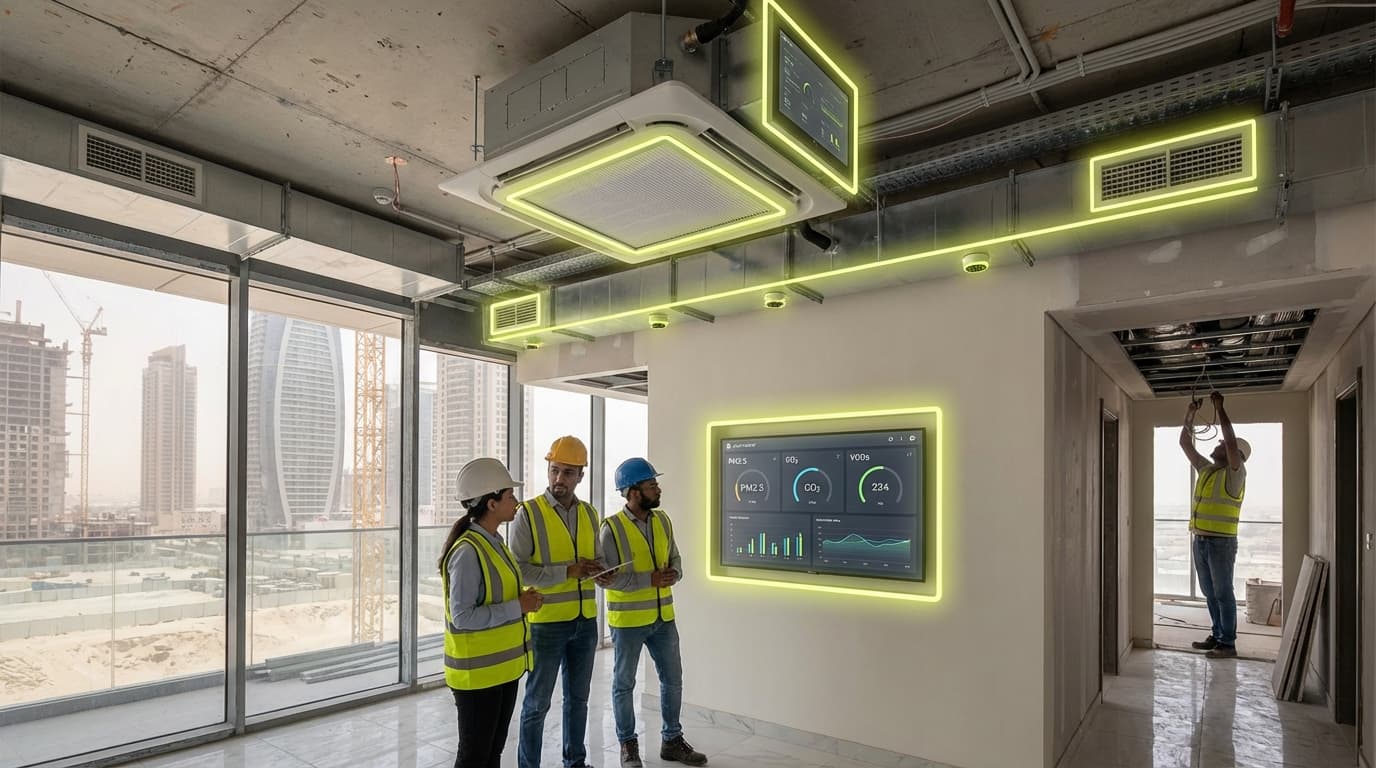
Indoor Air Quality (IAQ) & Filtration-as-Standard
Indoor air quality has emerged as a critical performance metric in residential and commercial real estate, driven by heightened health awareness, regulatory pressure, and tenant expectations shaped by pandemic-era scrutiny of ventilation systems. The core challenge this signal addresses is the historical treatment of indoor air as an invisible, unmanaged byproduct of HVAC operation rather than a measurable service with direct health and economic consequences. Poor IAQ contributes to respiratory illness, cognitive impairment, and absenteeism, yet most buildings have operated without continuous monitoring or enforceable standards. In the Gulf context, this challenge is amplified by extreme dust events, high outdoor particulate loads, and near-universal reliance on sealed, air-conditioned environments where occupants have limited recourse to natural ventilation. What was once a niche wellness amenity is now transitioning into a baseline operational requirement, particularly in premium residential towers, corporate campuses, and hospitality properties where tenant retention and brand reputation are at stake.
Early evidence of this shift includes the adoption of real-time IAQ monitoring dashboards in high-end developments, contractual air-quality service-level agreements in institutional lease terms, and the specification of MERV 13 or higher filtration as standard in new construction. Developers in Dubai and Abu Dhabi report that IAQ credentials—third-party certifications, published sensor data, and documented maintenance protocols—are increasingly factored into leasing decisions and rental premiums. Industry analysts note that insurance underwriters are beginning to assess ventilation adequacy as part of health-related liability risk, while facility management firms are piloting predictive maintenance models that trigger filter replacements based on sensor thresholds rather than fixed schedules. The pattern is strongest in markets with institutional landlords and corporate tenants, though adoption remains uneven across mid-market residential stock where cost sensitivity and fragmented ownership slow uptake.
The implications extend beyond tenant satisfaction to operational liability and energy trade-offs. Buildings that commit to IAQ transparency must balance filtration performance with HVAC energy consumption, as higher-grade filters increase system resistance and cooling loads. Facilities that publish real-time data may face reputational or legal exposure if thresholds are breached, creating tension between transparency and risk management. For policymakers, the signal suggests a need for standardised IAQ metrics and disclosure frameworks that avoid creating uninsurable liabilities while raising baseline performance. Monitoring priorities include the pace at which IAQ clauses appear in commercial leases, the emergence of third-party IAQ certification schemes, and whether regulatory bodies in the UAE or wider GCC adopt mandatory ventilation standards for residential buildings. The trajectory points toward IAQ becoming a managed utility—priced, monitored, and contractually guaranteed—rather than an incidental feature of building operation.
Related Organizations

The organization leading the global movement to transform buildings in ways that help people thrive.


Manufacturer of air quality monitors including the Laser Egg, a compact device for home and travel.

Global filtration specialist offering HVAC and molecular filtration solutions.



Consumer electronics company that developed the Dyson Zone, headphones with air purification and monitoring.


Provides comprehensive indoor air quality monitoring solutions for businesses.