Climate Risk Pricing & Insurance Innovation (Parametric)
Climate risk pricing represents the integration of physical hazard data—flooding probability, heat stress thresholds, coastal storm surge exposure—into the financial instruments that govern real estate development and ownership. Historically, climate considerations remained abstract or voluntary within Gulf property markets, treated as environmental compliance checkboxes rather than quantified liabilities. The problem this signal addresses is the growing mismatch between actual exposure and financial assumptions: as extreme weather events intensify and coastal development accelerates across GCC nations, traditional insurance models and lending terms fail to reflect true risk, creating systemic vulnerabilities in property portfolios and municipal balance sheets. When underwriters cannot price climate hazards accurately, developers face no financial incentive to invest in resilience, and governments inherit unfunded disaster liabilities.
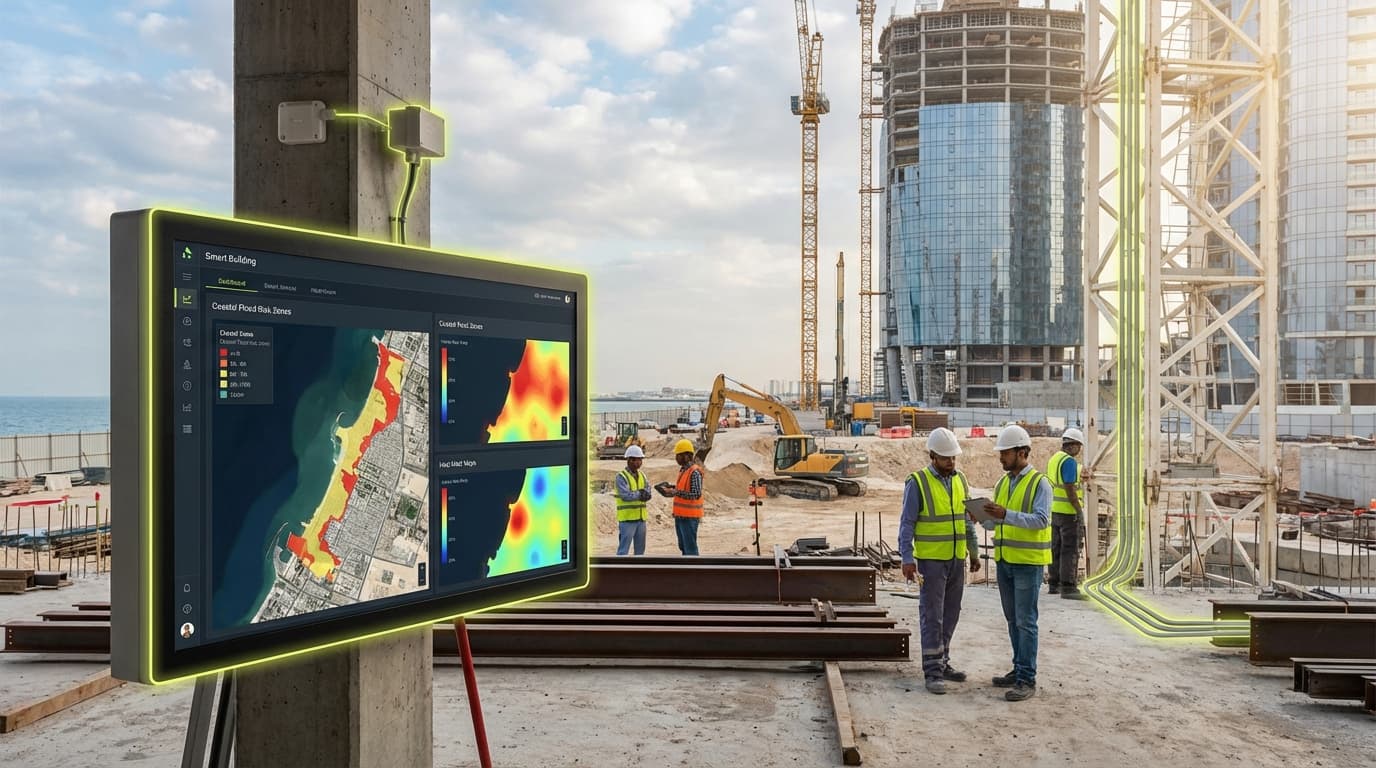
The mechanism works through two complementary pathways. First, insurers and lenders are embedding granular climate models into underwriting processes, adjusting premiums and loan covenants based on site-specific flood maps, heat exposure indices, and infrastructure resilience scores. Properties with inadequate drainage, vulnerable envelopes, or poor backup power systems face higher insurance costs or reduced loan-to-value ratios, making resilience investments financially legible. Second, parametric insurance products are emerging as alternatives to traditional indemnity coverage: these instruments pay out automatically when predefined triggers occur—rainfall exceeding 100mm in 24 hours, wind speeds above 120 km/h, or temperature thresholds sustained for specified durations—eliminating lengthy claims processes and enabling faster recovery. Early deployments in agriculture and infrastructure suggest parametric models can transfer risk more transparently, though adoption in residential and commercial property markets remains nascent. The Gulf's recent experience with flash flooding and record heat events has accelerated insurer interest in these tools, while regulators in UAE and Saudi Arabia are beginning to require climate risk disclosures in project financing.
The implications extend beyond individual transactions to reshape development incentives and urban planning priorities. As climate risk becomes priced into capital costs, developers gain clear financial motivation to invest in flood-resistant design, passive cooling strategies, and distributed energy systems—shifting resilience from regulatory burden to competitive advantage. For municipalities, transparent risk pricing can inform infrastructure investment priorities and land-use decisions, directing growth away from high-exposure zones. However, critical uncertainties remain: hazard models depend on data quality and historical baselines that may not reflect future conditions; parametric triggers require careful calibration to avoid basis risk (where payouts misalign with actual losses); and there is tension between making risk visible through pricing and maintaining housing affordability in vulnerable areas. Monitoring should focus on the pace of model adoption by major Gulf insurers, the emergence of standardized parametric products for residential properties, and regulatory frameworks that balance risk transparency with equitable access to coverage.
Related Organizations

An insurtech company offering parametric insurance against climate risks using satellite data.

A dedicated entity within AXA Group focused entirely on parametric insurance and climate adaptation services.

Swiss Re
Switzerland · Company
Global reinsurance giant known for its 'CatNet' tool and research on closing the climate protection gap.

Provides climate risk analytics using cloud computing and AI to model extreme weather risks for asset planning.

A technology-led underwriter of parametric coverage for climate risks.

One of the world's largest reinsurers, actively developing public-private partnerships for climate risk transfer.

Specializes in analyzing and transferring climate risks (specifically severe convective storms and heat) for financial resilience.

Global risk assessment firm that acquired RMS (Risk Management Solutions) to integrate climate risk modeling into credit ratings and insurance pricing.

Global insurance broker and risk advisor helping clients structure parametric programs for natural catastrophe risks.

One of the leading insurers in the UAE (formerly Oman Insurance), actively modernizing underwriting for regional risks.