Flood & Climate Resilience Infrastructure
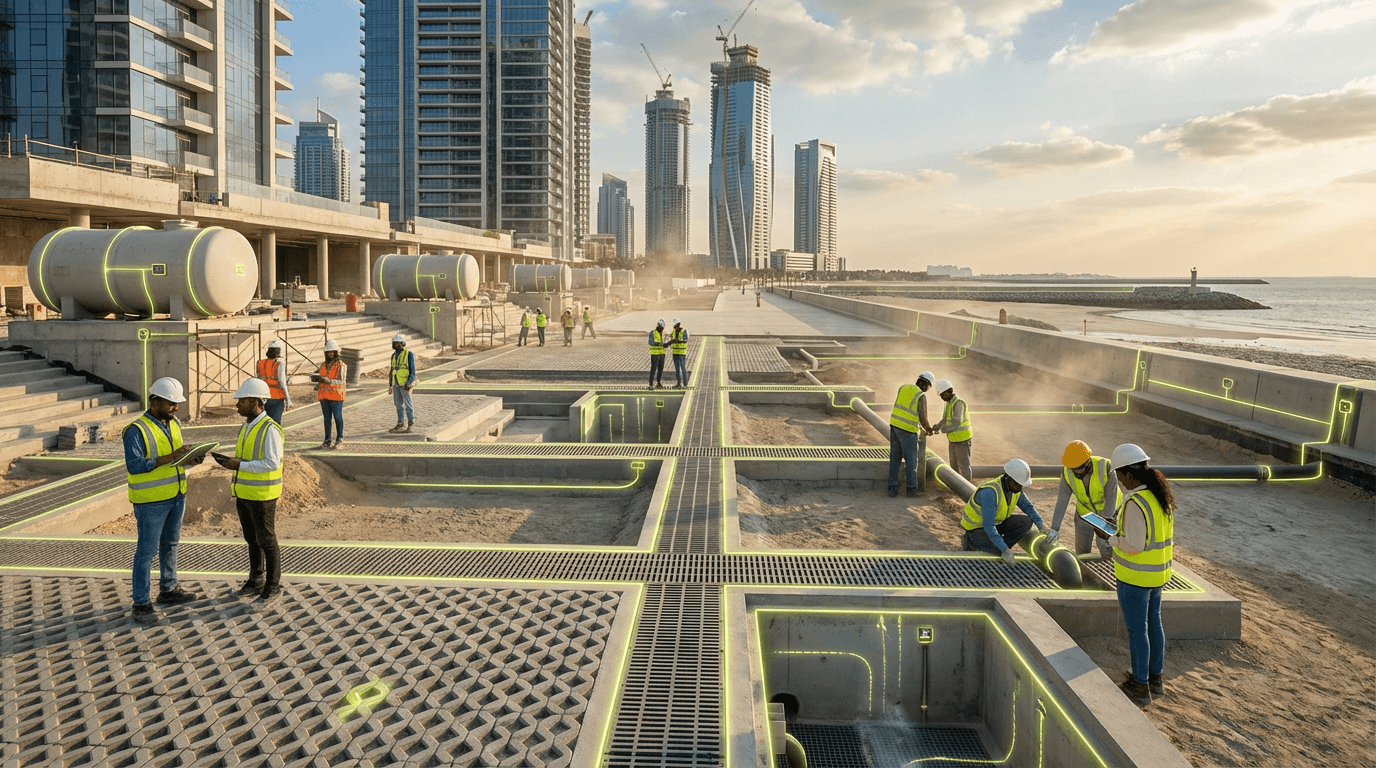
The Gulf's rapid urbanization has collided with intensifying climate pressures, exposing critical vulnerabilities in infrastructure systems designed for historical weather patterns rather than emerging extremes. Flood and climate resilience infrastructure addresses this mismatch by integrating adaptive design principles into the built environment—from permeable surfaces and advanced stormwater management to elevated construction and heat-resistant materials. The problem is both immediate and structural: coastal cities like Dubai, Abu Dhabi, and Doha face compounding risks from sea-level rise, increasingly intense precipitation events, and prolonged heat exposure, while existing drainage systems often reflect development timelines that prioritized speed over climate adaptation. The 2024 flooding events across the UAE served as a visible inflection point, demonstrating how infrastructure gaps can paralyze even technologically advanced cities when extreme weather overwhelms legacy systems. This signal matters because it represents a fundamental shift in development philosophy—from treating climate impacts as occasional disruptions to embedding resilience as a core design requirement.
Early evidence of this transition appears in policy adjustments, procurement patterns, and project specifications across GCC markets. Dubai and Abu Dhabi have accelerated drainage system upgrades, with municipalities requiring developers to demonstrate stormwater management capacity in project approvals. Qatar's infrastructure planning for post-World Cup development increasingly references climate scenarios in design standards. Sustainable urban drainage systems (SUDS)—including retention ponds, bioswales, and permeable pavements—are moving from optional sustainability features to baseline expectations in master-planned communities. Elevated construction is becoming standard practice for critical infrastructure and coastal developments, while building codes are incorporating heat stress considerations into material specifications and cooling requirements. The pattern direction suggests a broader normalization of climate-forward design, though implementation remains uneven: flagship projects often showcase advanced resilience features, while mid-market developments may lag due to cost pressures or regulatory gaps. Uncertainty persists around the pace of retrofit programs for existing infrastructure and whether standards will evolve quickly enough to match accelerating climate impacts.
The implications extend beyond engineering specifications to reshape development economics, insurance markets, and urban competitiveness. Cities that successfully integrate resilience infrastructure may attract investment and talent by offering operational continuity during climate events, while those that delay face escalating costs from both physical damage and reputational risk. Real estate valuations increasingly reflect climate exposure, creating market incentives for resilient design even where regulation remains permissive. For monitoring, key thresholds include the adoption rate of SUDS in new developments, changes in insurance premiums tied to climate risk, and whether building codes mandate rather than encourage resilience features. Policy signals to watch include regional coordination on drainage standards, public disclosure requirements for climate risk in real estate transactions, and infrastructure spending allocations prioritizing adaptation over expansion. The critical question is whether resilience investment can outpace climate velocity—and whether it becomes embedded deeply enough to withstand economic downturns that might tempt cost-cutting on "invisible" infrastructure.
Related Organizations

Government body responsible for urban planning and the massive 'Tasreef' rainwater drainage tunnel project.
Regional arm of the global ACO Group, specializing in drainage technology and sponge city concepts for extreme weather resilience.
Global infrastructure firm providing climate adaptation planning, coastal resilience engineering, and relocation strategies.

A global technical professional services firm that designs and operates wastewater treatment facilities.

Manufacturer of geosynthetics and industrial fabrics used for coastal protection, dewatering, and earthworks reinforcement.

Global design and consultancy firm for natural and built assets.

Independent institute for applied research in the field of water and subsurface.

Engineering consultancy famous for 'Blue-Green Infrastructure' projects in Copenhagen and globally to manage cloudbursts.

Provides plastic pipe systems and solutions for climate-resilient water management, including attenuation and infiltration tanks.