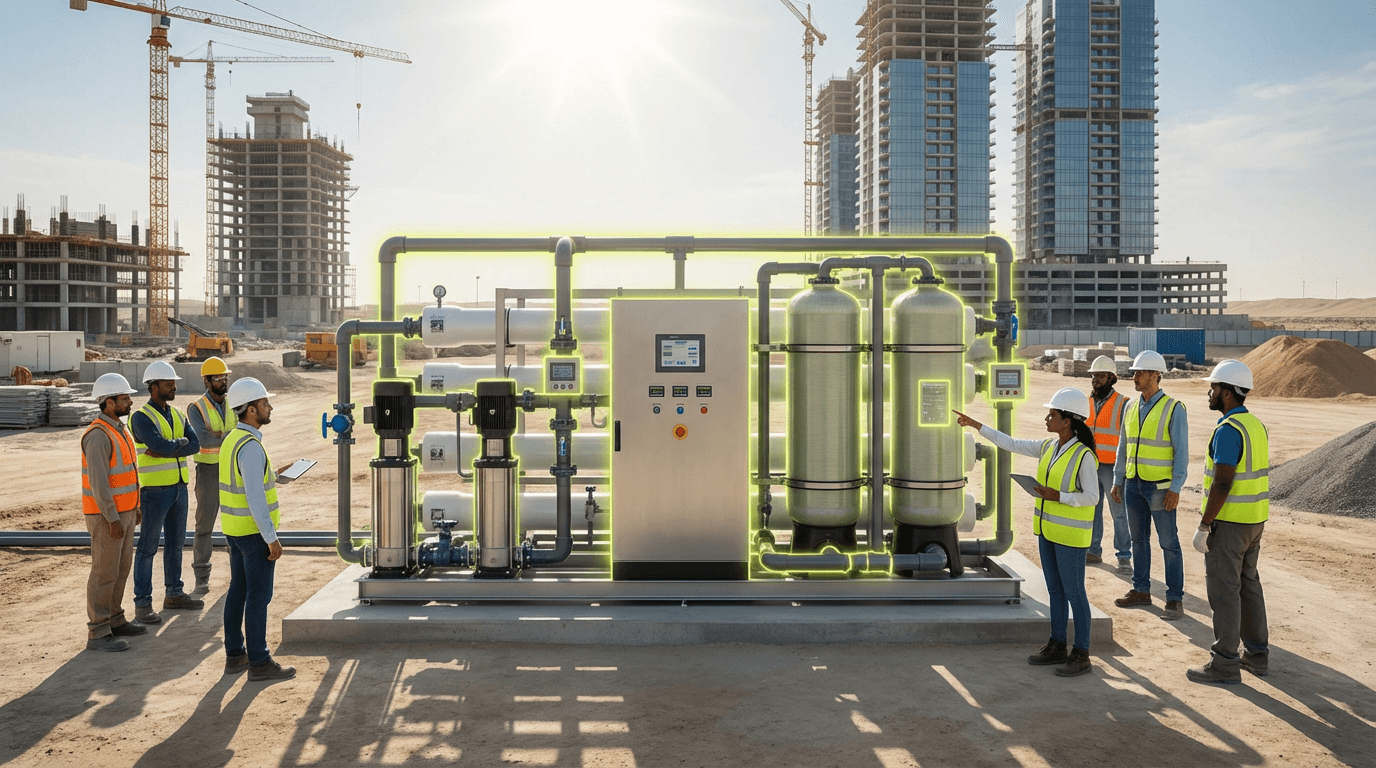
Water Recycling & Greywater Systems
Water recycling and greywater systems represent a fundamental shift in how cities manage their most critical resource, particularly in regions where freshwater scarcity intersects with rapid urbanization. The challenge these systems address is straightforward yet profound: conventional water infrastructure treats all water to potable standards and uses it once before disposal, an approach that becomes economically and environmentally unsustainable in water-stressed environments. In the Gulf region, where nearly all municipal water comes from energy-intensive desalination, this linear model creates a double burden of high costs and significant carbon emissions. The transition signal here is the decoupling of water quality from water use—recognizing that toilet flushing, irrigation, and cooling systems don't require drinking-quality water, and that treating water on-site for specific reuse applications can dramatically reduce both freshwater demand and wastewater discharge.
Early adoption patterns in the GCC demonstrate how regulatory frameworks and premium development positioning are driving implementation beyond pilot projects. The UAE's Estidama Pearl Rating System and similar green building standards across the region now incorporate greywater recycling as a pathway to certification, creating market incentives for developers. Masdar City's district-scale water recycling infrastructure and The Sustainable City Dubai's integrated treatment systems provide operational evidence that these technologies can function reliably in Gulf climates and building typologies. The systems themselves range in sophistication from basic filtration and storage for landscape irrigation to advanced membrane bioreactor systems that produce water suitable for nearly any non-potable application. Industry data suggests properly designed systems can reduce freshwater consumption by 30-50% in residential and mixed-use developments, with payback periods shortening as desalination costs rise and water tariffs increasingly reflect true production costs. The pattern extends beyond individual buildings to district-scale systems that serve multiple properties, suggesting a middle path between fully centralized and completely distributed infrastructure.
The implications for Gulf urban development are substantial, particularly as climate pressures intensify and sustainability commitments require measurable reductions in resource consumption. Widespread adoption could significantly reduce the expansion requirements for desalination capacity, freeing capital and energy for other priorities while improving water security through diversified supply. However, several threshold questions remain unresolved: maintenance protocols that ensure system reliability without specialized expertise, regulatory frameworks that protect public health while enabling innovation, and cultural acceptance of water reuse in contexts where potable water has historically been abundant and cheap. Monitoring should focus on operational performance data from existing installations, evolution of health and safety standards as evidence accumulates, integration with smart building systems for automated monitoring, and whether water pricing reforms create stronger economic signals for adoption. The technology itself is proven; the question is whether institutional frameworks and market conditions will align to make distributed water recycling standard practice rather than premium feature.
Related Organizations

A global leader in intelligent water management solutions, headquartered in Dubai, specializing in desalination and wastewater recycling.

Consumer-friendly greywater recycling systems for residential homes and apartments, reducing water consumption by up to 45%.

Specializes in onsite water reuse systems for high-rise buildings and urban developments.

The utility provider for Dubai, which has fully deployed smart meters and operates the 'Shams Dubai' and demand response programs.
A global leader in water, waste, and energy management with dedicated facilities for e-waste and battery recycling.

Provides advanced water and wastewater treatment solutions, including carrier gas extraction and membrane technologies.

A global leader in renewable energy and sustainable urban development (Masdar City).

The National Central Cooling Company, providing district cooling services that drastically reduce energy consumption compared to conventional AC.

Global market leader in energy storage products and services, and digital applications for renewables and storage.