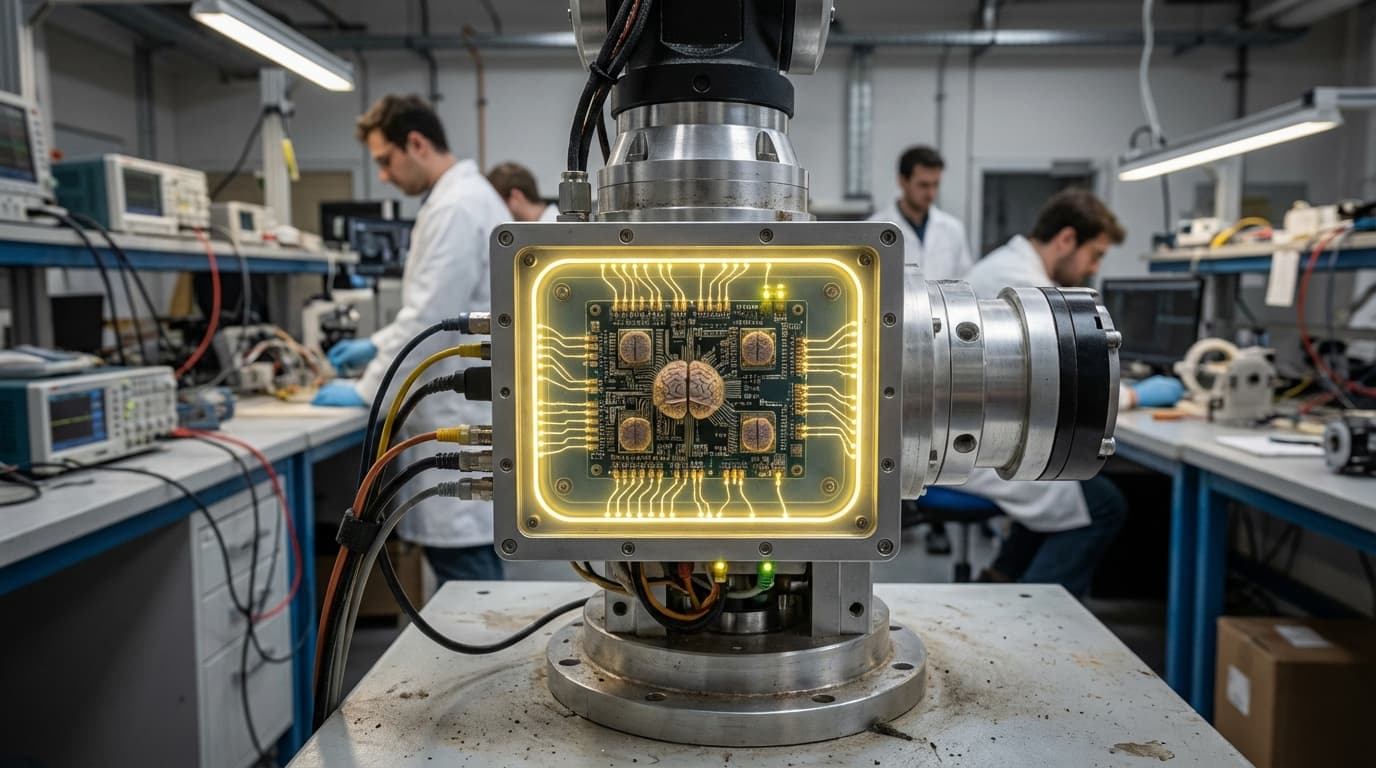
Neuromorphic Edge Processors
Neuromorphic edge processors represent a fundamental departure from traditional computing architectures by emulating the structure and function of biological neural networks. Unlike conventional processors that execute instructions sequentially, these chips process information through networks of artificial neurons and synapses that communicate via electrical spikes, similar to how the human brain operates. This event-driven approach means the processor only activates when relevant data arrives, rather than continuously consuming power through clock-driven operations. The architecture typically features thousands or millions of interconnected processing units that can perform parallel computations, enabling real-time pattern recognition and decision-making with remarkably low energy requirements. Research in this field draws from neuroscience, materials science, and computer engineering to create circuits that can learn and adapt over time, storing knowledge in the strength of connections between artificial neurons rather than in separate memory banks.
In industrial settings, the convergence of artificial intelligence demands and edge computing constraints creates a critical challenge: how to deploy sophisticated AI capabilities on devices with limited power budgets and processing resources. Traditional AI accelerators, while powerful, often require substantial energy and generate significant heat, making them impractical for battery-operated sensors, remote monitoring equipment, or space-constrained factory environments. Neuromorphic processors address this fundamental limitation by achieving orders of magnitude improvement in energy efficiency compared to conventional chips performing similar tasks. This enables manufacturers to embed real-time anomaly detection, predictive maintenance algorithms, and quality control systems directly into production equipment without requiring constant cloud connectivity or extensive local power infrastructure. The technology also supports continuous on-device learning, allowing industrial systems to adapt to changing conditions and refine their performance over time without human intervention or external computation.
Early deployments of neuromorphic edge processors are emerging across manufacturing, robotics, and industrial automation sectors. These chips enable vibration sensors to detect equipment failures milliseconds before they occur, vision systems to identify defects on high-speed production lines with minimal latency, and autonomous mobile robots to navigate complex warehouse environments while operating for extended periods on single battery charges. The event-driven nature of these processors proves particularly valuable in scenarios where most sensor data is routine, with the system only activating fully when anomalies or significant events occur. Industry analysts note that as manufacturing facilities increasingly adopt Industry 4.0 principles, the demand for intelligent edge devices that can process data locally while consuming minimal power will accelerate. The technology aligns with broader trends toward distributed intelligence in industrial systems, where decision-making moves closer to the point of data generation, reducing latency, bandwidth requirements, and dependence on centralized computing infrastructure. As neuromorphic architectures mature and development tools become more accessible, these processors are positioned to become standard components in the next generation of smart industrial equipment.
Related Organizations

Developer of the Akida neuromorphic processor IP and chips.

Creates ultra-low power intelligence for sensors using spiking neural processor architecture.

Develops ultra-low-power mixed-signal neuromorphic processors and sensors for edge AI applications.

Swiss company specializing in Dynamic Vision Sensors (DVS) and neuromorphic software for robotics.

Develops silicon spin qubits using advanced 300mm wafer manufacturing processes.

Pioneer in event-based vision sensors and associated neuromorphic processing algorithms.

Building analog-digital in-memory computing hardware for AI.

Leads the DISCOVERER project focusing on VLEO aerodynamics and materials.

Long-standing leader in neuro-symbolic AI, combining neural networks with logical reasoning for enterprise applications.

Developing 'Natural Intelligence' for machines by reverse-engineering insect brains to create autonomous decision-making software.

Develops stacked event-based vision sensors with integrated logic layers.
Supporting Evidence
Research this in Signals
Signals turns a topic into a sourced research record you can inspect and rerun. Your first scan is free, and this one starts with Neuromorphic Edge Processors already loaded, so edit it or scan as is.