Neuro-Symbolic AI
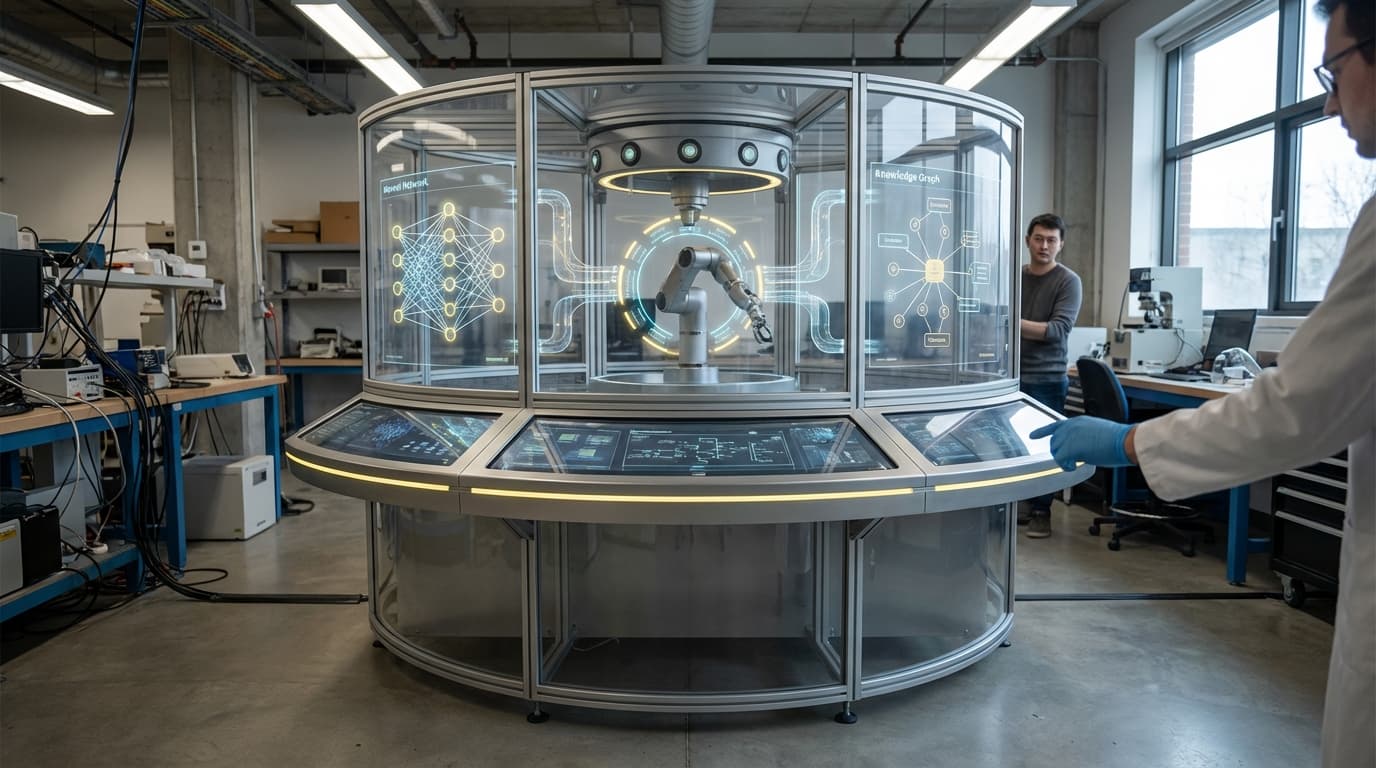
Neuro-Symbolic AI represents a fundamental shift in artificial intelligence architecture, merging the pattern recognition capabilities of neural networks with the logical reasoning power of symbolic systems. Traditional deep learning excels at processing vast amounts of data to identify patterns—such as recognizing defects in manufacturing or predicting equipment failures—but struggles to explain its decisions or apply abstract rules. Conversely, symbolic AI systems can perform logical deductions and follow explicit rules but lack the ability to learn from raw data or handle uncertainty. Neuro-Symbolic AI bridges this gap by creating hybrid architectures where neural networks handle perception and pattern matching while symbolic reasoning engines manage logic, constraints, and knowledge representation. This integration allows the system to both learn from data and reason about what it has learned, creating AI that can explain its conclusions in terms humans can verify and audit.
In industrial automation contexts, this hybrid approach addresses critical challenges that have limited AI adoption in safety-critical and regulated environments. Manufacturing facilities require AI systems that not only optimize production but can also justify their decisions to human operators and regulatory bodies. When a Neuro-Symbolic system recommends adjusting a chemical process or shutting down a production line, it can provide a logical trace of its reasoning rather than operating as an inscrutable black box. This explainability is essential for industries where errors can result in significant safety hazards or financial losses. Furthermore, these systems can incorporate domain expertise and physical laws directly into their reasoning processes, ensuring that AI recommendations respect engineering constraints and safety protocols. The technology also enables more robust performance in edge cases and novel situations, as the symbolic reasoning component can apply general principles even when encountering scenarios absent from training data.
Early industrial deployments indicate promising results in domains such as predictive maintenance, quality control, and process optimization. Research institutions and industrial AI developers are exploring applications where these systems monitor complex manufacturing processes, combining sensor data analysis with knowledge about equipment specifications, maintenance schedules, and operational constraints. The technology shows particular promise in scenarios requiring both real-time adaptation and adherence to strict safety or regulatory requirements. As Industry 4.0 initiatives emphasize the integration of AI into cyber-physical systems, Neuro-Symbolic approaches offer a pathway toward AI that is simultaneously more capable and more trustworthy. This aligns with broader trends toward explainable AI and human-machine collaboration, suggesting that hybrid architectures may become standard in industrial settings where transparency, safety, and reliability are paramount alongside performance.
Related Organizations

Long-standing leader in neuro-symbolic AI, combining neural networks with logical reasoning for enterprise applications.

Research lab hosting Josh Tenenbaum's Computational Cognitive Science group, a leader in probabilistic programming and neuro-symbolic models.

An AI foundation model company building structured models that use category theory to enable reasoning, distinct from pure transformer approaches.

Developers of the Gemini family of models, which are trained from the start to be multimodal across text, images, video, and audio.

Provides a relational knowledge graph system that integrates with machine learning for neuro-symbolic data apps.

Non-profit research institute with a long history in AI, currently working on hybrid neuro-symbolic systems for DARPA and commercial use.

Develops silicon spin qubits using advanced 300mm wafer manufacturing processes.
Industrial giant offering the 'Senseye Predictive Maintenance' suite and MindSphere IoT platform.
Supporting Evidence
Research this in Signals
Signals turns a topic into a sourced research record you can inspect and rerun. Your first scan is free, and this one starts with Neuro-Symbolic AI already loaded, so edit it or scan as is.