Agentic AI for Manufacturing
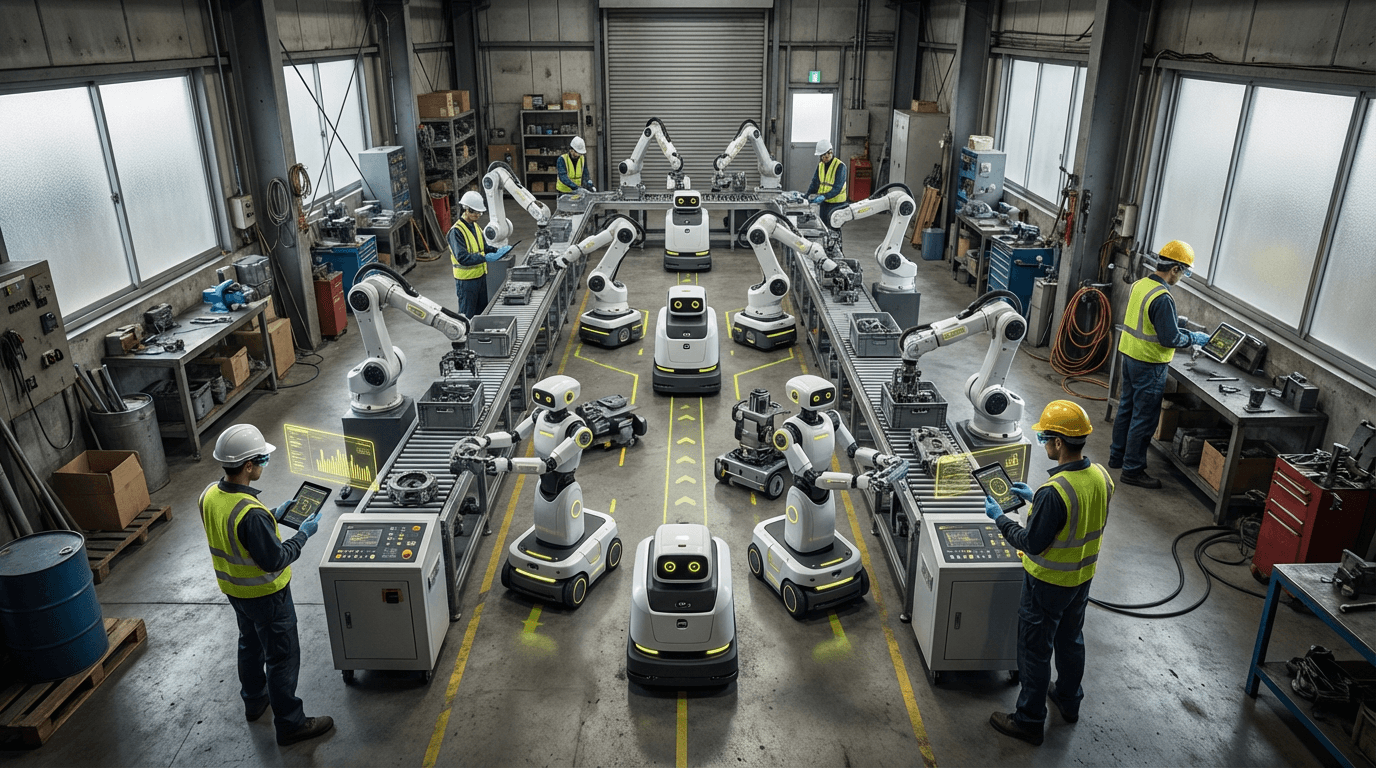
Agentic AI for Manufacturing represents a significant evolution beyond traditional automation systems, introducing autonomous software agents powered by large language models that can interpret complex instructions, make contextual decisions, and orchestrate multi-step industrial processes without constant human supervision. Unlike conventional robotic process automation that follows rigid, pre-programmed sequences, these AI agents possess the ability to understand natural language directives, assess current conditions on the factory floor, dynamically plan execution strategies, and adapt their approach when encountering unexpected situations. The underlying architecture combines advanced language models with specialised industrial knowledge bases, real-time sensor data integration, and tool-calling capabilities that allow agents to interact with existing manufacturing execution systems, quality control equipment, supply chain databases, and production machinery. This creates a layer of intelligent coordination that can bridge the gap between high-level business objectives and the granular technical operations required to achieve them.
The manufacturing sector has long struggled with the challenge of automating non-routine tasks that require judgment, contextual understanding, and cross-functional coordination. Traditional automation excels at repetitive, well-defined processes but falters when faced with variability, exceptions, or tasks that span multiple systems and domains. Agentic AI addresses this limitation by enabling factories to automate complex workflows that previously demanded human expertise—such as diagnosing production anomalies, optimising scheduling in response to supply disruptions, coordinating maintenance activities across interdependent systems, or managing quality assurance processes that require interpretation of diverse data sources. This technology also tackles the persistent skills gap in manufacturing by allowing operators to communicate with production systems using natural language rather than specialised programming or technical interfaces. By reducing the cognitive load on human workers and enabling them to delegate routine decision-making to AI agents, manufacturers can redirect human talent toward higher-value activities like innovation, strategic planning, and complex problem-solving that still require uniquely human capabilities.
Early industrial deployments indicate that agentic AI systems are moving beyond pilot programs into production environments, particularly in sectors where customisation, rapid changeovers, and complex supply chains create significant operational challenges. These implementations typically begin with narrowly scoped applications—such as agents that monitor production lines and automatically adjust parameters to maintain quality specifications, or systems that coordinate logistics between warehousing, production scheduling, and shipping operations. Research suggests that the technology's ability to learn from operational data and refine its decision-making over time makes it particularly valuable in environments characterised by high product variety or frequent process changes. As manufacturing continues its trajectory toward greater flexibility and mass customisation, agentic AI represents a critical enabler of what industry analysts describe as "cognitive manufacturing"—production environments where intelligent software agents work alongside human operators and physical automation to create adaptive, self-optimising industrial ecosystems capable of responding to market demands with unprecedented speed and efficiency.
Related Organizations
Industrial giant offering the 'Senseye Predictive Maintenance' suite and MindSphere IoT platform.

AI robotics company building a universal AI brain for robots.
Developing foundation models for robotics (Project GR00T) and vision-language models like VILA.

A startup building a general-purpose brain for robots, backed by OpenAI and Thrive Capital.

An Alphabet company building a software platform to make industrial robotics accessible and interoperable.

Industrial DataOps platform (Cognite Data Fusion) that contextualizes data for AI-driven maintenance applications.
Industrial automation leader offering FactoryTalk Analytics, which uses ML to identify equipment anomalies.

Provides AI-powered connected worker platforms where agents analyze worker performance and suggest personalized workflows.


A leading enterprise automation software company focusing on RPA and AI-powered automation.
Supporting Evidence
Research this in Signals
Signals turns a topic into a sourced research record you can inspect and rerun. Your first scan is free, and this one starts with Agentic AI for Manufacturing already loaded, so edit it or scan as is.