Digital Workforce Transition Platforms
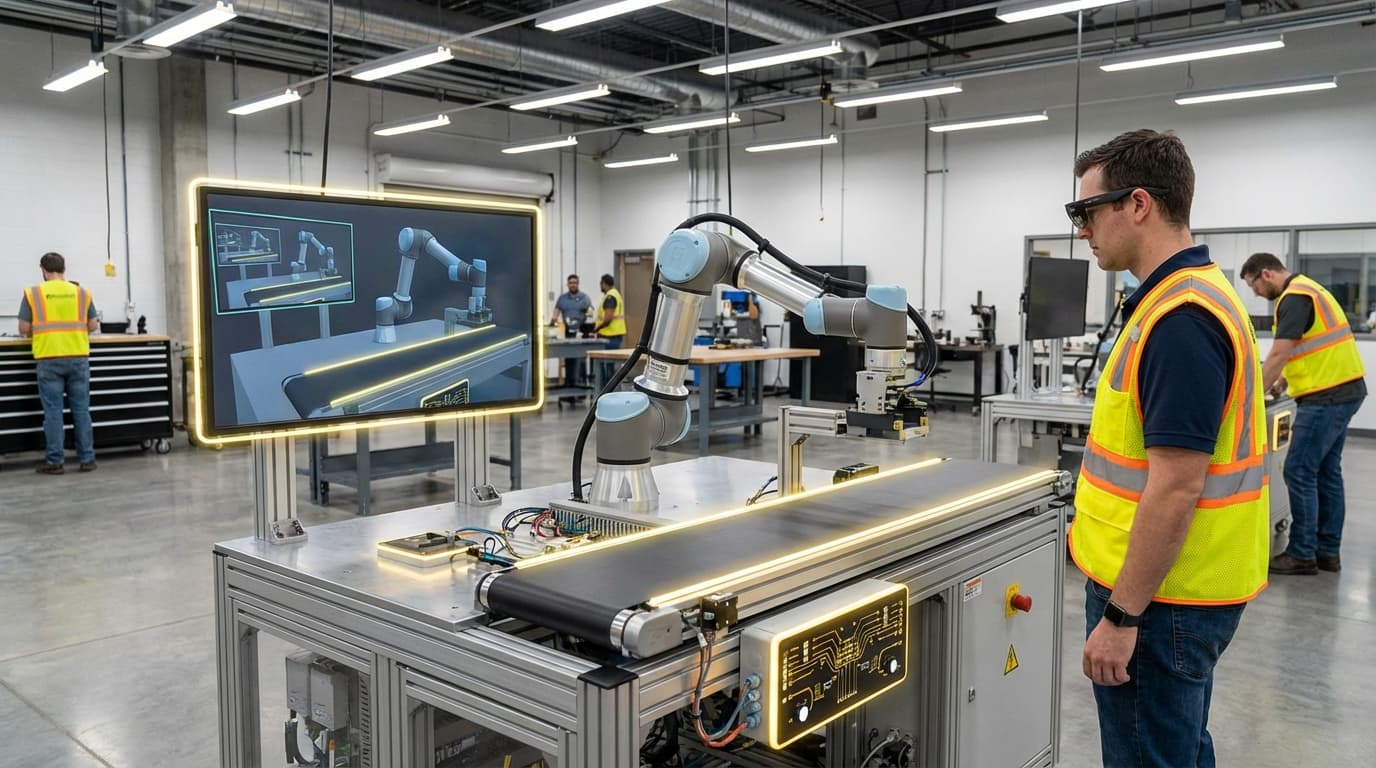
The rapid advancement of automation, artificial intelligence, and cyber-physical systems within manufacturing environments has created an urgent need to prepare the existing workforce for fundamentally different roles. Digital workforce transition platforms address the critical challenge of bridging the gap between traditional manufacturing skills and the competencies required in highly automated, data-intensive production environments. These systems combine artificial intelligence, learning analytics, and competency frameworks to create personalized pathways for workers whose roles are being transformed or displaced by automation. At their core, these platforms employ machine learning algorithms to assess individual workers' current skill sets, identify gaps relative to emerging job requirements, and map optimal learning trajectories. The technology integrates with enterprise systems to understand both current workforce capabilities and future skill demands, creating a dynamic matching system that evolves as manufacturing processes become increasingly digitized and interconnected.
The fundamental problem these platforms solve is the mismatch between the pace of technological change in manufacturing and the speed at which workers can adapt to new requirements. Traditional training programs often lack the granularity and personalization needed to effectively transition workers from manual or semi-automated roles to positions requiring data analysis, robotics supervision, predictive maintenance, or cyber-physical system management. Research suggests that many manufacturing workers possess transferable skills that can be leveraged for new roles, but identifying and building upon these foundations requires sophisticated assessment and planning tools. Digital workforce transition platforms enable manufacturers to retain institutional knowledge and experienced personnel while systematically upgrading capabilities across the organization. This approach not only reduces the social and economic costs of workforce displacement but also helps companies maintain operational continuity during technological transitions, avoiding the productivity losses associated with wholesale staff replacement.
Early deployments of these platforms in manufacturing contexts indicate promising results in both worker engagement and skill acquisition rates. Some implementations combine virtual reality simulations for hands-on practice with adaptive learning modules that adjust difficulty based on individual progress, while others integrate micro-credentialing systems that allow workers to demonstrate competency in specific areas before moving to more complex topics. The platforms typically feature dashboards that provide visibility to both workers and management regarding progress toward transition goals, creating accountability and motivation throughout the reskilling process. As Industry 4.0 technologies continue to reshape manufacturing work, these platforms are becoming essential infrastructure for managing human capital in an era of continuous technological disruption. The trajectory points toward increasingly sophisticated systems that can predict skill requirements years in advance and begin preparing workers proactively, transforming workforce development from a reactive necessity into a strategic competitive advantage for manufacturers navigating the fourth industrial revolution.
Related Organizations
An AI-powered training platform for skilled trades that captures workflows via video and automatically segments them into step-by-step guides.

A connected worker platform (acquired by IFS) that facilitates real-time knowledge sharing and task management on the factory floor.


Develops VR simulations for vocational training in manufacturing, skilled trades, and hospitality.

Documentation and training software for industrial companies, focusing on standardizing work instructions and training programs.

Creator of SkillMill, a platform for VR and 3D simulation training for HVAC, solar, and electrical trades.
Industrial giant offering the 'Senseye Predictive Maintenance' suite and MindSphere IoT platform.

International organization for public-private cooperation.

Edtech company offering 'Nanodegrees' in IoT, AI, and data science, often partnering with enterprise clients.
Supporting Evidence
Research this in Signals
Signals turns a topic into a sourced research record you can inspect and rerun. Your first scan is free, and this one starts with Digital Workforce Transition Platforms already loaded, so edit it or scan as is.