Autonomous Mobile Robots
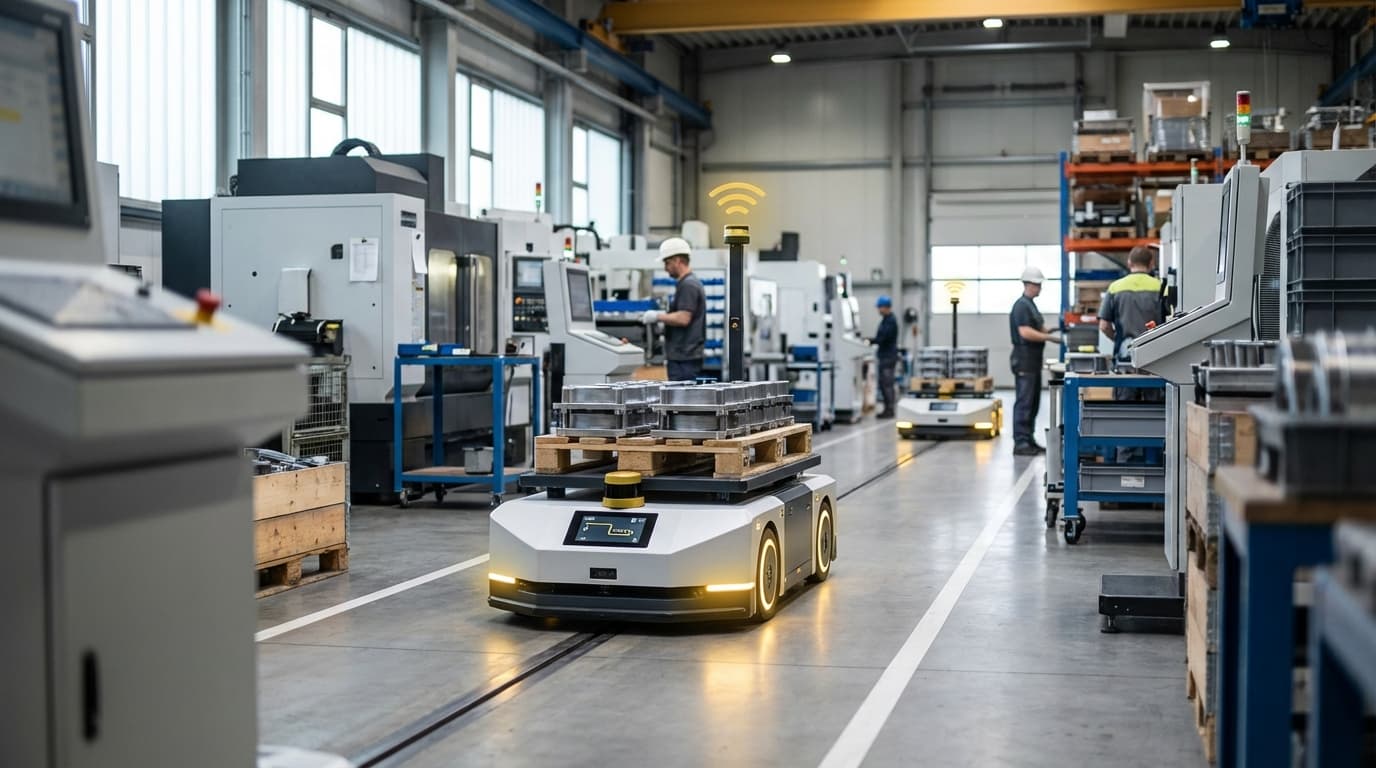
Autonomous Mobile Robots (AMRs) represent a significant evolution in industrial material handling, distinguished from traditional automated guided vehicles by their ability to navigate dynamically without fixed infrastructure. Unlike AGVs that follow magnetic strips or wires embedded in factory floors, AMRs use Simultaneous Localization and Mapping (SLAM) technology combined with onboard sensors—including LiDAR, cameras, and ultrasonic detectors—to build real-time maps of their environment and determine their position within it. This sensor fusion enables AMRs to perceive obstacles, recognize changes in their surroundings, and calculate optimal paths autonomously. The robots typically operate under fleet management software that coordinates multiple units, assigns tasks based on priority and proximity, and optimizes traffic flow to prevent bottlenecks. Advanced implementations incorporate machine learning algorithms that allow the robots to improve their navigation efficiency over time, learning from repeated routes and adapting to seasonal layout changes or temporary obstructions.
The manufacturing and warehousing sectors face mounting pressure to increase throughput while managing labor shortages and rising operational costs. Traditional material transport methods—whether manual forklifts or fixed conveyor systems—struggle with the flexibility demands of modern production environments, where product mixes change frequently and just-in-time delivery is essential. AMRs address these challenges by providing scalable, reconfigurable logistics solutions that can be deployed without extensive facility modifications. They eliminate the need for workers to spend significant time on repetitive material transport tasks, allowing human labor to focus on higher-value activities requiring dexterity and decision-making. The technology also reduces workplace injuries associated with manual material handling and forklift operation. By operating continuously across shifts with minimal downtime for charging, AMRs can significantly increase material flow consistency and reduce the idle time that occurs when parts or tools aren't available at workstations precisely when needed.
Early deployments indicate that AMRs are particularly effective in facilities with high-mix, low-volume production where traditional automation proves too rigid. Automotive suppliers, electronics manufacturers, and pharmaceutical companies have been among the early adopters, using AMRs to shuttle components between assembly stations, deliver kitting materials, and transport finished goods to staging areas. The technology has matured to the point where robots from different manufacturers can increasingly operate within the same facility through standardized communication protocols. Industry analysts note that the integration of AMRs with warehouse management systems and enterprise resource planning software is becoming more seamless, enabling better inventory visibility and production scheduling. Looking forward, the convergence of AMRs with collaborative robots and digital twin technology points toward fully autonomous production cells where materials, tools, and finished products move through facilities with minimal human intervention, adapting in real-time to production demands and optimizing themselves for energy efficiency and throughput.
Related Organizations

A pioneer in collaborative autonomous mobile robots for internal transport and logistics, owned by Teradyne.

Provides autonomous mobile robots for material handling in manufacturing and warehouse facilities, acquired by Rockwell Automation.

Develops internal logistics robots, including the fully autonomous 'Proteus'.

Global leader in autonomous mobile robots (AMRs) for logistics, known for shelf-to-person robots that coordinate in large fleets.

Produces collaborative AMRs that work alongside humans in warehouses to improve picking productivity.

Specializes in vision-guided vehicles (VGVs) for materials handling, using proprietary 3D vision technology.

Develops autonomous mobile robots based on visual SLAM and AI for material handling.

Pioneer of Autonomous Case-handling Mobile Robot (ACR) systems, allowing robots to pick and carry specific totes rather than whole racks.

A major manufacturer of industrial robots, including the LBR Med, a lightweight robot certified for integration into medical devices.

Industrial automation giant offering a line of mobile robots (LD/HD series).

Provides automated material handling solutions, including self-driving pallet trucks and tow tractors.
Supporting Evidence
Research this in Signals
Signals turns a topic into a sourced research record you can inspect and rerun. Your first scan is free, and this one starts with Autonomous Mobile Robots already loaded, so edit it or scan as is.