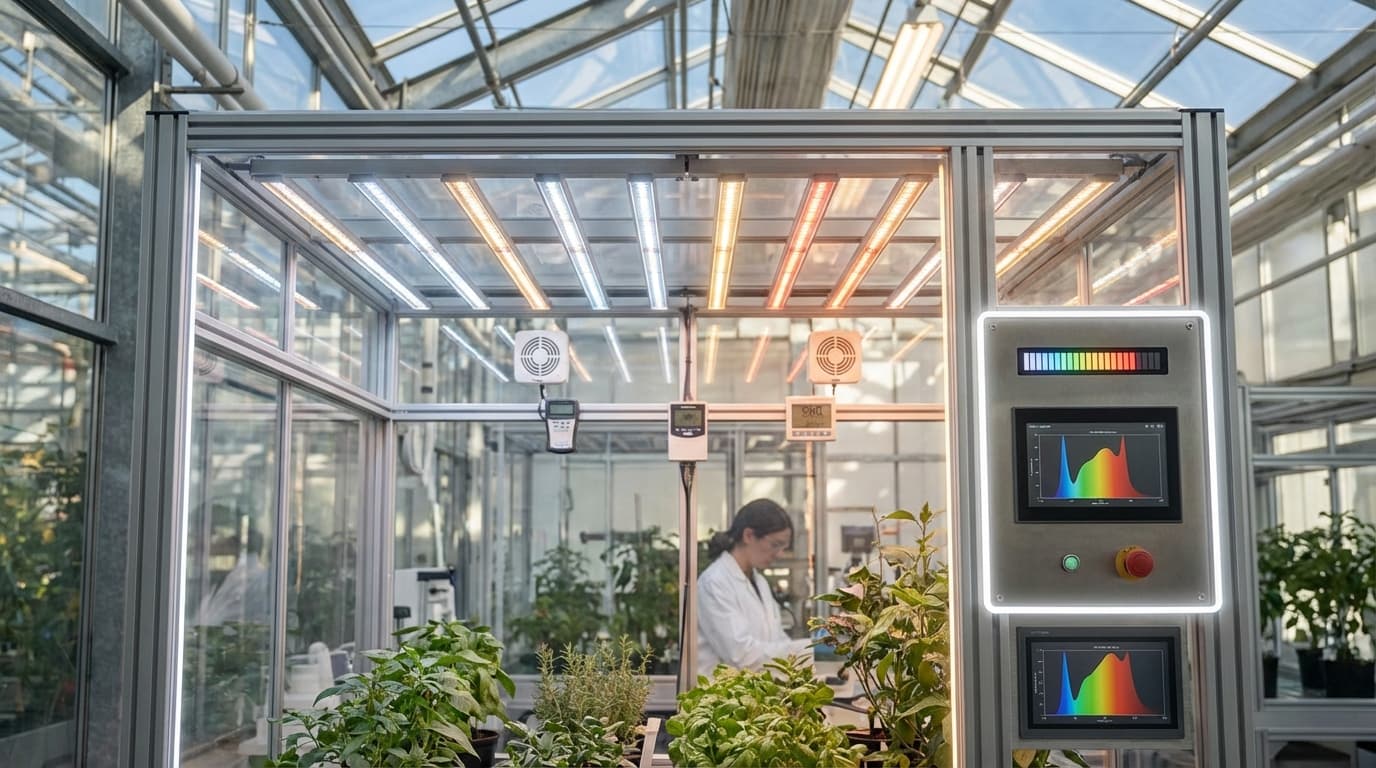
Tunable Spectrum LEDs
Tunable spectrum LEDs represent a significant advancement beyond conventional lighting technology by incorporating multiple LED channels that can independently adjust their output across different wavelengths of the visible and near-visible spectrum. Unlike traditional RGB LEDs that mix only three primary colors, these sophisticated systems typically employ four to seven or more discrete LED emitters, each targeting specific spectral bands. This multi-channel architecture enables precise control over the spectral power distribution (SPD), allowing the light source to replicate the complex spectral characteristics of natural daylight as it shifts throughout the day, from the warm, red-rich tones of sunrise to the cool, blue-enriched midday sun. The underlying technology relies on advanced driver electronics and control algorithms that coordinate the intensity of each channel in real-time, creating smooth transitions between different spectral profiles. Some implementations incorporate feedback sensors that monitor ambient conditions and automatically adjust output to maintain desired spectral characteristics or compensate for environmental changes.
The development of tunable spectrum LEDs addresses a fundamental limitation in architectural and workplace lighting: the inability of conventional static lighting to support human biological needs that evolved under dynamic natural light conditions. Research in chronobiology has demonstrated that specific wavelengths, particularly in the blue spectrum around 480 nanometers, strongly influence the human circadian system by suppressing melatonin production and promoting alertness. Conversely, warmer spectra with reduced blue content support evening relaxation and sleep preparation. Traditional lighting solutions force occupants to choose between energy efficiency and biological appropriateness, often resulting in environments that contribute to circadian disruption, reduced cognitive performance, and long-term health impacts. Tunable spectrum technology resolves this conflict by enabling a single lighting installation to serve multiple functions throughout the day, supporting alertness during working hours while transitioning to circadian-friendly spectra in the evening. This capability also extends to specialized applications where precise spectral control enhances visual perception, such as medical facilities requiring accurate color rendering for diagnostic purposes, retail environments seeking to optimize product appearance, or industrial settings where specific wavelengths improve defect detection.
Commercial implementations of tunable spectrum LEDs are increasingly appearing in healthcare facilities, corporate offices, and educational institutions, with early deployments indicating measurable improvements in occupant well-being and performance. Hospital installations have utilized these systems to support patient recovery by maintaining appropriate circadian stimulation during daytime hours while minimizing sleep disruption at night. Office environments are adopting human-centric lighting strategies that align artificial light exposure with natural circadian patterns, with some studies suggesting benefits for employee alertness and satisfaction. The technology is also finding applications in controlled environment agriculture, where precise spectral tuning optimizes plant growth while reducing energy consumption compared to broad-spectrum alternatives. As the lighting industry continues its transition toward solid-state solutions and building automation systems become more sophisticated, tunable spectrum LEDs are positioned to become a standard feature rather than a premium option. The convergence of declining LED costs, growing awareness of light's biological impacts, and increasing demand for personalized environmental control suggests that dynamic spectral tuning will play a central role in next-generation architectural lighting, fundamentally reshaping how we design and experience illuminated spaces.
Related Organizations

A company founded by former NASA researchers developing 'SkyBlue' technology to provide high melanopic lux for circadian regulation without compromising visual color.

The world's leading university-based research center devoted to lighting, pioneering studies on circadian stimulus (CS).

Global LED market leader developing high-density micro-LED light sources for adaptive automotive lighting.

Developers of 'SunLike' LED technology, which reproduces the spectrum of natural sunlight more closely than conventional LEDs to support circadian health.

Produces 'Thrive' and 'Vesta' series COB LEDs that offer tunable white points and high color fidelity for human-centric applications.

A Lutron subsidiary manufacturing premium architectural lighting capable of dynamic, high-resolution spectral tuning to mimic natural light shifts.

Parent company of Philips Hue, which offers the 'Hue Sync' protocol to align smart lighting with HDMI video signals.

A Smart Global Holdings company producing high-efficacy LED components with color tuning capabilities for general illumination.

Specializes in high-CRI and full-spectrum LED packaging, offering custom spectral engineering for film, photography, and health applications.

A Norwegian industrial group that develops Human Centric Lighting (HCL) solutions for extreme latitude environments.