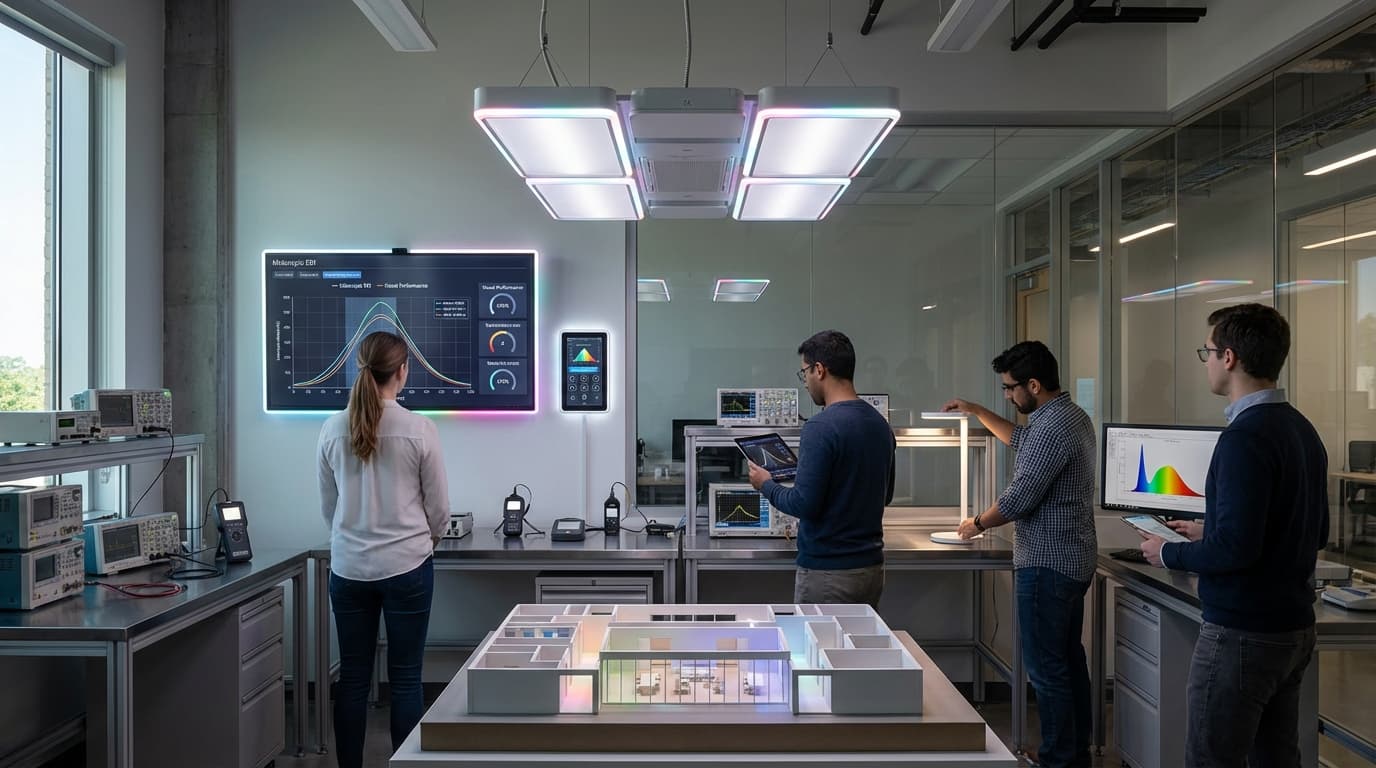
Melanopic-aware Spectral Optimization
Melanopic-aware spectral optimization represents a fundamental shift in how lighting systems are designed and controlled, moving beyond traditional photopic metrics to account for the biological effects of light on human physiology. Conventional lighting design has historically focused on visual performance metrics such as illuminance levels, color rendering index (CRI), and glare control—all measured through the lens of the photopic visual system. However, research over the past two decades has revealed that a distinct photoreceptor system, mediated primarily by intrinsically photosensitive retinal ganglion cells (ipRGCs) containing the photopigment melanopsin, governs non-visual responses including circadian rhythm entrainment, melatonin suppression, and acute alertness. This software leverages melanopic equivalent daylight illuminance (EDI) and related spectral metrics to quantify the biological potency of light, enabling designers to optimize spectral power distributions that simultaneously meet visual task requirements and deliver targeted non-visual stimulation. By modeling the spectral sensitivity curves of both visual photoreceptors and melanopsin-containing cells, these tools can predict how different light sources will influence both perception and physiology.
The lighting industry faces a critical challenge in environments where occupants experience disrupted circadian rhythms or require precise control over alertness and sleep-wake cycles. Healthcare facilities struggle with patient recovery outcomes linked to poor circadian alignment, office workers in windowless spaces experience afternoon fatigue and evening sleep difficulties, and shift workers in industrial settings face elevated health risks from chronic circadian disruption. Traditional approaches often resort to simply increasing overall light levels to boost alertness, leading to energy waste, visual discomfort, and potential overexposure during evening hours when circadian suppression is undesirable. Melanopic-aware optimization software solves this by enabling precise spectral tuning—delivering higher melanopic content during morning and daytime hours to promote alertness while reducing blue-enriched spectra in evening periods to support natural melatonin onset. This approach allows facilities to achieve human-centric lighting (HCL) objectives without the inefficiencies of blanket illuminance increases, creating dynamic lighting schedules that adapt spectral output to occupant needs throughout the day while maintaining appropriate visual conditions for tasks.
Early implementations of melanopic-aware design tools have appeared in specialized healthcare and commercial office projects, with several lighting manufacturers now incorporating melanopic metrics into their specification software and control platforms. Research institutions and progressive healthcare systems have deployed pilot installations that demonstrate measurable improvements in patient sleep quality and staff alertness during night shifts. The technology is particularly valuable in environments with vulnerable populations—neonatal intensive care units optimizing infant circadian development, elder care facilities addressing age-related circadian weakening, and psychiatric wards managing mood disorders with light therapy protocols. As international standards bodies including CIE (International Commission on Illumination) formalize melanopic measurement standards and building certification programs begin recognizing circadian-effective lighting, adoption is expected to accelerate beyond specialized applications into mainstream architectural practice. This trajectory aligns with broader movements toward evidence-based design and occupant wellness, positioning melanopic optimization as an essential capability in the next generation of intelligent lighting systems that treat light as both a visual medium and a biological signal.
Related Organizations

The international authority on light, illumination, color, and color spaces, defining the standard observers and colorimetric functions used in all modeling.

A company founded by former NASA researchers developing 'SkyBlue' technology to provide high melanopic lux for circadian regulation without compromising visual color.

A leading academic research center (formerly at RPI) studying the impact of light on human health and defining metrics like Circadian Stimulus (CS).

Develops software that adjusts the color temperature of computer displays according to time of day to reduce melanopic input at night.

The organization leading the global movement to transform buildings in ways that help people thrive.

A major European lighting group with a strong research focus on 'Organic Response' and human-centric lighting solutions for education and healthcare.

Developers of 'SunLike' LED technology, which reproduces the spectrum of natural sunlight more closely than conventional LEDs to support circadian health.
An app that provides personalized light exposure plans (melanopic management) to alleviate jet lag and shift work fatigue.

A Norwegian industrial group that develops Human Centric Lighting (HCL) solutions for extreme latitude environments.

Developing 'Apple Intelligence', a personal intelligence system integrated into iOS/macOS that uses on-device context to mediate tasks and information.