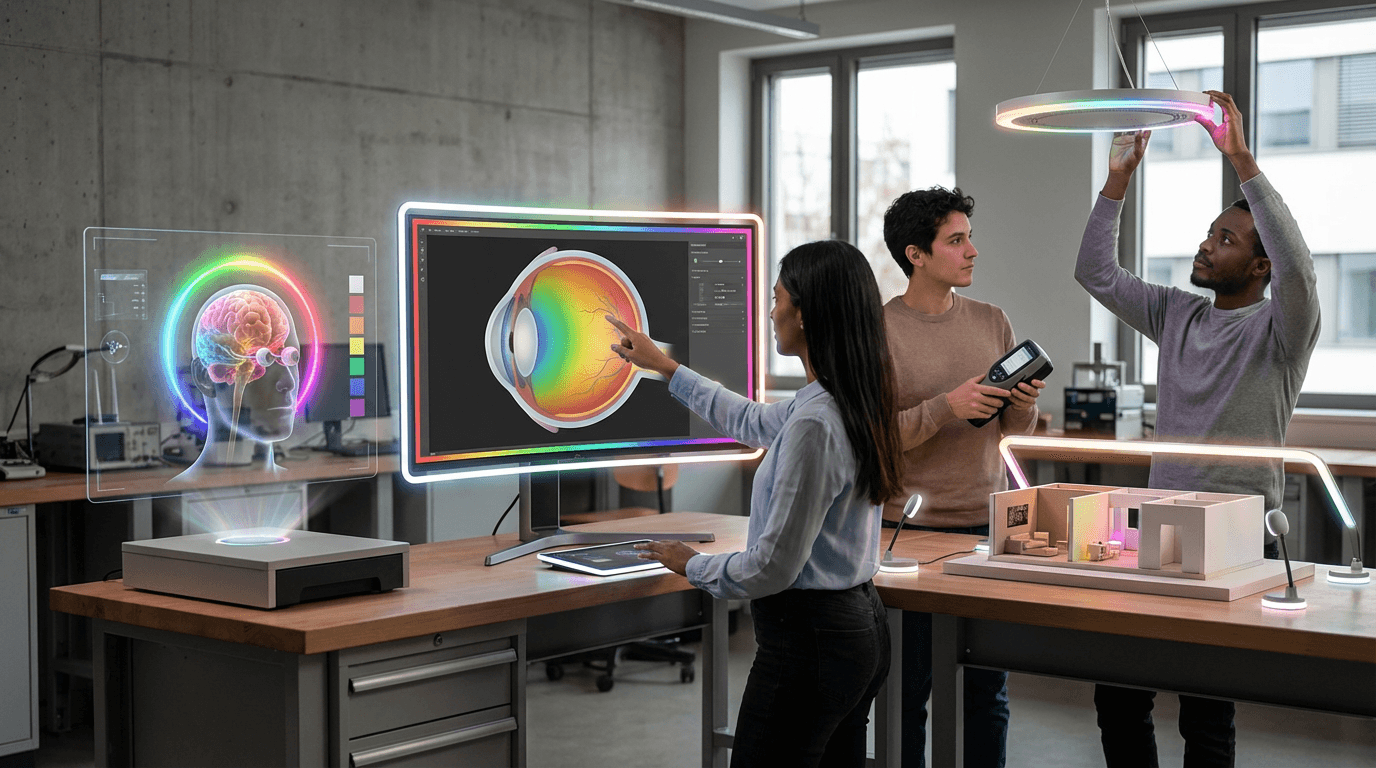
Perceptual Light Modeling
Perceptual light modeling represents a significant evolution beyond traditional photometric analysis, which typically measures only the physical properties of light such as intensity, color temperature, and distribution. While conventional lighting design software calculates illuminance levels and ensures compliance with technical standards, it often overlooks the fundamental reality that light is experienced subjectively by diverse human populations. This technology integrates computational models of human vision, psychology, and cultural context to simulate how different individuals actually perceive and respond to lighting conditions. The software incorporates databases of physiological variables—including age-related changes in lens yellowing, pupil size variations, and conditions like cataracts or color vision deficiencies—alongside psychological factors such as circadian rhythm sensitivity, glare tolerance, and emotional responses to different spectral compositions. By combining these datasets with advanced rendering algorithms, the system can generate visualizations showing how a proposed lighting design will appear to users with different visual capabilities, creating a bridge between the objective measurements of luminaires and the subjective experience of illuminated space.
The lighting industry has long struggled with the gap between technical compliance and human comfort, a challenge that becomes particularly acute in public spaces, healthcare facilities, educational institutions, and workplaces serving diverse populations. Standard lighting guidelines typically assume a normative viewer—often modeled on young adults with typical vision—leading to environments that may be uncomfortable, disorienting, or even unsafe for elderly users, individuals with visual impairments, or those with neurological differences such as autism spectrum conditions that affect sensory processing. Perceptual light modeling addresses these limitations by enabling designers to test their concepts against multiple user profiles before installation, identifying potential issues like excessive glare for older adults, insufficient contrast for those with low vision, or overwhelming sensory stimulation for neurodivergent individuals. This capability also extends to cultural considerations, as research indicates that color associations, preferences for warm versus cool lighting, and tolerance for brightness levels vary significantly across different cultural backgrounds. By making these invisible differences visible during the design phase, the technology helps prevent costly retrofits and ensures that lighting investments genuinely serve their intended populations.
Early implementations of perceptual light modeling are emerging primarily in specialized architectural practices and research institutions focused on inclusive design, with particular interest from healthcare facility planners and aging-in-place housing developers. The technology supports concrete applications such as designing dementia care facilities where lighting must minimize confusion and support circadian health, or creating museum galleries where illumination enhances artifact visibility for visitors across the visual ability spectrum. As awareness grows regarding the profound impact of lighting on wellbeing, productivity, and accessibility, this approach aligns with broader movements toward evidence-based design and universal accessibility in the built environment. The integration of perceptual modeling into mainstream lighting design software platforms represents a crucial step toward environments that accommodate human diversity rather than demanding conformity to arbitrary standards, ultimately contributing to more equitable and health-supporting spaces for all users.
Related Organizations

The international authority on light, illumination, color, and color spaces, defining the standard observers and colorimetric functions used in all modeling.

The world's leading university-based research center devoted to lighting, pioneering studies on circadian stimulus (CS).

Creators of DIALux, the world's leading software for lighting planning which integrates energy calculation with visual comfort and normative perception standards.


Developing Electronic Design Automation (EDA) tools specifically for superconducting electronics.

Laboratory of Integrated Performance in Design, researching visual comfort, daylighting dynamics, and human perception in architecture.

Developer of ReluxDesktop, a professional lighting simulation tool focusing on accurate rendering and sensor planning.

US DOE lab conducting environmental monitoring and materials research relevant to marine energy, including OTEC environmental impacts.

Institute for Building Physics conducting applied research on visual comfort, daylighting, and the psychophysical effects of lighting.

Arup
United Kingdom · Company
A multinational professional services firm dedicated to sustainable development, known for pioneering the use of BIM in complex engineering projects.