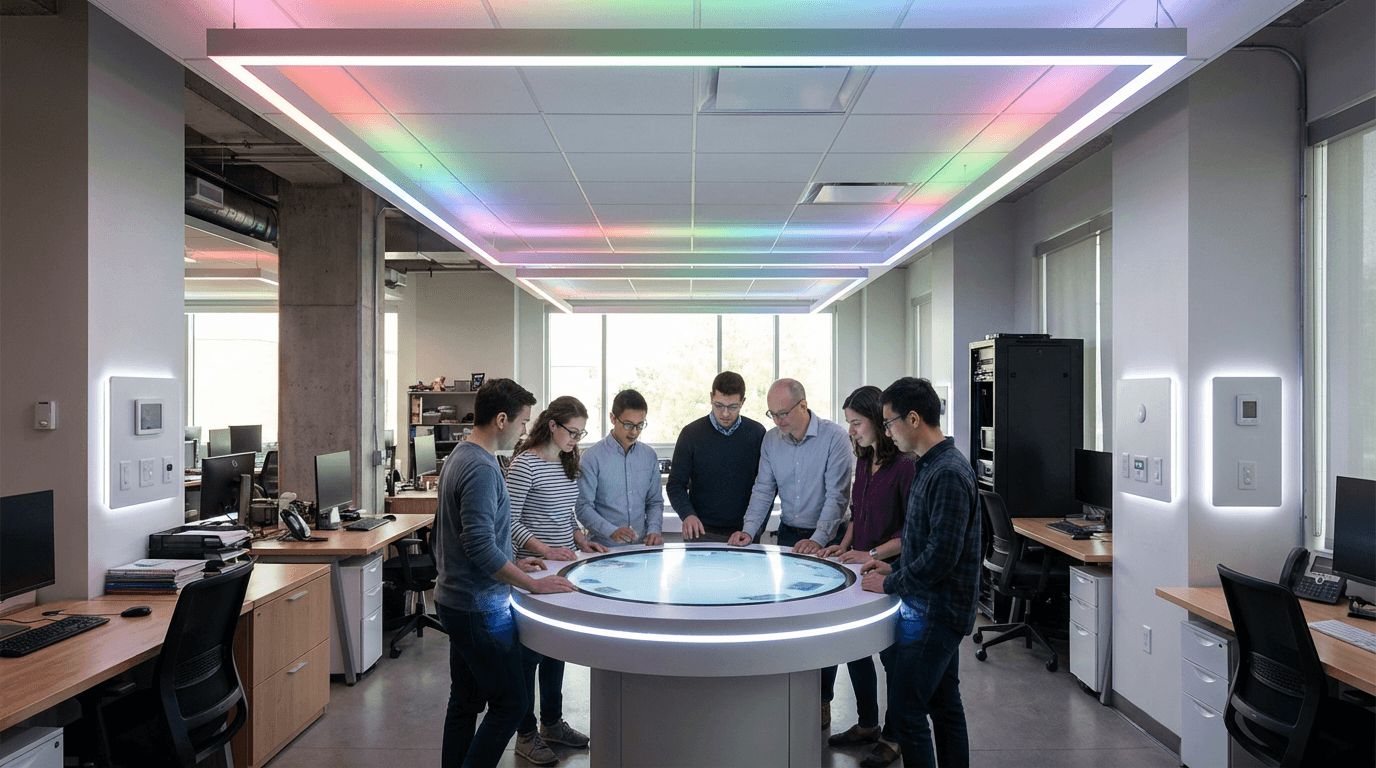
Behavioral Influence via Illumination
Light has long been recognized as a powerful environmental factor influencing human psychology and behavior, but only recently has its deliberate application to shape conduct become a subject of systematic study and ethical scrutiny. Behavioral influence via illumination operates through multiple mechanisms rooted in human physiology and psychology. Specific wavelengths, intensities, and patterns of light can trigger neurological responses that affect circadian rhythms, emotional states, attention levels, and even decision-making processes. Blue-enriched lighting, for instance, has been shown to increase alertness and suppress melatonin production, while warmer color temperatures tend to create more relaxed psychological states. Beyond these biological effects, lighting design can direct attention, create psychological boundaries, and establish implicit social norms within spaces. The technical implementation ranges from static architectural lighting schemes to dynamic systems that adjust color temperature, intensity, and distribution based on time of day, occupancy patterns, or specific behavioral objectives.
The application of lighting as a behavioral tool addresses several challenges facing urban managers, retailers, and security professionals, though not without controversy. In public spaces, strategic illumination has been deployed to discourage loitering in areas prone to antisocial behavior, with harsh blue or pink lighting making prolonged presence uncomfortable while maintaining visibility for legitimate users. Retail environments have long employed lighting strategies to influence shopping behavior, using bright, cool lighting to energize customers in certain zones while employing warmer tones to encourage lingering in others. Transportation hubs and public facilities increasingly use dynamic lighting systems that subtly guide pedestrian flow, reduce perceived wait times, and manage crowd density during peak periods. However, these applications raise significant ethical questions about manipulation and consent. Unlike explicit signage or verbal instructions, lighting-based behavioral influence operates largely below conscious awareness, leading critics to characterize certain implementations as a form of environmental coercion that disproportionately affects vulnerable populations who may have limited alternative spaces to occupy.
Current deployments of behavioral lighting exist along a spectrum from benign to controversial, with regulatory frameworks struggling to keep pace with technological capabilities. Many municipalities have implemented improved street lighting programs that demonstrably reduce crime rates through enhanced visibility and perceived surveillance, an application generally viewed as socially beneficial. More contentious are hostile lighting installations specifically designed to discourage homeless individuals from sheltering in certain areas, or aggressive color schemes in public restrooms intended to prevent drug use by making vein detection difficult. As LED technology and smart lighting systems become more sophisticated and affordable, the capacity for fine-grained behavioral influence will only increase. Research suggests that future systems may incorporate real-time occupancy sensing and adaptive algorithms that optimize lighting conditions for specific behavioral outcomes. This trajectory makes the development of ethical guidelines and regulatory oversight increasingly urgent, particularly regarding transparency, proportionality, and the rights of individuals to occupy public space without being subjected to psychologically manipulative environmental conditions. The challenge moving forward will be distinguishing between lighting design that serves legitimate public interests and applications that constitute unacceptable forms of social control.