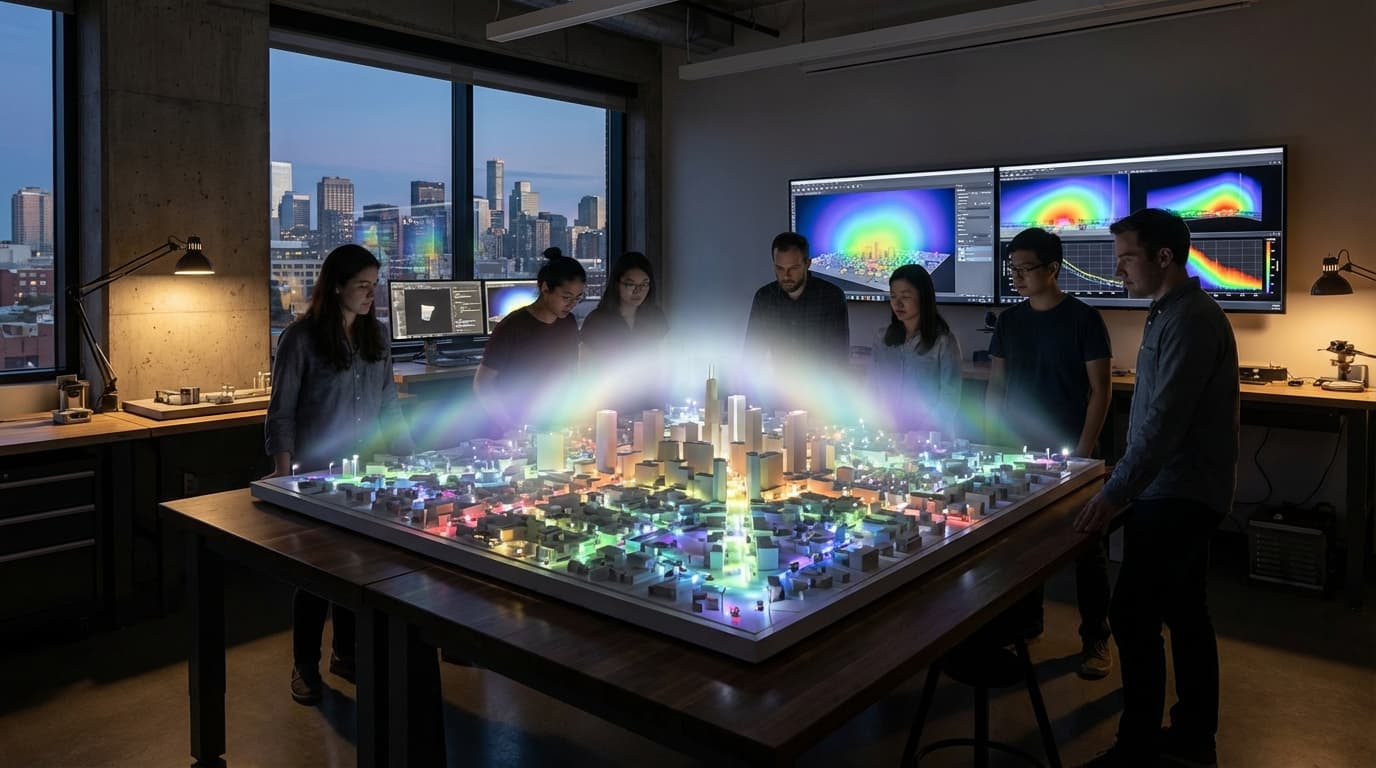
Light Pollution Modeling & Skyglow Simulation
Light pollution modeling and skyglow simulation tools represent a sophisticated computational approach to understanding and managing the environmental impact of artificial lighting at night. These systems combine photometric data from individual light fixtures with complex atmospheric physics models to predict how light propagates through urban and natural environments. At their technical core, these tools integrate multiple data layers: precise fixture specifications including luminous intensity distributions, mounting heights and orientations, surface reflectance properties of roads and buildings, and atmospheric conditions such as aerosol density and humidity that influence light scattering. Advanced simulation engines employ radiative transfer calculations to model how photons interact with particles in the atmosphere, creating the characteristic glow that obscures celestial objects and disrupts natural darkness. The most sophisticated platforms can process thousands of light sources simultaneously, generating spatial maps of illuminance, luminance, and sky brightness across entire municipalities or regions.
Urban planners and lighting designers face mounting pressure to balance public safety and visibility requirements with growing awareness of light pollution's ecological and human health consequences. Research suggests that excessive artificial light at night disrupts circadian rhythms in humans, disorients migratory birds, affects insect populations, and degrades astronomical observation conditions for both professional observatories and amateur stargazers. Traditional lighting design focused primarily on ground-level illumination targets, often overlooking upward light emissions and cumulative atmospheric effects. These modeling tools address this gap by quantifying metrics that matter for dark-sky compliance, such as upward light ratio, backlight spill onto adjacent properties, and the contribution of individual fixtures to overall skyglow. By visualizing these impacts before installation, municipalities can make informed decisions about fixture selection, shielding requirements, and operational schedules that minimize ecological disruption while maintaining adequate visibility for pedestrians and vehicles.
Early adopters of these simulation platforms include cities implementing dark-sky ordinances, national parks protecting nocturnal ecosystems, and astronomical observatories establishing protective lighting zones. Several municipalities have incorporated skyglow modeling into their development review processes, requiring developers to demonstrate compliance with maximum allowable sky brightness increases. The technology supports scenario testing, allowing planners to compare LED retrofit options, evaluate adaptive lighting strategies that dim fixtures during low-activity hours, and assess the cumulative impact of proposed developments on regional light pollution. As awareness of artificial light's environmental footprint grows alongside the rapid global transition to LED technology, these modeling tools are becoming essential infrastructure for sustainable urban development. The trend toward smart city integration suggests future systems will incorporate real-time monitoring data, automatically adjusting lighting schedules and intensities to maintain safety thresholds while minimizing ecological impact, ultimately helping communities preserve access to naturally dark skies as a shared environmental resource.