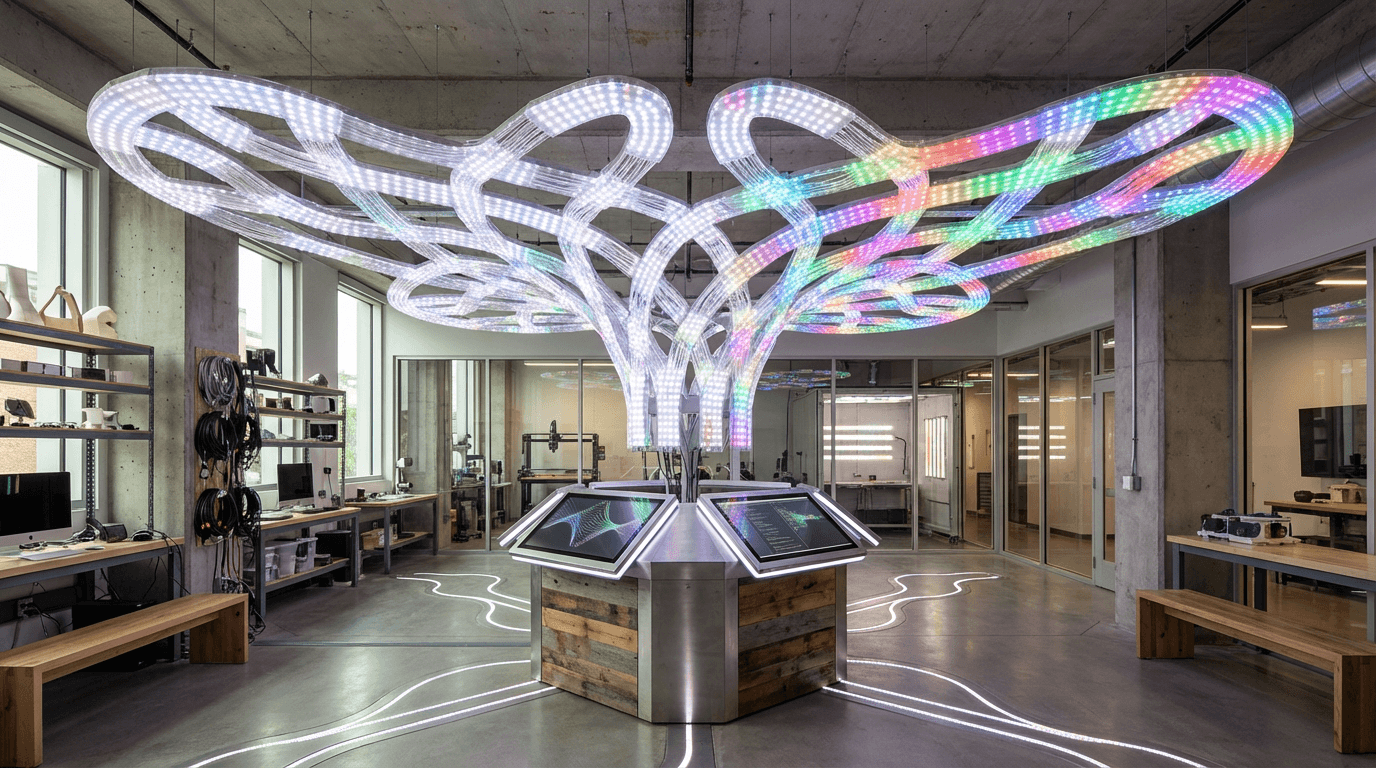
Generative Lighting Design
Generative lighting design represents a paradigm shift from traditional programmed lighting sequences to dynamic, AI-driven illumination that evolves in real time. Unlike conventional lighting control systems that cycle through predetermined scenes or respond to simple triggers, generative algorithms employ machine learning models and procedural generation techniques to create continuously evolving lighting states that never exactly repeat. These systems process multiple data streams simultaneously—ranging from acoustic analysis of live music performances to computer vision assessment of crowd density and movement patterns, from real-time weather data to biometric sensors measuring collective emotional states. The underlying architecture typically combines neural networks trained on aesthetic principles with rule-based systems that ensure technical constraints are met, such as energy consumption limits and fixture capabilities. By treating lighting as a generative medium rather than a fixed output, these systems can produce aesthetically complex compositions that maintain coherence while introducing organic variation, much like how natural phenomena such as firelight or aurora borealis exhibit structured randomness.
The entertainment and hospitality industries face mounting pressure to create memorable, differentiated experiences in an increasingly competitive landscape where static installations quickly become familiar and lose their impact. Traditional lighting design requires extensive programming time for each new show or seasonal refresh, creating bottlenecks and limiting the ability to respond to immediate context. Generative lighting design addresses these challenges by enabling venues to deploy systems that automatically adapt to each unique moment, whether matching the emotional arc of a live musical performance, responding to the energy level of a nightclub crowd, or creating ambient atmospheres in hotel lobbies that shift subtly throughout the day. This technology also solves the problem of content fatigue—the phenomenon where repeated exposure to the same lighting sequences diminishes their psychological impact on regular visitors. By generating novel variations within defined aesthetic boundaries, these systems maintain freshness without requiring constant human intervention. Furthermore, they enable new business models where lighting becomes a service that continuously evolves, potentially incorporating guest feedback or seasonal themes without manual reprogramming.
Early deployments of generative lighting design have emerged primarily in high-end entertainment venues, immersive art installations, and flagship retail environments where differentiation justifies the investment in sophisticated control infrastructure. Music festivals and concert venues have begun experimenting with systems that analyse audio in real time to generate complementary lighting that goes beyond simple beat-matching, creating visual interpretations that enhance rather than merely illustrate the sonic experience. In architectural contexts, several luxury hotels have implemented generative systems in public spaces, where lighting subtly responds to occupancy patterns and time of day while maintaining brand-consistent aesthetic parameters. The technology aligns with broader trends toward ambient intelligence and responsive environments, where physical spaces actively participate in shaping human experience rather than serving as passive backdrops. As computational costs decrease and pre-trained aesthetic models become more accessible, generative lighting design is poised to expand beyond premium applications into broader commercial and public contexts, potentially transforming how we conceive of illumination—not as a static utility but as a dynamic medium capable of continuous artistic expression and environmental attunement.
Related Organizations

A multimedia entertainment studio specializing in the conception and production of immersive environments and media facades.

An international art collective that creates digital art installations, often projecting onto buildings and urban surfaces.

The developers of TouchDesigner, a visual development platform used widely to create real-time, generative lighting and visual systems.

A design studio blending architecture with interaction design and installation art, often using generative light arrays.

Developers of MadMapper, a software for video mapping and LED light control.

A design and technology studio that creates data-driven and generative installations.

A London-based collective creating large-scale installations that integrate sculpture, performance, and generative light.

A design and art studio known for kinetic light installations and the Kinetic Lights brand.

A post-digital art group exploring the human condition in an increasingly mechanized world.

A creative studio integrating digital media into the physical world.