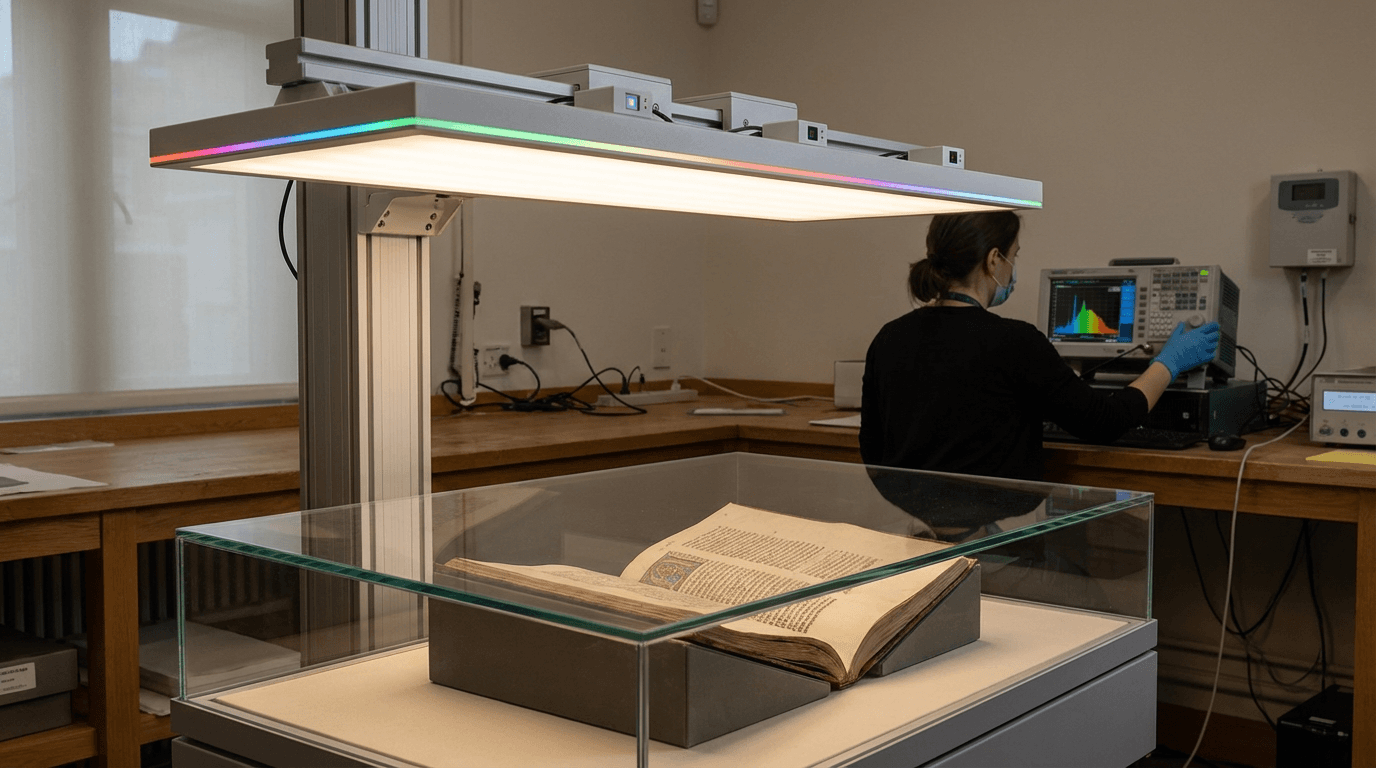
Museum & Conservation Lighting
Museum and conservation lighting represents a sophisticated approach to illuminating cultural artifacts, artworks, and historical objects while minimizing the photochemical degradation that occurs when light interacts with sensitive materials. Unlike conventional lighting systems that prioritize visual comfort and energy efficiency, conservation lighting must address the fundamental conflict between visibility and preservation. The technology relies on precise spectral control—selectively filtering or generating specific wavelengths of light that enable human vision while eliminating or reducing ultraviolet and infrared radiation that accelerates fading, discoloration, and structural breakdown in pigments, textiles, paper, and organic materials. Advanced systems employ tunable LED arrays that can adjust their spectral output based on the specific sensitivities of displayed objects, combined with sophisticated optical filters and diffusers that ensure even illumination without hotspots that could concentrate damaging energy on vulnerable surfaces.
The preservation challenge facing museums and galleries is substantial: light exposure is cumulative and irreversible, meaning every hour an object spends on display contributes to its gradual deterioration. Traditional approaches relied on simple strategies like reduced illumination levels and limited exhibition periods, but these compromises often resulted in dimly lit galleries that frustrated visitors and restricted public access to collections. Conservation lighting systems address this dilemma by implementing dose management protocols that track the total light exposure each artifact receives over time, measured in lux-hours. This quantitative approach allows institutions to establish preservation budgets for individual objects based on their material composition and condition, then dynamically adjust lighting parameters to stay within safe thresholds. The technology also enables more nuanced strategies, such as using higher illumination levels during peak visiting hours when the enhanced viewing experience justifies the increased exposure rate, then reducing intensity during quieter periods to conserve the remaining exposure budget.
Current implementations of conservation lighting are becoming increasingly sophisticated, with several major museums deploying systems that integrate environmental sensors, visitor tracking, and automated controls to optimize the preservation-access balance. These installations demonstrate how spectral tuning can maintain excellent color rendering indices—ensuring that visitors perceive artwork as the artist intended—while eliminating wavelengths below 400 nanometers that contribute disproportionately to photochemical damage. Research institutions and conservation laboratories continue to refine understanding of material-specific photosensitivities, enabling more precise calibration of lighting systems to the actual objects on display. Looking forward, the integration of conservation lighting with broader smart building systems promises to create adaptive exhibition environments that respond not only to cumulative exposure data but also to real-time conditions like temperature, humidity, and visitor density, supporting the long-term mission of cultural institutions to preserve heritage while maintaining meaningful public engagement with collections.