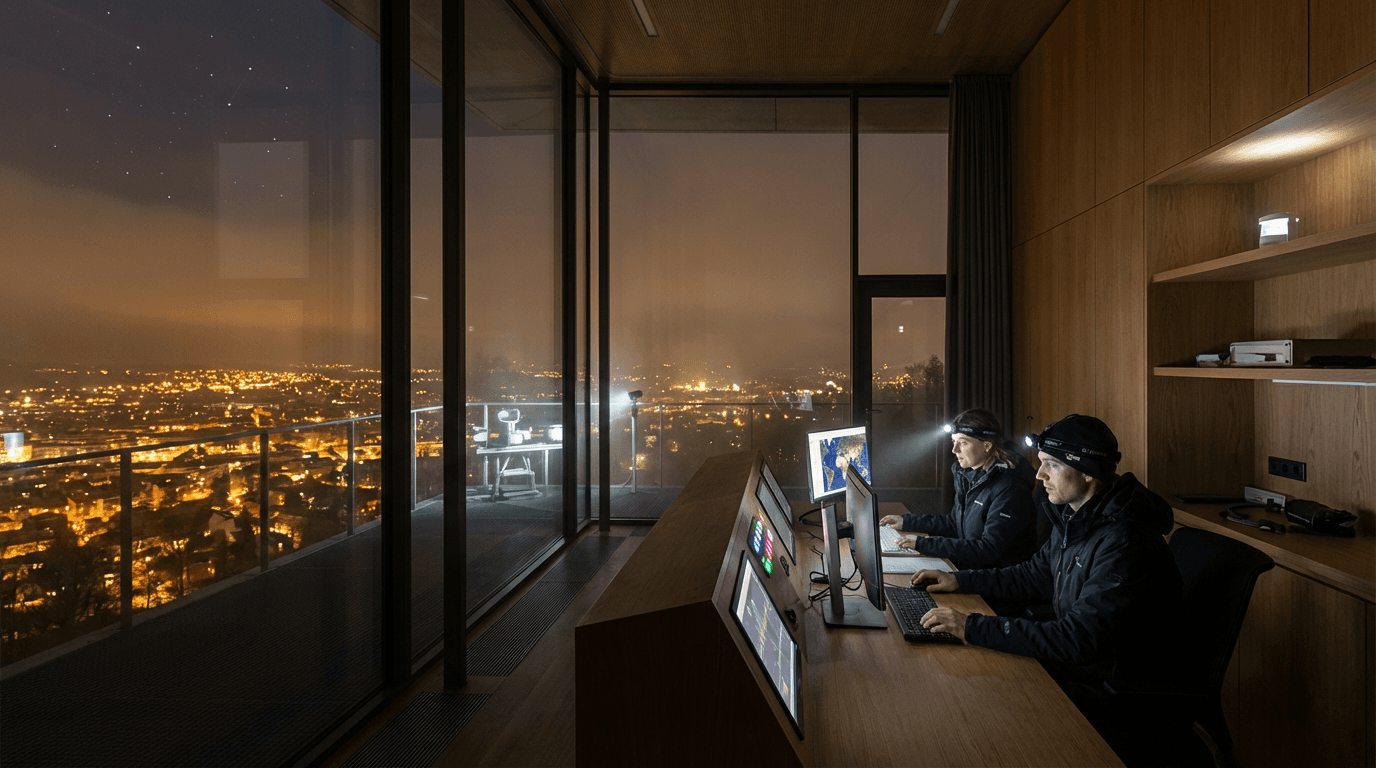
Environmental Light Pollution
Environmental light pollution represents one of the most pervasive yet underappreciated forms of ecological disruption in modern urban and suburban environments. Unlike other forms of pollution that leave visible residues or measurable chemical traces, light pollution operates through the fundamental alteration of natural light-dark cycles that have governed biological rhythms for millions of years. At its core, this phenomenon occurs when artificial illumination—from streetlights, building facades, advertising displays, and industrial facilities—scatters into the night sky or spills beyond its intended targets, creating a persistent luminous haze that obscures celestial objects and fundamentally alters nocturnal ecosystems. The mechanisms of disruption are multifaceted: upward-directed light reflects off atmospheric particles to create skyglow, while poorly shielded fixtures cast light horizontally across landscapes, and excessive illumination levels overwhelm the natural scotopic vision adapted by nocturnal species. This artificial brightening operates across multiple wavelengths, with blue-rich LED lighting proving particularly disruptive to biological processes regulated by circadian photoreceptors.
The ecological and cultural consequences of environmental light pollution extend far beyond simple aesthetic concerns about stargazing. Research indicates that artificial light at night disrupts critical biological processes across numerous species, from the navigation systems of migratory birds that use celestial cues for orientation, to the reproductive cycles of sea turtles whose hatchlings instinctively move toward the brightest horizon—historically the moon-lit ocean, now often misdirected toward coastal development. Nocturnal pollinators, including moths and bats that provide essential ecosystem services, experience altered foraging patterns and reduced reproductive success in illuminated areas. For human populations, the loss extends beyond health impacts of circadian disruption to encompass profound cultural and psychological dimensions—the severing of humanity's ancestral connection to the cosmos and the erasure of dark skies as a shared natural heritage. Urban residents, particularly children in developed nations, increasingly grow up never experiencing a truly dark sky, fundamentally altering their relationship with the natural world and the universe beyond Earth.
Addressing environmental light pollution requires coordinated technical, regulatory, and cultural interventions that are gaining momentum globally. The International Dark-Sky Association has certified over 200 Dark Sky Places worldwide, establishing standards for lighting that minimize ecological impact while maintaining safety and functionality. These standards emphasize fully shielded fixtures that direct light downward, adaptive controls that dim or extinguish lights during low-activity periods, and spectral considerations that favor warmer color temperatures less disruptive to biological systems. Municipal regulations in cities from Tucson to Paris now mandate lighting curfews and specify maximum illumination levels for different zones, demonstrating that urban safety and ecological stewardship need not be mutually exclusive. Emerging technologies including precision optics, motion-activated systems, and networked lighting controls enable increasingly sophisticated approaches to providing illumination only where, when, and at the intensity actually needed. As awareness grows of light pollution's role in biodiversity loss and the broader sustainability agenda, the movement toward reclaiming natural darkness represents not a rejection of progress but rather a more nuanced understanding of how artificial light can coexist with the ecological and experiential value of night.
Related Organizations

Coordinates the 'Loss of the Night' network, researching the ecological impacts of artificial light on biodiversity and aquatic systems.

A division of the US NPS dedicated to measuring, monitoring, and protecting the night sky as a natural resource.

Runs the 'BirdCast' project, which uses weather radar to track bird migration and issues light pollution warnings to cities.

Fatal Light Awareness Program (FLAP) focuses on the impact of city lights on migrating birds, advocating for 'Lights Out' campaigns.

Works to retrofit coastal lighting to be turtle-friendly (amber/red wavelengths) to prevent hatchling disorientation.

The Invertebrate Conservation Trust, which campaigns and researches the impact of LED streetlights on insect populations.
Maintains a certification program for 'Wildlife Lighting' fixtures that meet strict spectral and shielding requirements.

A manufacturer specializing in corrosion-resistant, turtle-safe amber lighting fixtures for coastal environments.

Maker of smart telescopes that use digital processing to cut through light pollution, also engaging users in citizen science on sky quality.