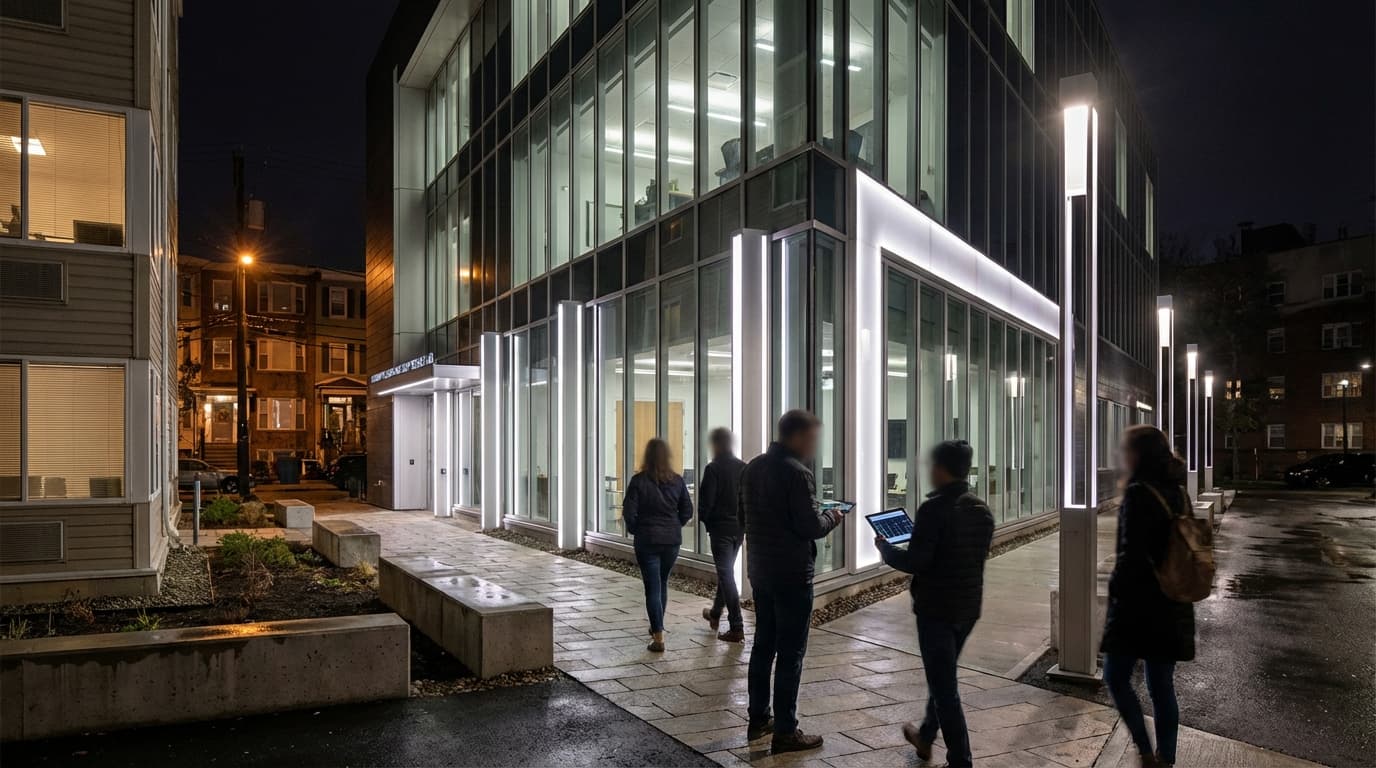
Light Trespass & Environmental Justice
Light trespass occurs when artificial illumination spills beyond its intended target area, intruding into homes, natural habitats, and public spaces where it is neither needed nor wanted. This phenomenon is driven by poorly designed or improperly aimed lighting fixtures, excessive illumination levels, and the proliferation of high-intensity sources such as LED streetlights, commercial signage, and security floodlights. Unlike light pollution, which refers to the general brightening of the night sky, light trespass is a localized intrusion that directly impacts individuals and communities. The technical mechanisms involve both direct glare—light shining directly into the eye—and reflected glare from surfaces, as well as skyglow that reduces contrast and visibility. The problem is compounded by the shift to cooler-temperature LEDs, which emit more blue-spectrum light that scatters more readily and penetrates windows more effectively than traditional sodium vapor lamps.
The environmental justice dimension of light trespass emerges from its uneven distribution across urban landscapes. Research suggests that lower-income neighborhoods, communities of color, and areas adjacent to industrial zones or major transportation corridors experience disproportionately high levels of intrusive lighting. These communities often lack the political capital to influence lighting decisions or demand remediation, while simultaneously bearing the health and quality-of-life costs. Chronic exposure to nighttime light intrusion disrupts circadian rhythms, contributing to sleep disorders, metabolic dysfunction, and increased stress levels. For residents living near brightly lit highways, warehouses, or 24-hour commercial operations, the inability to achieve darkness in their own homes represents a fundamental erosion of environmental quality and personal autonomy. This pattern reflects broader inequities in urban planning, where industrial and commercial activities are concentrated in areas with less political resistance, creating cumulative environmental burdens that include noise, air pollution, and now, light trespass.
Addressing light trespass through an equity lens requires systemic changes in how communities plan, regulate, and maintain outdoor lighting. Progressive municipalities are beginning to adopt lighting ordinances that include measurable limits on horizontal and vertical illuminance at property boundaries, mandatory shielding requirements, and curfews for non-essential lighting. Community-based participatory processes are emerging as essential tools, ensuring that residents most affected by lighting decisions have meaningful input into planning and enforcement. Some cities have established complaint mechanisms with transparent tracking and accountability measures, while others are conducting lighting audits in environmental justice communities to identify and remediate the worst offenders. As awareness grows of the health impacts of circadian disruption and the equity dimensions of environmental quality, light trespass is increasingly recognized not as a minor nuisance but as a legitimate public health concern requiring the same rigor applied to air and water quality standards.
Related Organizations

DarkSky International
United States · Nonprofit
The leading global organization combating light pollution, providing the 'Fixture Seal of Approval' for shielding and trespass control.
Illuminating Engineering Society (IES)
United States · Company
The technical society in North America that develops standards for the lighting industry.

A research group at the London School of Economics exploring the sociological and inequality aspects of urban lighting and planning.

An academic center dedicated to the research and preservation of dark skies, linking it to public health and community planning.

A global leader in sports lighting known for advanced optics that precisely cut off light to prevent spill into neighboring properties.
A municipal government famous for its strict outdoor lighting codes to protect local observatories and reduce neighborhood light trespass.

An advocacy group dedicated to raising awareness about the harms of LED glare and light trespass, often citing ADA and equity concerns.

A manufacturer of LED street lights that includes specific shields and optics to address light trespass complaints in municipalities.

Selux
Germany · Company
A lighting manufacturer focusing on high-end optical systems that eliminate glare and control light distribution in urban environments.
Kim Lighting
United States · Company
A brand (now part of Current) that pioneered 'cutoff' lighting fixtures to direct light downwards and prevent light pollution/trespass.