Laser-based Lighting
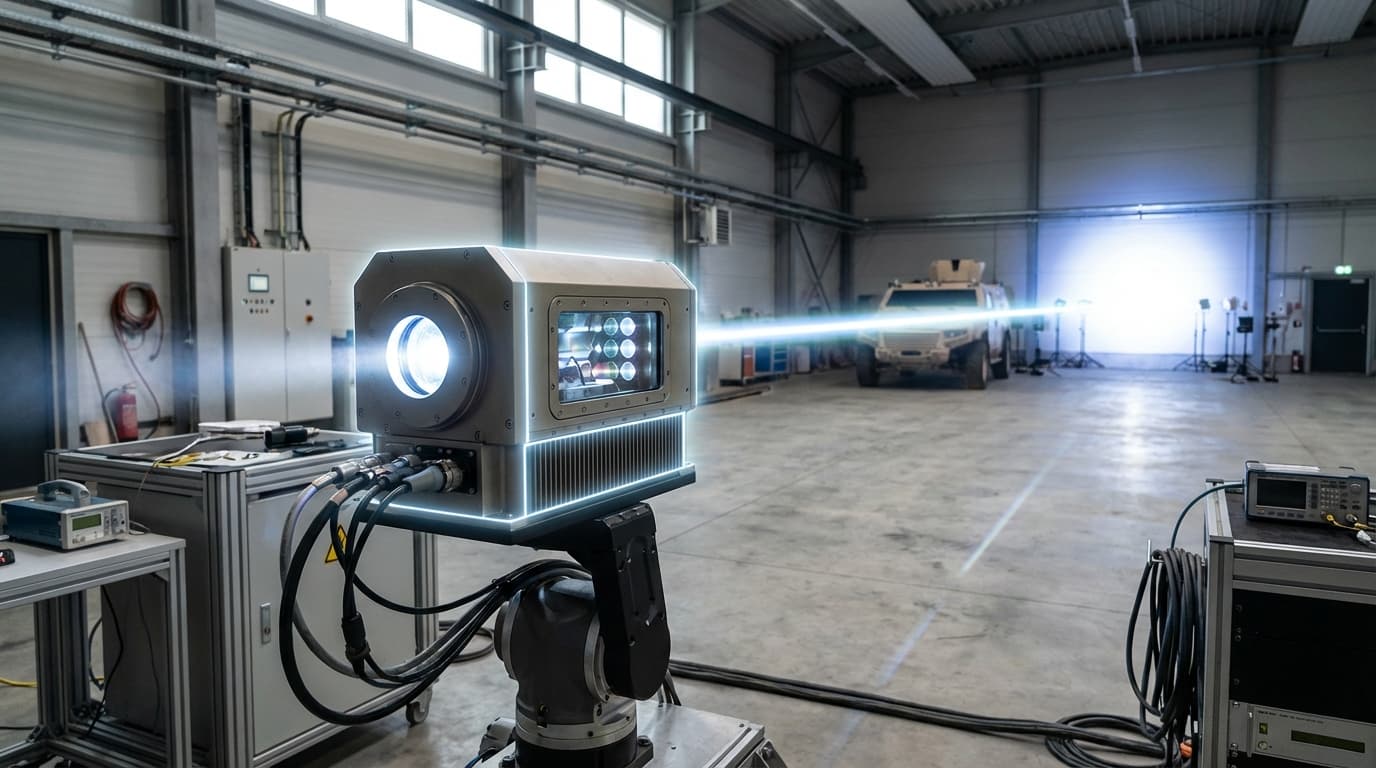
Laser-based lighting represents a significant advancement in illumination technology, employing laser diodes that excite phosphor materials to generate exceptionally bright, highly directional white light. Unlike conventional LED systems that rely on semiconductor junctions to produce light directly, this approach uses blue or ultraviolet laser diodes to stimulate phosphor coatings, which then convert the coherent laser energy into broad-spectrum white light. The result is a light source with dramatically higher luminance density—often ten times that of comparable LEDs—while maintaining excellent energy efficiency. The coherent nature of laser light allows for precise beam control and focusing, enabling illumination over distances that would be impractical with traditional technologies. The compact size of laser diodes, combined with their ability to generate intense light from a small emitting surface, makes them particularly valuable in applications where space constraints and performance demands intersect.
The automotive industry has emerged as a primary driver for laser-based lighting adoption, particularly for high-beam applications where visibility at extended distances directly impacts safety. Traditional halogen and even advanced LED headlights struggle to provide adequate illumination beyond 300 meters, whereas laser-based systems can effectively illuminate roadways at 600 meters or more, giving drivers crucial additional reaction time at highway speeds. Beyond automotive applications, this technology addresses critical limitations in large-scale venue lighting, where conventional systems require extensive arrays of fixtures to achieve desired brightness levels. Stadium operators and event venues benefit from reduced fixture counts, lower installation complexity, and decreased energy consumption while maintaining superior light quality. In emergency response scenarios, the combination of extreme brightness, long throw distance, and compact form factor enables search-and-rescue teams to deploy portable lighting systems capable of illuminating vast areas from elevated positions or scanning distant terrain features that would remain invisible under standard lighting technologies.
Early commercial deployments have already demonstrated the viability of laser-based lighting in premium automotive segments, with several manufacturers incorporating the technology into flagship vehicle models. Research initiatives continue to explore expanded applications in maritime navigation, where long-range illumination can enhance nighttime operations and collision avoidance, and in industrial settings requiring precise, high-intensity lighting for inspection and quality control processes. As manufacturing costs decline and thermal management techniques improve, industry analysts note growing interest in architectural applications, particularly for landmark illumination and facade lighting where dramatic visual impact justifies the technology's current premium. The trajectory of laser-based lighting aligns with broader trends toward solid-state illumination and intelligent lighting systems, positioning it as a complementary technology to LEDs rather than a wholesale replacement, filling specific niches where conventional solutions cannot meet performance requirements for intensity, distance, or precision.
Related Organizations

Produces the Eviyos hybrid LED, a multipixel light source designed specifically for high-resolution adaptive headlights and road projection.
Develops laser light sources for automotive and specialty lighting.


A major hub for quantum materials research, including topological insulators and superconductors.

Developing sensor-integrated headlamps and external communication displays for autonomous shuttles.
Automotive supplier producing the h-Digi lighting module, which uses micro-mirrors to project high-resolution light patterns on the road.

Manufacturer of the 'Care222' filtered Far-UV-C excimer lamp module, the core component in most safe-for-occupied-space UV systems.
Major automotive supplier that produced the first automotive-grade LiDAR (SCALA).

Specializes in premium lighting systems and high-definition projection modules for luxury automakers.

Develops LiDAR sensors and perception software used for reliable volume monitoring and pedestrian detection at smart intersections.

Has developed prototypes and partnered with Aromajoin for scent delivery in immersive environments.