Metasurface / Freeform Optics for Beam Shaping
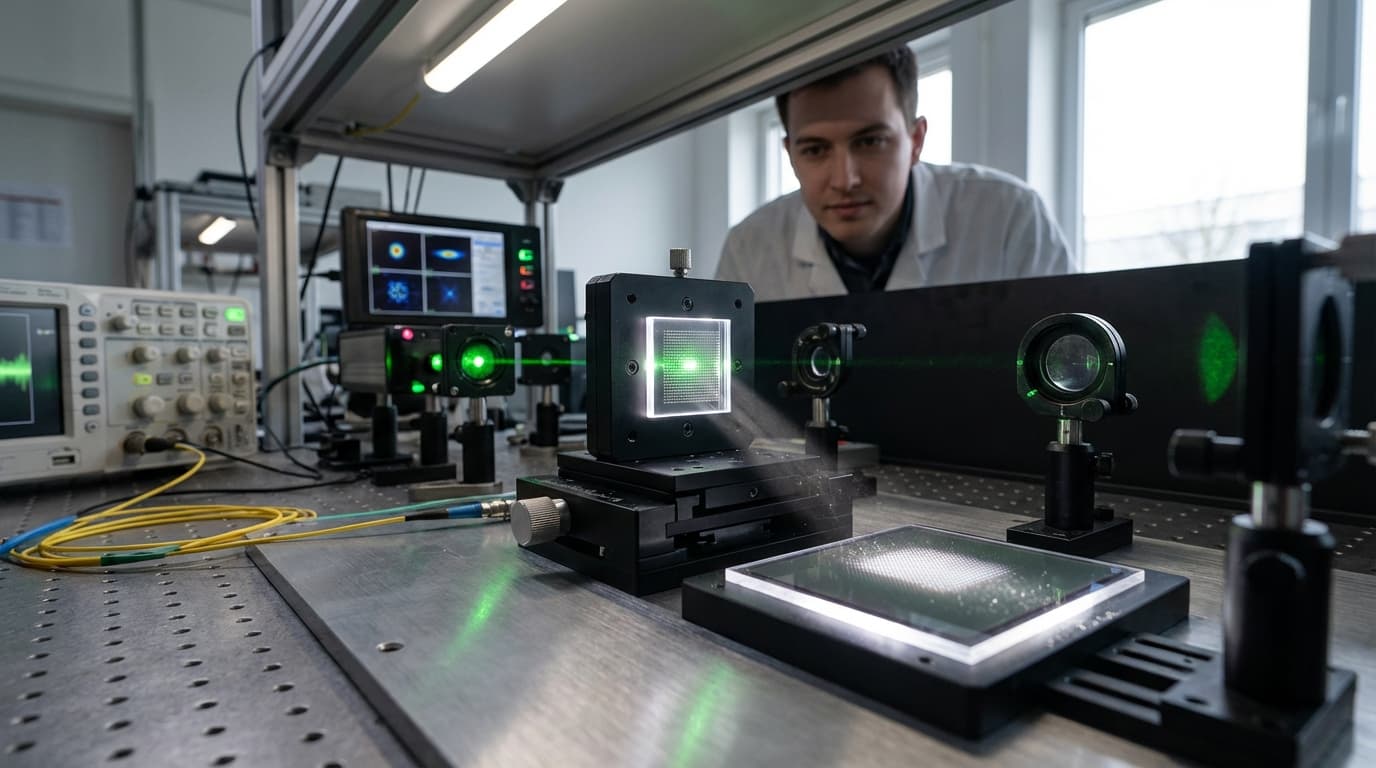
Metasurface and freeform optics represent a fundamental shift in how light can be controlled and distributed, moving beyond the constraints of traditional lens and reflector systems. Conventional lighting optics rely on smooth, symmetric surfaces governed by classical geometric optics—parabolic reflectors, spherical lenses, and Fresnel arrays—which often struggle to deliver the precise, application-specific beam patterns demanded by modern lighting scenarios. Metasurfaces, composed of sub-wavelength nanostructures arranged in carefully designed patterns, manipulate light at the scale of its wavelength, enabling unprecedented control over phase, amplitude, and polarization. Freeform optics, meanwhile, employ mathematically optimized, non-rotationally symmetric lens and reflector surfaces that can redirect light with surgical precision. Together, these technologies allow designers to sculpt illumination into complex, asymmetric distributions—sharp cutoffs that prevent upward light pollution, pixel-level projection for dynamic messaging, or tailored patterns that illuminate pedestrian crossings while leaving adjacent areas dark.
The lighting industry has long grappled with the challenge of delivering light exactly where it is needed while avoiding where it is not. Glare from streetlights reduces visibility and disrupts circadian rhythms, while automotive headlights that illuminate oncoming drivers create safety hazards. Traditional beam-shaping methods require bulky optical assemblies, multiple components, and often accept compromises in efficiency or uniformity. Metasurface and freeform optics address these limitations by collapsing complex optical functions into ultra-thin, lightweight elements. A single metasurface layer, thinner than a human hair, can replace stacks of conventional lenses, reducing size, weight, and material costs. Freeform lenses enable automotive adaptive driving beam (ADB) systems to carve out dark zones around detected vehicles in real time, maintaining high-beam illumination elsewhere. In architectural contexts, these optics allow luminaires to respect building facades, minimize light trespass into residential windows, and create visually comfortable environments without sacrificing illumination levels on task surfaces.
Early commercial adoption is already visible in premium automotive lighting, where manufacturers are integrating freeform optics into ADB headlights that dynamically reshape their beams based on camera and sensor input. Research prototypes demonstrate metasurface-based streetlights capable of projecting crosswalk patterns or directional arrows directly onto pavement, merging wayfinding with illumination. As fabrication techniques for nanoscale structures mature and costs decline, these technologies are poised to migrate from high-end applications into mainstream architectural and urban lighting. The convergence of computational design tools, advanced manufacturing, and real-time sensing positions metasurface and freeform optics as foundational elements in the evolution toward context-aware, human-centric illumination systems that respect both visual comfort and energy efficiency imperatives.
Related Organizations

The research group led by Federico Capasso, widely credited with pioneering the field of flat optics and metasurfaces.

LEDiL
Finland · Company
A global leader in secondary optics for LEDs, specializing in freeform injection-molded lenses and reflectors.

A spin-out from Harvard's Capasso Lab commercializing metasurface optics for consumer electronics and sensing applications.

Institute for Applied Optics and Precision Engineering, conducting advanced research on micro-optics and freeform surfaces.

An Italian manufacturer of optical solutions for LED lighting, utilizing advanced freeform design and silicone molding.

Developer of optical semiconductor solutions enabling solid-state LiDAR using Light Control Metasurfaces (LCM).
Nil Technology
Denmark · Company
Specializes in nanoimprint lithography and the design/manufacturing of meta-optics and diffractive optical elements.

Designs and manufactures injection molded freeform optics for LED lighting applications.

Specializes in Diffractive Optical Elements (DOEs) and beam shaping micro-optics for high-power lasers and aesthetic applications.

Develops 'VirtualLab Fusion', a fast physical optics simulation software used to design metasurfaces and micro-optics.

Developing tunable metasurface optics for imaging and vision applications, allowing focus-free systems.

Developing Electronic Design Automation (EDA) tools specifically for superconducting electronics.