Automated Commissioning & Interoperability Layers
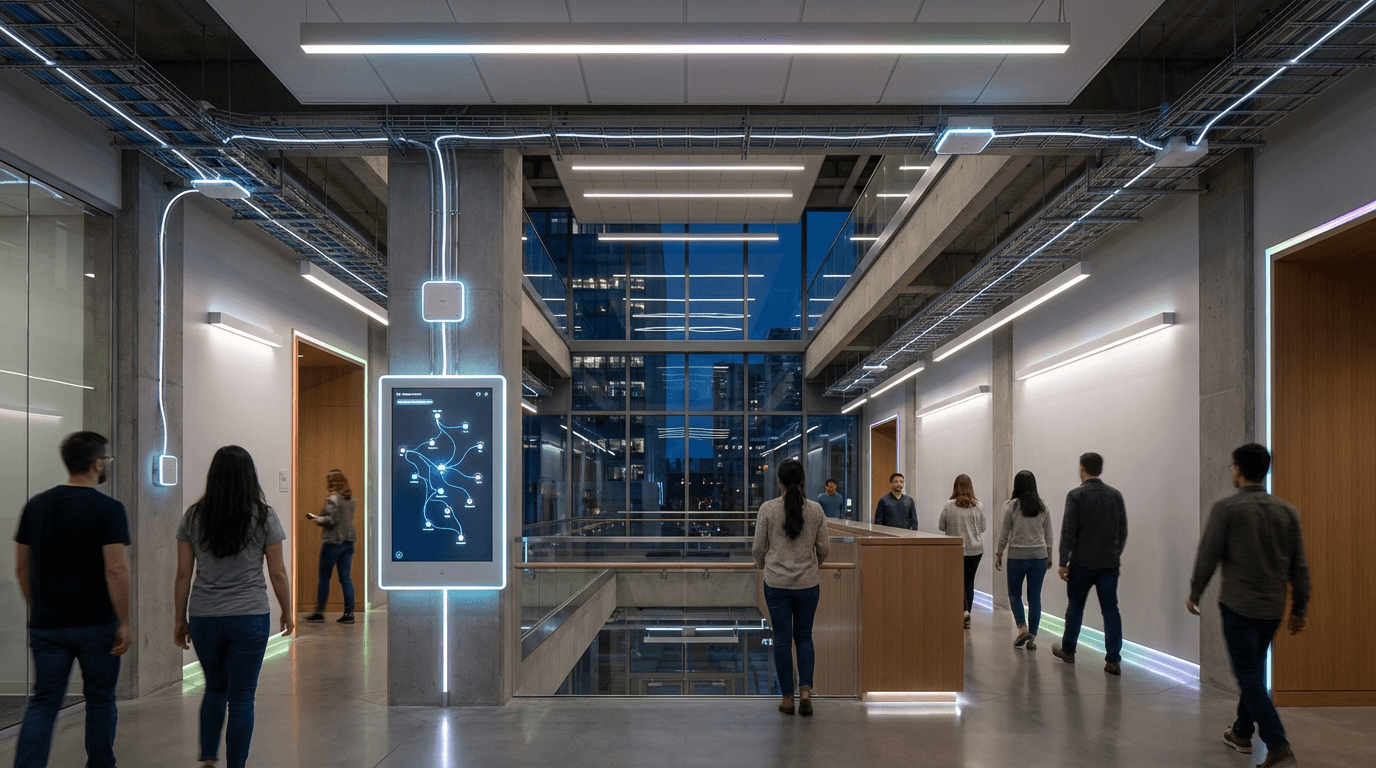
The deployment of connected lighting systems in commercial buildings and urban environments has historically been hampered by the complexity and cost of commissioning—the process of configuring, testing, and integrating individual luminaires and control devices into a functioning network. Traditional commissioning requires specialized technicians to manually address each fixture, map control zones, program scenes, and ensure interoperability between devices from different manufacturers. This labor-intensive process can account for 30-50% of total installation costs and introduces significant delays in project timelines. The fundamental challenge lies in the fragmented landscape of lighting control protocols: a single building might contain legacy DALI-controlled fixtures, DMX theatrical systems, IP-networked architectural lighting, and building management system (BMS) integrations, each speaking a different technical language. Automated commissioning and interoperability layers address this complexity by providing software platforms that can discover devices across these heterogeneous networks, automatically assign addresses, translate between protocols, and apply consistent control policies regardless of the underlying hardware.
These systems function as middleware that sits between physical lighting infrastructure and control applications, abstracting away protocol differences and enabling unified management. When new fixtures are installed, the software automatically detects them on the network, identifies their capabilities, and integrates them into the building's lighting topology without manual intervention. Advanced implementations employ machine learning to recognize spatial relationships between fixtures based on their physical proximity and light output patterns, enabling automatic zone creation and scene replication across different areas. This approach transforms lighting from a collection of individually configured devices into software-defined infrastructure, where configurations can be version-controlled, tested in virtual environments, and deployed repeatably across multiple sites. For facility managers, this means lighting policies—such as daylight harvesting schedules, occupancy-based dimming, or emergency protocols—can be defined once and applied consistently across entire portfolios of buildings, with full audit trails documenting every change.
Early deployments in commercial real estate and smart city initiatives demonstrate the transformative potential of this technology. Large corporate campuses are using automated commissioning to reduce installation timelines from weeks to days, while municipalities deploying smart streetlight networks leverage interoperability layers to integrate lighting with other city systems like traffic management and public safety networks. The technology is particularly valuable in retrofit scenarios, where existing lighting infrastructure must coexist with new connected systems during phased upgrades. As the lighting industry continues its transition toward networked, data-driven systems, automated commissioning and interoperability layers are becoming essential enablers of scalability. They address not only the immediate cost barriers to adoption but also the long-term challenge of managing increasingly complex lighting ecosystems that must adapt to changing building uses, energy regulations, and user expectations over decades of operational life.
Related Organizations

The global industry organization for DALI lighting control, managing the DALI-2 and D4i standards which enable interoperability and data exchange.

Provider of firmware and software solutions dedicated to Bluetooth Mesh lighting control, focusing heavily on automated commissioning tools.

Organization behind the 'Matter' standard for smart home interoperability.

Lighting control specialist known for ActiveAhead, a self-learning solution that automates commissioning through AI.

Industry alliance maintaining the Thread networking protocol, a low-power mesh networking technology that underpins the Matter standard.

Tridonic
Austria · Company
Lighting technology company offering drivers and controls with advanced interfaces (DALI-2, wireless) that simplify system setup.

Software company providing a decentralized mesh connectivity suite that enables massive scale IoT with minimal configuration.

Manufacturer of DALI-2 control systems focused on cloud-based commissioning and remote management.

Provider of Bluetooth mesh control components and sensors designed for interoperability with major platforms like Silvair and Casambi.

Smart lighting software stack provider offering a scalable mesh network that integrates with various building management systems.