Agricultural & Bio-lighting
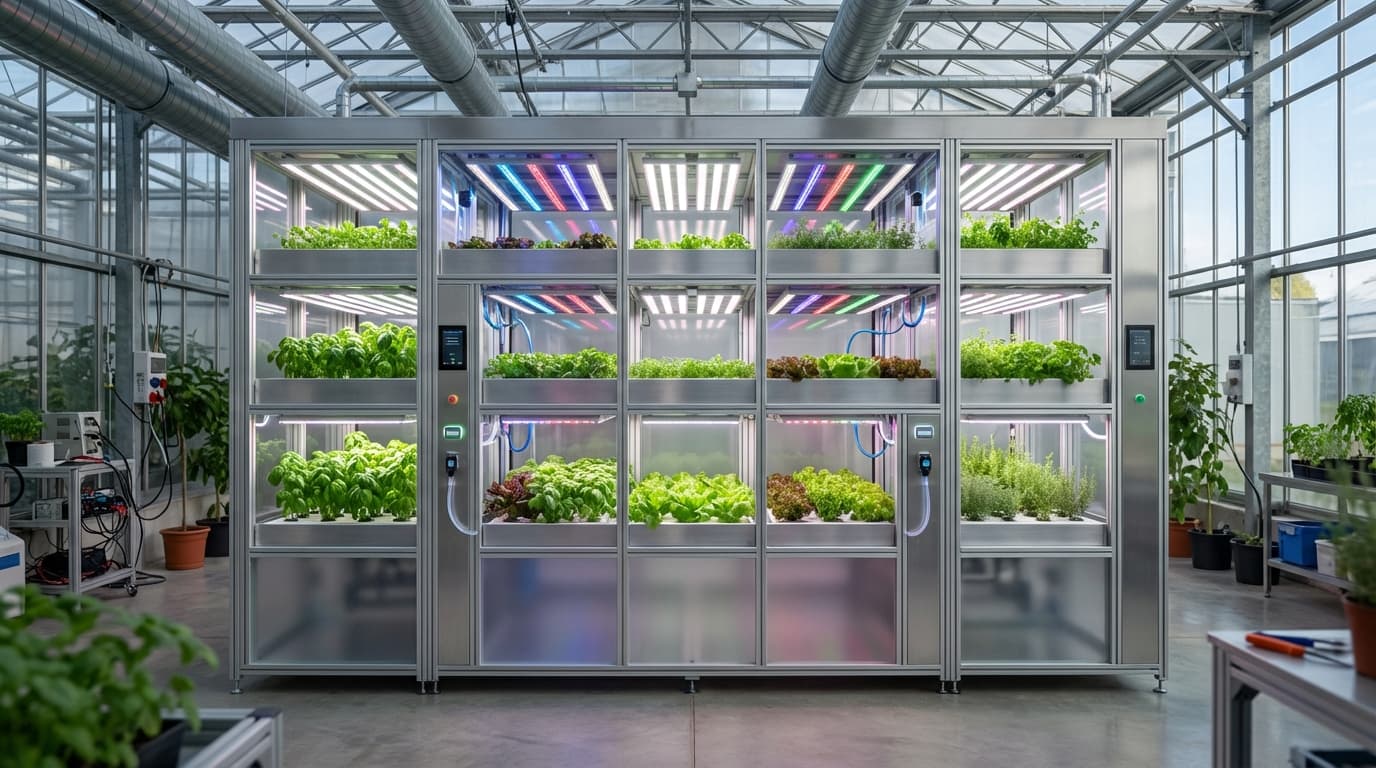
Agricultural and bio-lighting represents a fundamental shift in how we approach food production, leveraging precise control over light wavelengths, intensity, and duration to optimize plant development independent of natural sunlight. This technology operates on the principle that different wavelengths of light trigger specific photoreceptors in plants—phytochromes respond to red and far-red light, cryptochromes to blue light, and phototropins to directional light cues. By manipulating these spectral components through LED arrays, growers can influence everything from stem elongation and leaf expansion to flowering initiation and the synthesis of vitamins, antioxidants, and other phytonutrients. The technical foundation rests on understanding photosynthetic efficiency curves and morphogenic responses, allowing cultivators to deliver exactly the light recipe a crop needs at each growth stage, whether that means blue-heavy spectra for compact vegetative growth or red-enriched wavelengths to accelerate flowering.
The agricultural sector faces mounting pressure from climate volatility, diminishing arable land, and the need to produce more food closer to urban consumption centers. Traditional greenhouse operations remain dependent on supplemental lighting that often wastes energy on wavelengths plants cannot use, while outdoor farming is constrained by seasonal variation and unpredictable weather patterns. Agricultural bio-lighting addresses these limitations by enabling year-round cultivation in controlled environments, from multi-story vertical farms in city centers to shipping container farms in food deserts. This precision approach can reduce energy consumption by 40-50% compared to conventional horticultural lighting while simultaneously improving crop quality—research indicates that tailored light recipes can increase vitamin C content in leafy greens, enhance the concentration of beneficial compounds like anthocyanins in berries, and even influence flavor profiles in herbs. The technology also enables faster crop cycles by extending photoperiods beyond natural day length, potentially allowing three to four harvests annually where traditional agriculture might yield only one.
Commercial adoption of agricultural bio-lighting has accelerated significantly in recent years, particularly in regions with limited sunlight or expensive real estate where vertical farming economics make sense. Major urban vertical farms in Singapore, the Netherlands, and Japan have demonstrated the viability of LED-based cultivation systems that produce consistent, pesticide-free greens and herbs throughout the year. Beyond leafy vegetables, researchers are expanding applications to fruiting crops like strawberries and tomatoes, as well as exploring how specific light treatments can enhance the production of high-value compounds in medicinal plants. The technology aligns with broader trends toward localized food systems, reduced agricultural water use, and climate-resilient food security strategies. As LED efficiency continues to improve and our understanding of plant photobiology deepens, agricultural bio-lighting is positioned to become a cornerstone of sustainable urban food production, offering a pathway to nutritionally optimized crops grown with minimal environmental footprint in spaces previously unsuitable for agriculture.