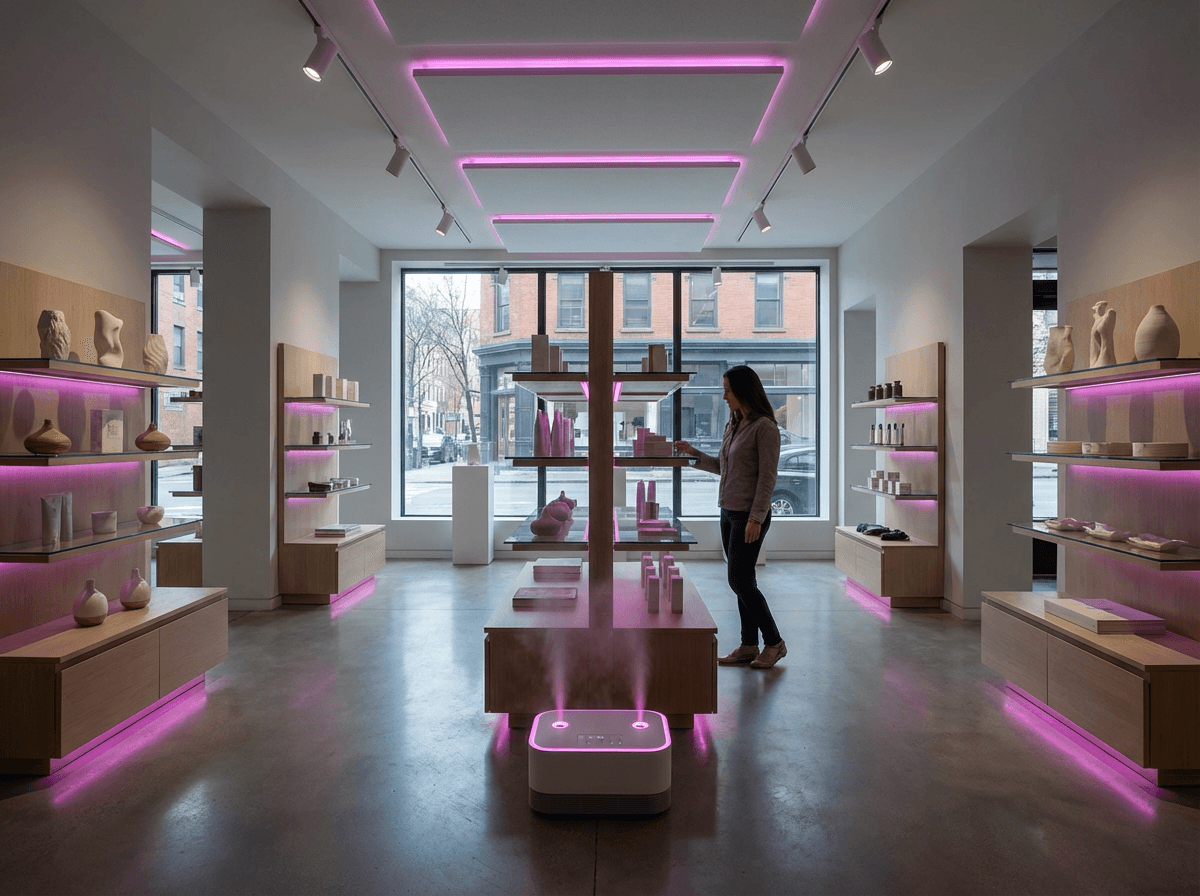
Adaptive Retail Atmospherics
Adaptive Retail Atmospherics represents a convergence of environmental psychology, sensor networks, and automated control systems designed to dynamically shape the in-store shopping experience. Unlike static store designs that maintain consistent lighting, music, and ambient conditions throughout the day, these systems deploy arrays of environmental sensors—including thermal cameras for crowd density mapping, point-of-sale data feeds, and even biometric indicators where permitted—to continuously assess shopper behavior and emotional states. The technical infrastructure typically combines Internet of Things (IoT) actuators controlling LED lighting arrays capable of adjusting color temperature and intensity, zoned audio systems that can vary tempo and genre across different store sections, and HVAC-integrated scent diffusion mechanisms that release specific aromatic compounds. Machine learning algorithms process incoming data streams to identify patterns correlating environmental conditions with desired behaviors, then issue commands to environmental controls within seconds, creating a responsive feedback loop between shopper activity and atmospheric conditions.
The retail industry faces mounting pressure from e-commerce competition, declining foot traffic, and shrinking profit margins that make every square meter of physical space critically important. Traditional approaches to store atmosphere relied on intuition and broad demographic assumptions, often resulting in environments that felt generic or failed to adapt to the natural rhythms of shopper behavior throughout the day. Adaptive atmospherics addresses these challenges by enabling retailers to test and refine environmental strategies with unprecedented precision, identifying which combinations of sensory inputs drive longer browsing sessions, higher basket values, or increased conversion rates for specific product categories. Early deployments indicate that strategic scent deployment can increase time spent in particular departments by measurable percentages, while dynamic lighting that shifts from energizing cool tones during morning hours to warmer, more relaxed hues in the evening can influence purchasing decisions in predictable ways. This granular control also allows retailers to create distinct atmospheric zones within a single location, guiding shoppers through carefully orchestrated sensory journeys that align with merchandising strategies.
Several major retail chains have begun piloting these systems in flagship locations, particularly in sectors where experiential differentiation matters most—luxury goods, cosmetics, and lifestyle brands. The technology builds on decades of research into environmental psychology and sensory marketing, but recent advances in affordable sensor networks and cloud-based analytics have made real-time adaptation economically viable for mid-market retailers. Current implementations range from relatively simple systems that adjust lighting and music based on time of day and weather conditions, to sophisticated platforms that attempt to detect shopper stress levels or decision fatigue and respond with calming scents or simplified visual displays. As the technology matures, industry analysts note a trajectory toward increasingly personalized atmospheric responses, potentially recognizing returning customers through mobile app integration and adjusting conditions to match individual preferences. However, this evolution raises important questions about transparency and consent, as shoppers may not be aware of the extent to which their environment is being actively manipulated to influence their behavior, suggesting that future regulatory frameworks may require disclosure of adaptive atmospheric systems.
Related Organizations


ScentAir
United States · Company
A global leader in scent marketing.

Parent company of Philips Hue, which offers the 'Hue Sync' protocol to align smart lighting with HDMI video signals.

In-store analytics provider using cameras to measure foot traffic and customer behavior.

A company providing in-store music and entertainment media.

A provider of scalable digital signage, media players, and sensor technology.

Leader in lighting control, owner of Ketra which produces natural light simulation.

Sensormatic Solutions
United States · Company
A global retail solutions portfolio of Johnson Controls.

Supporting Evidence
Research this in Signals
Signals turns a topic into a sourced research record you can inspect and rerun. Your first scan is free, and this one starts with Adaptive Retail Atmospherics already loaded, so edit it or scan as is.