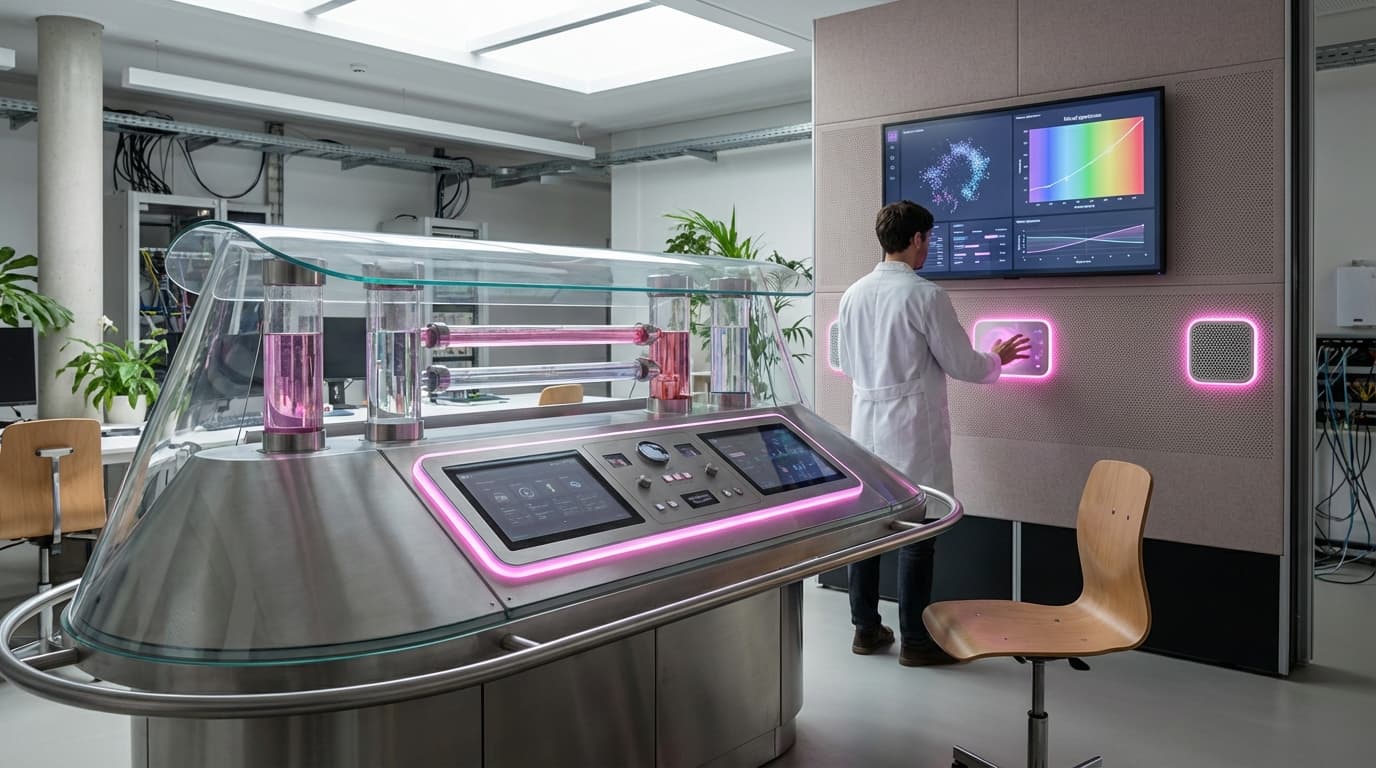
Sensory Experience Optimization Toolkits
Sensory Experience Optimization Toolkits represent a convergence of psychophysics, computational design, and affective computing, enabling systematic manipulation of environmental stimuli to elicit specific emotional and behavioral responses. These platforms integrate decades of research on how humans perceive and react to sensory inputs—color temperature, acoustic frequency profiles, olfactory compounds, haptic textures—into unified design environments. At their technical core, they employ machine learning models trained on psychophysical datasets that map stimulus parameters to measurable affective states, combined with multi-objective optimization algorithms that search vast parameter spaces to identify configurations meeting designer-specified criteria. Rather than relying on intuition or trial-and-error, these systems codify relationships between, for instance, particular wavelengths of light and arousal levels, or between specific scent molecules and memory recall, allowing designers to work with affect as a direct design variable. The toolkits typically output parameterized specifications—RGB values, sound pressure levels across frequency bands, diffusion rates for scent compounds, vibration patterns for haptic actuators—that can be implemented through standard environmental control systems.
The commercial and institutional demand for such tools stems from growing recognition that environmental design profoundly influences human performance, well-being, and decision-making, yet traditional approaches lack systematic methods for optimizing these effects. Retail environments struggle to balance stimulation that drives engagement against sensory overload that prompts exit; healthcare facilities seek configurations that reduce patient anxiety without inducing lethargy; workplaces attempt to tune environments for focus during deep work while supporting collaboration during meetings. These toolkits address the challenge of translating abstract goals like "reduce perceived wait time" or "increase trust" into concrete environmental parameters. They also solve the problem of individual variability—what calms one person may agitate another—by incorporating demographic and contextual factors into their recommendations. Early adopters report that systematic sensory optimization can increase retail conversion rates, improve patient outcomes, and enhance workplace productivity, though quantifying these effects remains methodologically complex. The technology enables new service models where environmental consultants can deliver evidence-based sensory strategies rather than purely aesthetic recommendations.
Pilot deployments are emerging across hospitality, healthcare, and corporate environments, with several design firms incorporating these platforms into their workflows. Hotels are using them to create signature sensory profiles for different room categories—energizing morning configurations, relaxing evening settings—while hospitals experiment with pre-surgical waiting areas optimized to reduce cortisol levels. Research suggests that as sensor networks become more sophisticated and capable of real-time occupant monitoring, these systems will evolve toward adaptive environments that continuously adjust sensory parameters based on measured physiological and behavioral responses. The technology aligns with broader trends toward personalized environments and evidence-based design, moving beyond the subjective preferences of individual designers toward reproducible, measurable outcomes. As our understanding of sensory neuroscience deepens and datasets linking stimuli to responses grow richer, these toolkits are likely to become standard components of architectural and experience design practice, fundamentally changing how we conceive of and manipulate the sensory character of built environments.
Related Organizations

Creates personalized soundscapes using AI that adapt in real-time to inputs like heart rate, weather, and circadian rhythm to help users focus, relax, or sleep.

Develops the Aroma Shooter, a directional scent delivery device that uses solid-state cartridges.

The world's largest flavor and fragrance company, investing in digital scent startups and technologies.


A music company creating audio specifically designed for health and wellbeing, validated by scientific research.

Specialists in digital scent technology for VR, cinema, and museums, offering professional scent generators.

A gaming and social platform that functions across VR headsets, mobile devices, and web browsers, maintaining a unified 3D space.

A global sonic branding agency that uses data and strategy to design the sound of brands.

The authority on color, providing standards and consulting (Pantone Color Institute) on color psychology and trend forecasting.
Supporting Evidence
Research this in Signals
Signals turns a topic into a sourced research record you can inspect and rerun. Your first scan is free, and this one starts with Sensory Experience Optimization Toolkits already loaded, so edit it or scan as is.