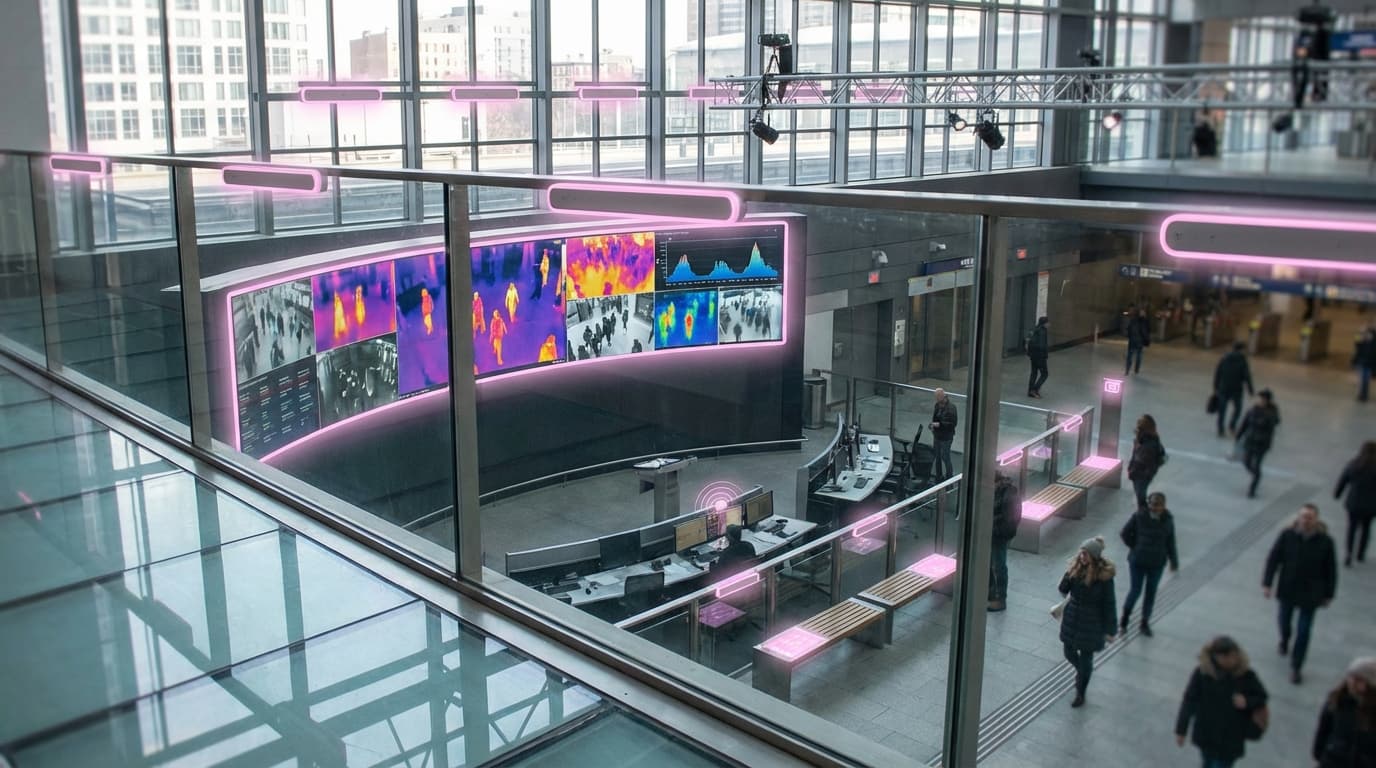
Crowd Affect Management Platforms
Crowd Affect Management Platforms represent an emerging class of integrated systems designed to monitor and influence the emotional states of large groups in real time. These platforms combine multiple sensing technologies—including computer vision algorithms that analyse facial expressions and body language, acoustic sensors that measure ambient noise levels and vocal patterns, and natural language processing tools that scan social media posts and messaging apps for sentiment indicators. The data streams converge in centralised analytics engines that apply machine learning models to generate continuous assessments of collective mood, stress levels, and potential flashpoints within crowds. Unlike traditional crowd management systems that focus solely on density and movement patterns, these platforms attempt to read and respond to the psychological dimension of mass gatherings, treating emotional contagion and group dynamics as quantifiable variables that can be measured and modified.
The core challenge these systems address is the unpredictability of crowd behaviour in high-stakes environments where emotional escalation can lead to dangerous outcomes. In venues hosting tens of thousands of people—sports stadiums, concert halls, transportation terminals—the difference between orderly dispersal and stampede often hinges on collective emotional state rather than physical capacity alone. Traditional security measures react to incidents after they occur, whereas affect management platforms aim to detect rising tension before it manifests in physical action. By identifying early indicators such as increased agitation in social media chatter, elevated vocal stress patterns, or clustering of anxious facial expressions in specific zones, operators gain precious minutes to intervene. The platforms then deploy countermeasures through environmental controls: adjusting lighting colour temperature to calming wavelengths, introducing ambient soundscapes that mask anxiety-inducing noise, displaying reassuring messages on digital signage, or even modulating HVAC systems to reduce perceived crowding through air circulation changes.
Early implementations have appeared in major transportation hubs and entertainment venues, where operators report using these systems to smooth passenger flow during delays and manage audience energy at large-scale events. Research in environmental psychology suggests that subtle atmospheric adjustments can significantly influence group behaviour, though the effectiveness of automated affect modulation remains a subject of ongoing study. As cities grow denser and mass gatherings become more complex, the technology reflects broader trends toward predictive public safety and experience optimisation. However, the capacity to monitor and manipulate collective emotions at scale raises profound questions about consent, psychological autonomy, and the appropriate boundaries of crowd influence—concerns that will likely shape the regulatory landscape as these platforms move from experimental deployments toward mainstream adoption in urban infrastructure.
Related Organizations

A leader in eye tracking and driver monitoring systems that acquired Affectiva (the pioneer of Emotion AI) to integrate deep affective computing capabilities.

Developing an Empathic Voice Interface (EVI) that detects and responds to human emotion.

Provides ethical facial analysis for events to measure attendee engagement and sentiment without storing PII.

Develops FaceReader, the standard software tool for automated analysis of facial expressions in scientific research.

The leading platform for Digital Out-of-Home (DOOH) audience measurement, analyzing mood and attention.

Uses webcams to measure attention and emotion in response to video advertising.

Develops Vector Annealing, a quantum-inspired simulated annealing service running on high-performance vector supercomputers.

Uses Swarm AI technology to amplify the intelligence of human groups.


AI platform that detects high-impact events and emerging risks from public data signals in real-time.
Supporting Evidence
Research this in Signals
Signals turns a topic into a sourced research record you can inspect and rerun. Your first scan is free, and this one starts with Crowd Affect Management Platforms already loaded, so edit it or scan as is.