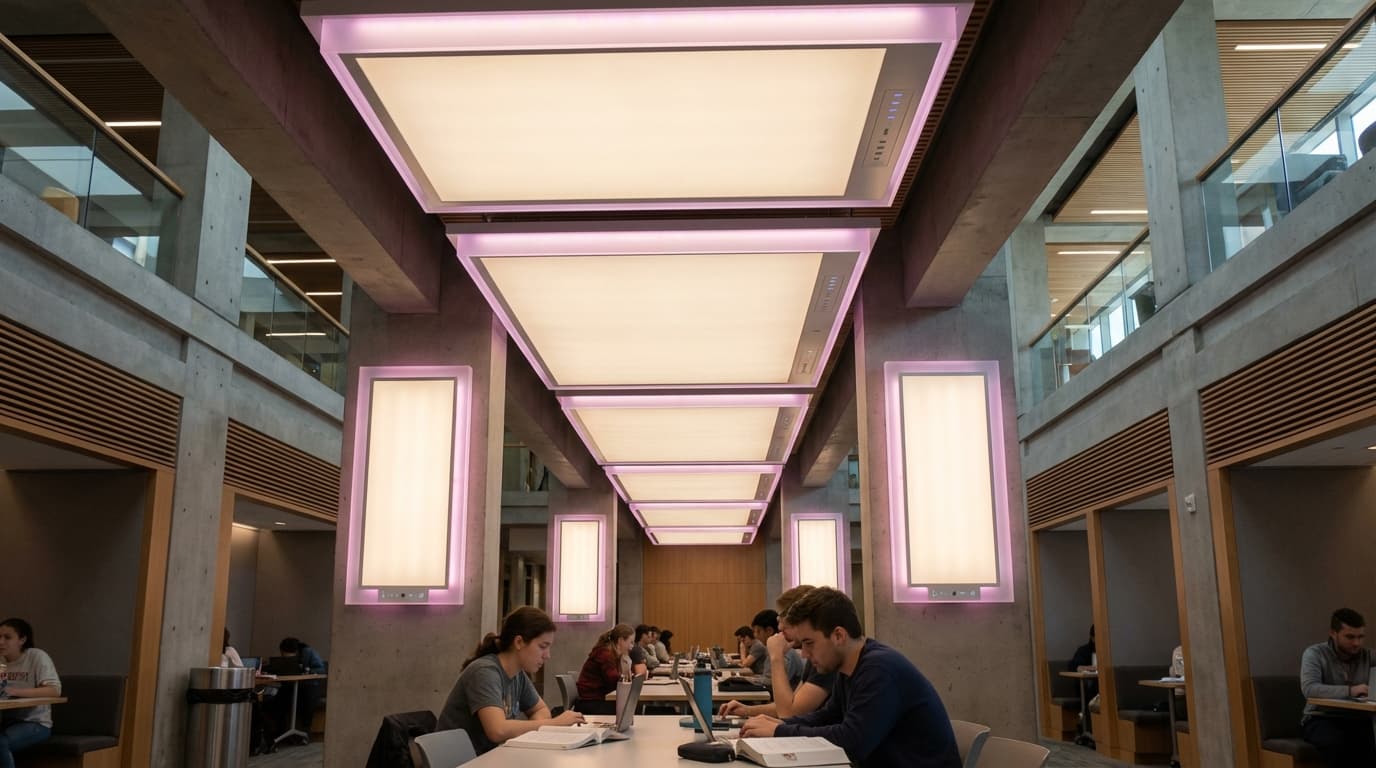
Circadian-Adaptive Light Fields
Circadian-adaptive light fields represent a sophisticated evolution in illumination technology that moves beyond simple brightness control to orchestrate the full spectrum, intensity, timing, and spatial distribution of light in response to human biological rhythms and psychological states. These systems leverage our growing understanding of how different wavelengths of light influence the human circadian system—the internal biological clock that regulates sleep-wake cycles, hormone production, and cognitive performance. At the technical core, these installations combine tunable LED arrays capable of shifting between warm amber tones (rich in longer wavelengths) and cool blue-enriched whites, networked sensors that monitor occupancy and ambient conditions, and control algorithms that reference both time-of-day protocols and real-time biometric or behavioral data. Advanced implementations incorporate spatial light modulation, where different zones within a single environment receive tailored illumination profiles, and some integrate spectral tuning that can emphasize or suppress specific wavelengths known to activate photoreceptors in the retina that communicate directly with the brain's circadian control centers.
The commercial imperative driving adoption of these systems stems from mounting evidence that conventional static lighting contributes to widespread circadian disruption, particularly in environments where occupants spend extended periods indoors under artificial illumination. Research suggests that exposure to blue-enriched light during morning hours can enhance alertness and cognitive performance, while evening exposure to the same spectral composition can suppress melatonin production and impair sleep quality. Organizations deploying circadian-adaptive systems report improvements in employee productivity, reductions in fatigue-related errors, and enhanced workplace satisfaction. In retail contexts, early implementations indicate that carefully orchestrated lighting transitions can influence customer dwell time and purchasing behavior by subtly modulating arousal and emotional states. Healthcare facilities have begun exploring these technologies to support patient recovery and reduce the disorientation common in windowless clinical environments, while transportation manufacturers are integrating adaptive lighting into vehicle cabins to help drivers maintain alertness during monotonous highway driving or long-haul flights.
Current deployments span corporate office buildings, where systems gradually shift from energizing cool tones in morning hours to warmer, relaxing hues as the workday concludes, and residential applications where smart home platforms enable personalized lighting schedules aligned with individual sleep patterns and preferences. Aviation and automotive sectors are piloting cabin lighting systems that adjust throughout journeys to minimize jet lag or driver fatigue. The technology is also finding traction in educational settings, where preliminary studies suggest that appropriately timed light exposure may support student attention and learning outcomes. As building codes in some jurisdictions begin recognizing the importance of circadian-supportive design, and as the cost of tunable LED technology continues to decline, industry analysts note a trajectory toward widespread integration of these systems into standard architectural practice. The convergence of circadian science, Internet of Things connectivity, and personalized wellness tracking suggests that future iterations may incorporate individual biometric feedback, creating truly responsive environments that adapt not just to time of day but to each occupant's real-time physiological state and behavioral context.
Related Organizations

A company founded by former NASA researchers developing 'SkyBlue' technology to provide high melanopic lux for circadian regulation without compromising visual color.

Leader in lighting control, owner of Ketra which produces natural light simulation.

A leading academic research center (formerly at RPI) studying the impact of light on human health and defining metrics like Circadian Stimulus (CS).

Parent company of Philips Hue, which offers the 'Hue Sync' protocol to align smart lighting with HDMI video signals.

A Swedish health-tech company pioneering 'BioCentric Lighting', a system that uses sensors and algorithms to deliver personalized light environments.

A major European lighting group with a strong research focus on 'Organic Response' and human-centric lighting solutions for education and healthcare.

Developers of 'SunLike' LED technology, which reproduces the spectrum of natural sunlight more closely than conventional LEDs to support circadian health.

Zumtobel Group
Austria · Company
An Austrian lighting manufacturer offering 'Active Light' solutions that dynamically adjust intensity and color temperature to support human biorhythms.

Consumer electronics company that developed the Dyson Zone, headphones with air purification and monitoring.
Supporting Evidence
Research this in Signals
Signals turns a topic into a sourced research record you can inspect and rerun. Your first scan is free, and this one starts with Circadian-Adaptive Light Fields already loaded, so edit it or scan as is.