Adaptive Stimuli Generators
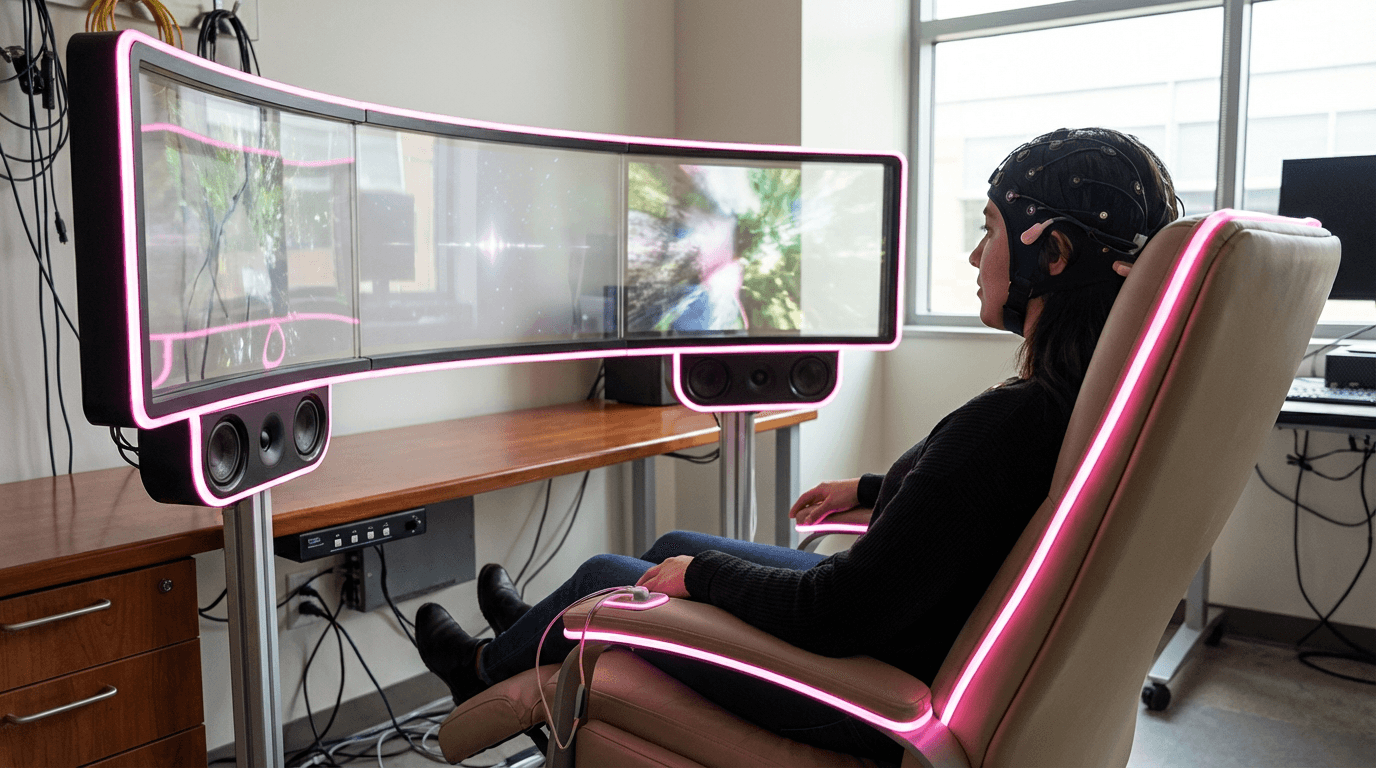
Adaptive Stimuli Generators represent a convergence of neurofeedback technology, generative artificial intelligence, and real-time signal processing to create dynamic sensory environments that respond to a user's neurological state. These systems employ electroencephalography (EEG) sensors or other brain-computer interface devices to continuously monitor brainwave activity, detecting patterns associated with different cognitive and emotional states such as focus, relaxation, or stress. The captured neural signals are processed through machine learning algorithms that interpret the data and feed it into generative AI engines capable of producing or modifying audiovisual content on the fly. Unlike static meditation apps or pre-recorded soundscapes, these generators create unique, personalized sensory experiences that evolve moment-to-moment based on the user's changing neurological patterns, forming a closed-loop system where the brain's response to stimuli directly shapes the next iteration of that stimuli.
The technology addresses a fundamental limitation in traditional wellness and cognitive enhancement tools: the inability to adapt to individual variability and changing states. Research suggests that people respond differently to the same sensory inputs depending on their baseline neurological patterns, current emotional state, and even time of day. Generic meditation tracks or focus music may work well for some users but prove ineffective or even counterproductive for others. Adaptive Stimuli Generators solve this problem by creating bespoke sensory environments tailored to each individual's real-time needs. In corporate wellness programs, early deployments indicate potential for reducing workplace stress and improving concentration during demanding tasks. The technology also shows promise in clinical settings, where therapists are exploring its use for anxiety management and attention training. By removing the guesswork from sensory-based interventions, these systems enable more consistent outcomes and reduce the time required for users to achieve desired mental states.
Current applications range from consumer wellness devices to specialized therapeutic tools. Several startups have introduced headband-style EEG devices paired with mobile applications that generate evolving soundscapes and visual patterns designed to guide users into meditative or focused states. In professional environments, some companies are piloting installations in designated quiet rooms or focus spaces where employees can engage in brief neurofeedback-guided sessions to manage stress or reset between demanding tasks. The technology is also being explored in creative industries, where artists and musicians experiment with brain-responsive installations that blur the line between performer and audience. As the accuracy of consumer-grade EEG sensors improves and generative AI becomes more sophisticated, industry analysts note a trajectory toward increasingly seamless and effective brain-responsive environments. The broader trend toward personalized digital health interventions and the growing acceptance of neurotechnology in everyday contexts suggest that adaptive stimuli systems may become a standard component of wellness technology ecosystems, offering a more scientifically grounded approach to mental state management than traditional one-size-fits-all solutions.
Related Organizations
Provides virtual reality and augmented reality stories that change visually based on the user's heart rate (via Apple Watch) or brainwaves (via Muse).

Creates personalized soundscapes using AI that adapt in real-time to inputs like heart rate, weather, and circadian rhythm to help users focus, relax, or sleep.

Pioneering research group led by Rosalind Picard that develops systems to recognize, interpret, and simulate human affects, including adaptive interfaces.

Develops the Muse EEG headband and software platform that adapts audio soundscapes in real-time based on the user's brain state (meditation/focus).
Develops BCI-enabled headphones that detect focus and intent to control digital experiences.
Creates open-source brain-computer interface tools and the Galea headset (integrating with VR) for researching physiological responses.

Produces EEG headsets and the BCI-OS platform, allowing developers to build applications that respond to cognitive stress and facial expressions.

Provides a remote neurofeedback platform using consumer wearables (like Muse) to treat ADHD and anxiety.

A media arts studio that uses data and AI to create immersive installations, often incorporating EEG data to create 'hallucinating' architecture that responds to human cognition.
Supporting Evidence
Research this in Signals
Signals turns a topic into a sourced research record you can inspect and rerun. Your first scan is free, and this one starts with Adaptive Stimuli Generators already loaded, so edit it or scan as is.