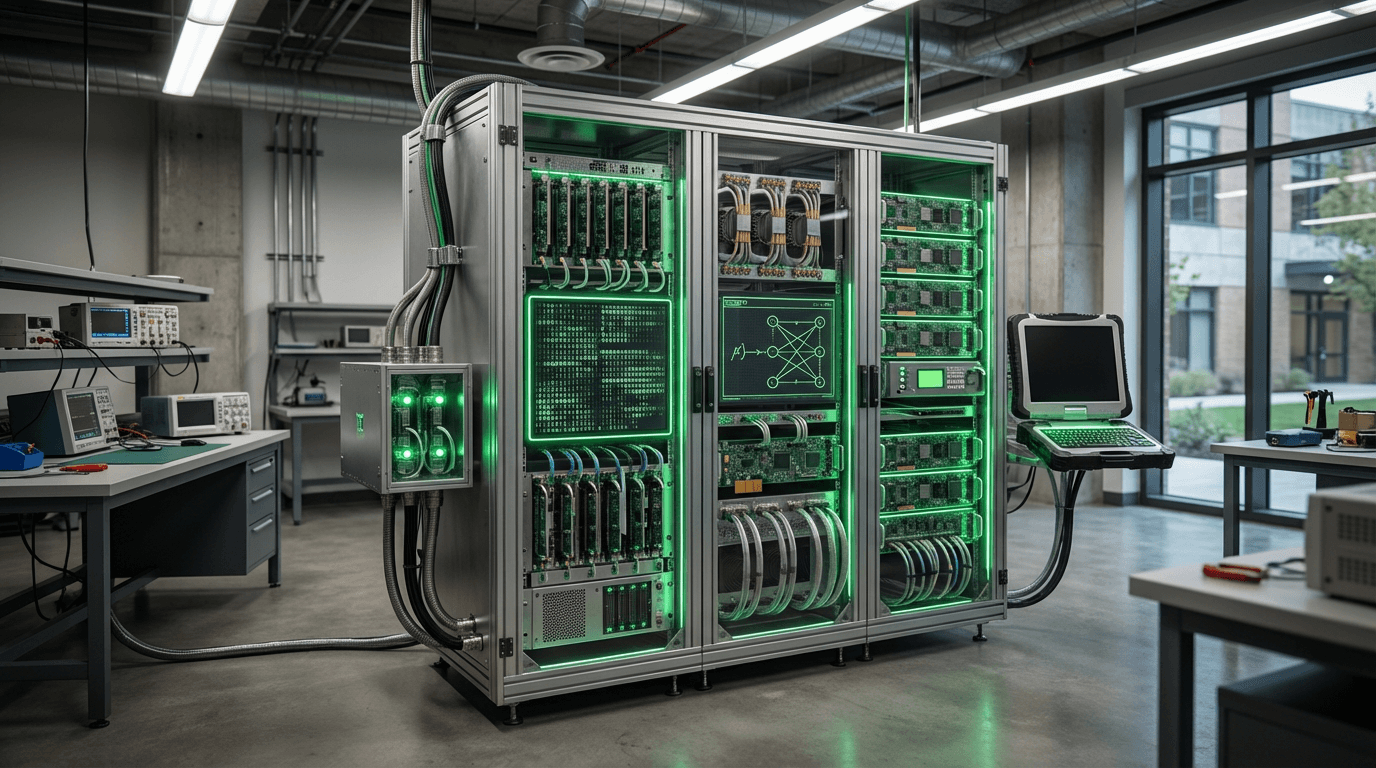
Post-Quantum Cryptography
Post-quantum cryptography represents a fundamental shift in how we protect digital communications and data, specifically designed to withstand attacks from quantum computers that could render current encryption methods obsolete. Unlike classical cryptographic systems that rely on mathematical problems like integer factorization or discrete logarithms—which quantum computers could solve exponentially faster using algorithms like Shor's algorithm—post-quantum approaches are built on mathematical structures believed to be resistant to both classical and quantum computational attacks. These include lattice-based cryptography, hash-based signatures, code-based cryptography, and multivariate polynomial equations. The urgency of this transition stems from the "harvest now, decrypt later" threat, where adversaries could collect encrypted data today and decrypt it once sufficiently powerful quantum computers become available, potentially exposing sensitive information that remains valuable for decades.
For energy grid operators and utilities, this technology addresses a critical vulnerability in infrastructure that must remain secure for 30 to 50 years or longer. Current public key infrastructure protecting supervisory control and data acquisition systems, smart meters, and grid communication networks could become compromised as quantum computing advances, exposing operational technology to manipulation or surveillance. The energy sector faces unique challenges because grid control systems cannot be easily upgraded or replaced, and encrypted operational data—such as consumption patterns, infrastructure vulnerabilities, or control protocols—retains strategic value far into the future. Post-quantum cryptography enables utilities to implement "crypto-agility," the ability to transition encryption methods without wholesale infrastructure replacement, while ensuring that long-term investments in grid modernization and smart infrastructure remain protected against evolving computational threats.
Several utilities and grid operators have begun pilot programs to assess post-quantum algorithms in operational environments, particularly for securing communication between substations and control centers. The U.S. National Institute of Standards and Technology has standardized initial post-quantum cryptographic algorithms, providing a foundation for industry adoption. Early implementations focus on hybrid approaches that combine classical and post-quantum methods, offering protection against both current and future threats while the technology matures. As quantum computing capabilities advance and become more accessible, the integration of post-quantum cryptography into grid infrastructure will transition from a forward-looking precaution to an operational necessity, particularly for protecting critical energy infrastructure that underpins economic stability and national security. This evolution aligns with broader trends toward zero-trust security architectures and resilient infrastructure design, ensuring that the energy grid can maintain confidentiality and integrity in an era of rapidly advancing computational capabilities.
Related Organizations

US federal agency that sets standards for technology, including facial recognition vendor tests (FRVT).

Long-standing leader in neuro-symbolic AI, combining neural networks with logical reasoning for enterprise applications.

A leading research institute that has contributed significantly to the development and analysis of post-quantum algorithms.

A spinout from Oxford University providing hardware and software IP for PQC, including side-channel analysis tools to test resistance.

Spun out of Alphabet, they provide a Security Suite that discovers cryptographic vulnerabilities and manages the migration to PQC.

A major semiconductor manufacturer developing secure chips with hardware support for PQC algorithms.

Develops crypto-agile solutions and tools to test and migrate systems to quantum-safe standards.

Leading manufacturer of Near Field Communication (NFC) and Secure Element chips used in offline payment hardware.

Provides HVDC Plus technology (VSC) and transformers for ultra-high-voltage transmission projects globally.

Prime contractor for the TeQuantS project and a key partner in ESA's quantum satellite initiatives.

Co-founded by Michele Mosca, offering 'Quantum Risk Assessment' services and tools to evaluate organizational vulnerability to quantum decryption.
Supporting Evidence
Research this in Signals
Signals turns a topic into a sourced research record you can inspect and rerun. Your first scan is free, and this one starts with Post-Quantum Cryptography already loaded, so edit it or scan as is.