Mobile Manipulation Robots
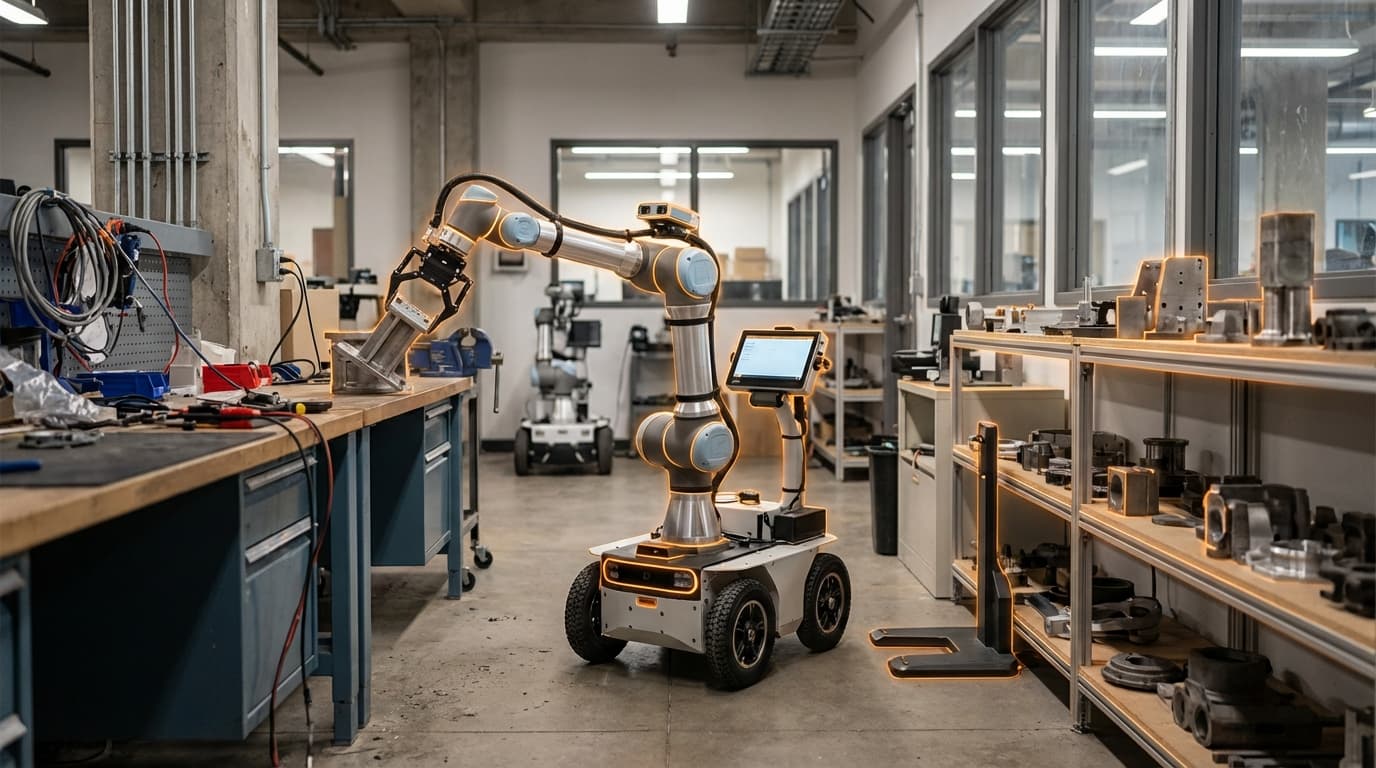
Mobile manipulation robots represent a convergence of autonomous mobility and dexterous manipulation, combining self-navigating mobile bases with multi-axis robotic arms to create versatile platforms capable of performing complex tasks across factory floors. Unlike traditional industrial robots bolted to fixed positions or simple automated guided vehicles limited to transport, these systems integrate simultaneous localisation and mapping (SLAM) algorithms with force-torque sensing and vision systems to navigate dynamic environments while executing precision assembly, material handling, and inspection tasks. The mobile base provides locomotion through various navigation technologies—from laser scanners and depth cameras to wheel odometry—while the mounted arm, often designed with collaborative safety features including compliant joints and proximity sensors, performs manipulation tasks that would traditionally require separate stationary workstations. This architectural integration enables a single platform to autonomously travel to a storage area, grasp components, navigate to an assembly station, and perform joining operations before moving to quality inspection zones, all without human intervention or predetermined paths.
The manufacturing sector faces mounting pressure to increase production flexibility while managing labour shortages and the complexity of high-mix, low-volume production runs. Traditional automation solutions, with their fixed conveyor systems and dedicated robotic cells, require substantial capital investment and offer limited adaptability when product designs change or production volumes fluctuate. Mobile manipulation robots address these constraints by eliminating the need for permanent infrastructure, allowing manufacturers to reconfigure production layouts rapidly in response to shifting demand or new product introductions. Early industrial deployments indicate these systems can reduce the time required to establish new assembly processes from weeks to days, while also enabling manufacturers to operate lights-out production during off-shifts without the safety barriers and floor space requirements of conventional industrial robots. The technology proves particularly valuable in sectors such as automotive component manufacturing, electronics assembly, and logistics operations where the same robot might need to perform kitting, machine tending, and packaging tasks across different areas of a facility throughout a single shift.
Current adoption remains concentrated in forward-thinking manufacturers seeking competitive advantages through operational agility, with research suggesting these platforms are transitioning from pilot deployments to production-scale implementations across North American and European factories. The technology supports emerging manufacturing paradigms including reconfigurable production systems and distributed manufacturing networks, where the ability to rapidly deploy and redeploy automation capabilities becomes a strategic differentiator. As sensor technologies advance and machine learning algorithms improve object recognition and grasp planning, these robots are expected to handle increasingly complex manipulation tasks with less programming overhead. Industry analysts note that the convergence of mobile manipulation with digital twin technologies and fleet management software is creating ecosystems where multiple robots can coordinate their activities, share learned behaviours, and optimise factory-wide workflows autonomously. This trajectory points toward manufacturing environments where physical automation infrastructure becomes as flexible and reconfigurable as the software systems that control modern production, fundamentally reshaping how factories respond to market volatility and customisation demands.
Related Organizations

Famous for Spot and Atlas, now integrating reinforcement learning for dynamic movement.

A major manufacturer of industrial robots, including the LBR Med, a lightweight robot certified for integration into medical devices.

Produces the LD Series of autonomous mobile robots (AMRs) often integrated by third parties for hospital logistics.

Develops mobile robots like TORU that perceive their environment to pick individual objects (shoe boxes) from shelves.

Creators of Digit, a bipedal robot designed for logistics work.

Specializes in rugged mobile robotics platforms (Husky, Ridgeback) that are frequently integrated with robotic arms for research and industrial prototyping.

Developed autonomous mobile manipulation robots specifically for piece-picking in e-commerce fulfillment centers.

Develops the TIAGo (Take It And Go) mobile manipulator, widely used in research and light industrial applications.

Specializes in mobile service robotics and mobile manipulation, offering platforms like the RB-KAIROS for industrial applications.

Develops cognitive robots including mobile manipulators that integrate AI, sensors, and safe human interaction.
Supporting Evidence
Research this in Signals
Signals turns a topic into a sourced research record you can inspect and rerun. Your first scan is free, and this one starts with Mobile Manipulation Robots already loaded, so edit it or scan as is.