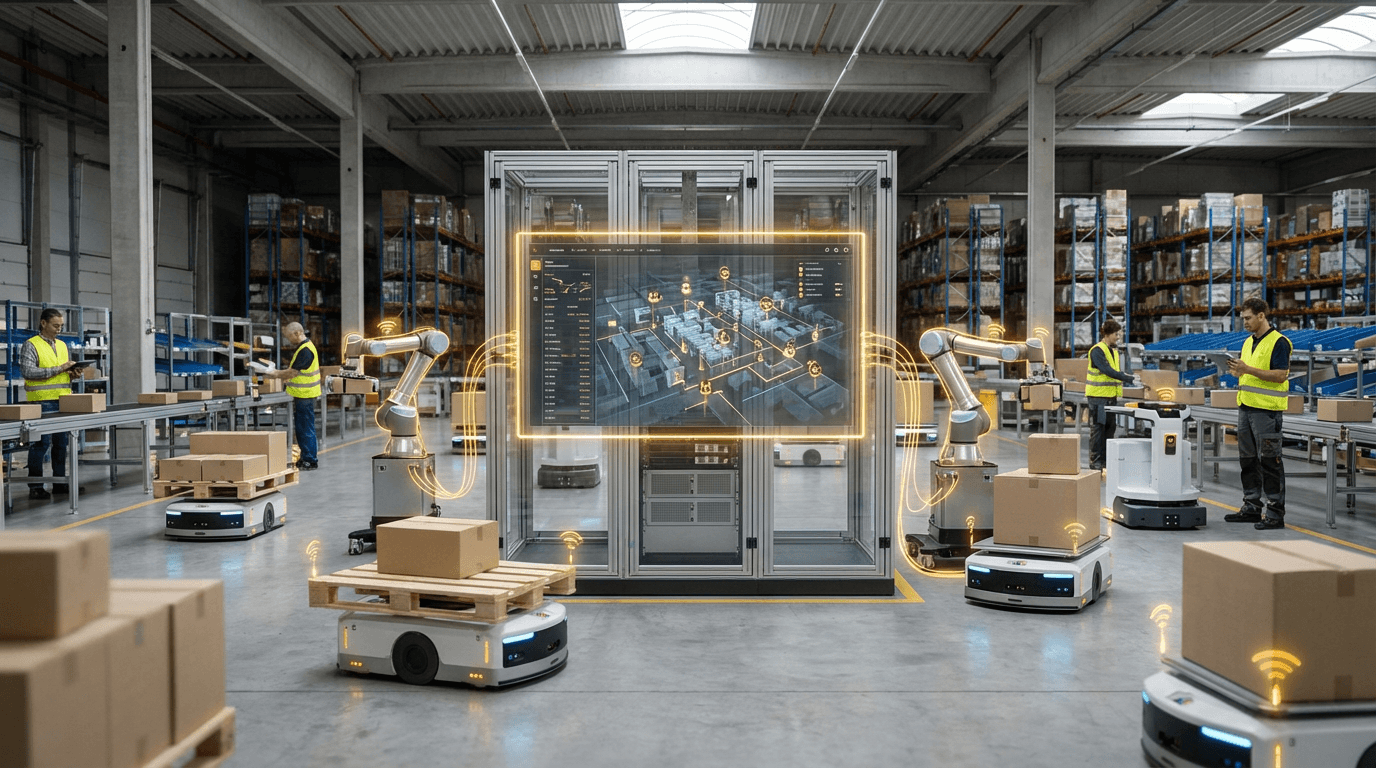
Cloud Robotics & Fleet Orchestration
Cloud robotics represents a fundamental shift in how autonomous systems process information and coordinate actions, moving computational intelligence from individual machines to centralized cloud infrastructure. Rather than equipping each robot with expensive onboard processors capable of handling complex tasks like simultaneous localization and mapping (SLAM), path planning, or object recognition, this architecture distributes the computational burden to remote servers with vastly greater processing power. Individual robots become lighter, more energy-efficient endpoints that stream sensor data to the cloud and receive navigation commands or task instructions in return. This approach also enables collective learning, where insights gained by one robot—such as optimal warehouse navigation patterns or successful manipulation strategies—can be instantly shared across an entire fleet, creating a form of distributed intelligence that improves system-wide performance over time.
The manufacturing and logistics sectors face mounting pressure to scale automation rapidly while managing costs and maintaining operational flexibility. Traditional robotics deployments require significant upfront investment in specialized hardware and lengthy integration periods, with each robot operating largely independently based on pre-programmed routines. Cloud robotics addresses these limitations by enabling what industry practitioners call "RoboOps"—a paradigm borrowed from software DevOps that treats robot fleets as dynamically manageable infrastructure. From a single control interface, operators can deploy software updates across thousands of units simultaneously, monitor real-time performance metrics, reassign tasks based on changing priorities, and diagnose issues remotely without physical intervention. This centralized orchestration proves particularly valuable in environments like fulfillment centers or manufacturing facilities operating across multiple geographic locations, where maintaining consistency and rapidly adapting to demand fluctuations are critical competitive advantages.
Early implementations have emerged in warehouse automation, where companies coordinate hundreds of mobile robots handling inventory movement and order fulfillment. Agricultural robotics represents another growing application, with fleets of autonomous vehicles sharing crop health data and coordinating harvesting schedules across large farms. The architecture also shows promise in last-mile delivery, where centralized route optimization can dynamically adjust to traffic conditions and delivery priorities. However, the approach introduces dependencies on network connectivity and latency considerations—challenges that edge computing solutions are beginning to address by placing intermediate processing nodes closer to robot operations. As 5G networks expand and edge infrastructure matures, cloud robotics is positioned to become the dominant architecture for large-scale automation deployments, fundamentally changing how industries think about robotic systems from isolated machines to coordinated, continuously improving fleets managed as software services.
Related Organizations

Cloud data platform for robotics, providing teleoperation and data management infrastructure for fleets of inspection robots.

Provides a cloud-based RobOps (Robot Operations) platform to manage autonomous robot fleets at scale.

Develops the Ocado Smart Platform, featuring 'The Hive'—a grid where thousands of washing-machine-sized robots swarm to pick groceries.

Pioneers in cloud robotics, offering a platform (rapyuta.io) that offloads processing from robots to the cloud.
Cloud computing giant offering Amazon Braket.

An Alphabet company building a software platform to make industrial robotics accessible and interoperable.

Provides a Robotics Engine Platform based on ROS to separate software from hardware and enable fleet management.
Developing foundation models for robotics (Project GR00T) and vision-language models like VILA.
Industrial DataOps platform (Cognite Data Fusion) that contextualizes data for AI-driven maintenance applications.
Supporting Evidence
Research this in Signals
Signals turns a topic into a sourced research record you can inspect and rerun. Your first scan is free, and this one starts with Cloud Robotics & Fleet Orchestration already loaded, so edit it or scan as is.